

Table of Contents
- Understanding Gold Nuggets and Their Formation
- How to Identify Real Gold Nuggets
- Gold Nugget Purity: What the Numbers Mean
- Natural Gold Nugget Value: Pricing Factors
- Investment vs. Collectible: Why Context Matters
- Ethical Sourcing and Authentication
- Caring for Your Gold Nugget Collection
- Frequently Asked Questions
Last Updated: September 28, 2026
Understanding Gold Nuggets and Their Formation
Gold nuggets are naturally occurring pieces of gold that form through geological processes over millions of years. Unlike manufactured gold bars, each nugget carries its own unique shape, texture, and character, making them genuinely collectible, not just valuable by weight.
Gold nuggets form primarily in alluvial deposits, where water erosion breaks down host rock and leaves heavier gold particles in riverbeds and stream channels. Australia, California, and parts of Africa have historically produced the world's most prized specimens. Gold's specific gravity of 19 times heavier than water means it settles in predictable locations.
Most natural gold nuggets range from 92 to 99 per cent pure gold, with trace elements like silver and copper from their host rock. This natural variation marks authenticity, refined gold is uniform; natural nuggets are not. Gold2u offers Australian specimens, a region renowned for producing distinctive, highly collectible nuggets.

How to Identify Real Gold Nuggets
Real gold nuggets display specific physical characteristics that distinguish them from imitations and fakes. A layered authentication approach eliminates false positives.

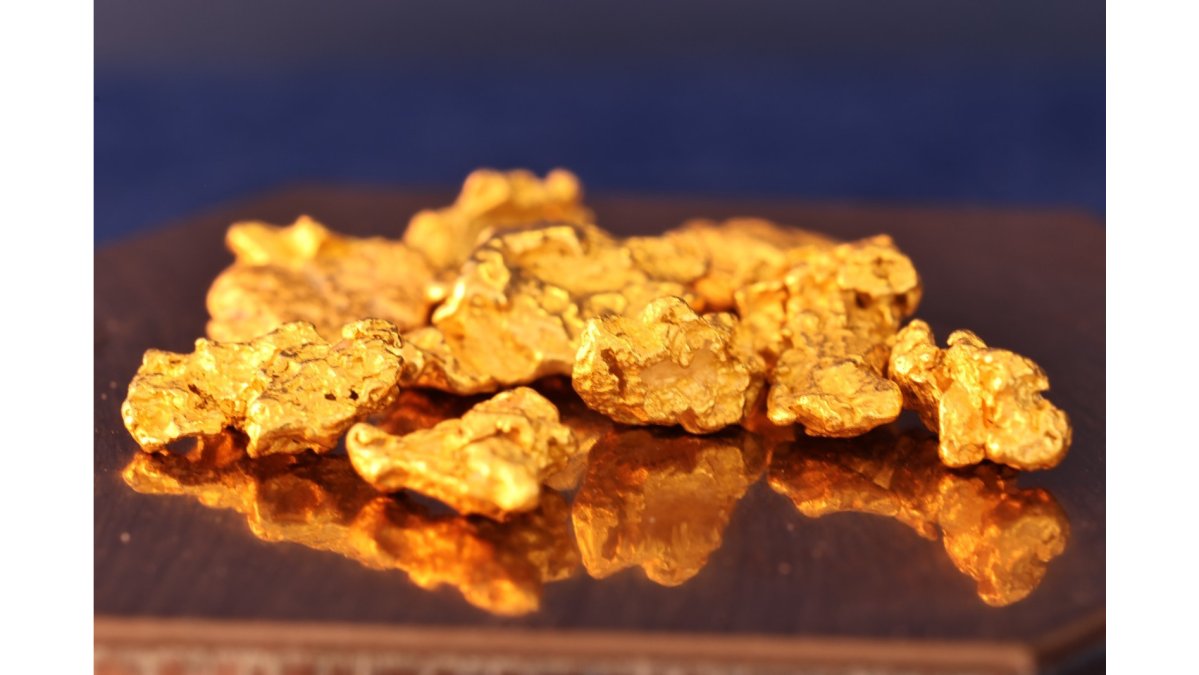
Step 1: Visual Inspection for Surface Character
Authentic nuggets show irregular surfaces with visible cavities, striations, and natural wear patterns. The surface should never be uniformly smooth or polished. Real gold ranges from pale yellow to deep orange; uniform bright yellow indicates coating or treatment.
Under magnification (10× loupe or smartphone macro lens), genuine nuggets reveal crystalline structures and surface irregularities. Artificially polished or coated pieces appear unnaturally uniform or have a plastic sheen.
Step 2: Magnetic Test
Place the nugget near a strong neodymium magnet (the kind used in industrial applications). Real gold is non-magnetic and won't react. If the piece moves toward the magnet or shows any attraction, it contains iron or other ferrous materials and is either not genuine gold or heavily contaminated. This test eliminates most common fakes immediately.
Step 3: Density Calculation (The Definitive Home Test)
Gold's specific gravity is 19.3. To verify density at home: (1) weigh the nugget on a digital scale, (2) measure volume using water displacement in a graduated cylinder, (3) divide weight by volume. A genuine nugget should yield density between 17 and 19.5. Example: a 10-gram nugget displacing 0.6ml has density 16.67, plausible for nuggets with silver content. Density below 15 suggests the piece is hollow or not pure gold.
Step 4: Scratch and Hardness Assessment
Gold is soft and malleable. Using a small, inconspicuous area (ideally the back or underside), attempt a gentle scratch with a steel knife or file. Genuine gold will scratch easily, leaving a visible mark. If the nugget resists scratching or the mark appears metallic silver rather than gold, it's either not gold or heavily alloyed with harder metals.
Step 5: Colour Consistency and Patina
Natural nuggets develop a subtle patina, slight darkening from trace element oxidation, that marks authenticity. Artificially enhanced nuggets have artificially brightened colour or uniform sheen. Look for discolouration in crevices where treatment chemicals may have pooled.
Troubleshooting: When Tests Conflict
If density is 16-17, the nugget likely contains higher silver or copper content, natural variation, not fakery. If density is below 15 or the piece is magnetic, professional assay is warranted. For investment-grade pieces, fire assay or XRF analysis provides definitive verification and documentation for resale and insurance.
Gold Nugget Purity: What the Numbers Mean
Purity is expressed in karat ratings or percentage of pure gold content. Most Australian nuggets range from 92 to 99 per cent purity (roughly 22 to 24 karat), commanding premium prices. The remaining 1 to 8 per cent of silver, copper, and other metals confirms natural origin.
Higher purity nuggets maintain stronger resale value, but purity alone doesn't determine market value. A 5-gram nugget at 95% purity might sell for more than a 6-gram nugget at 92% purity if the smaller piece has superior specimen appeal. Collectors factor in both intrinsic value (gold content) and collectible value (rarity, appearance, provenance). Professional assay using fire assay or XRF analysis provides definitive purity verification and documentation for investment-grade pieces.
Natural Gold Nugget Value: Pricing Factors
Market value depends on multiple factors beyond weight. The spot price of gold sets a baseline, but natural nuggets typically command premiums above spot price, reflecting rarity, collector demand, and unique characteristics.
8.055g Natural Gold Nugget – The Boss →
Size significantly influences pricing. A 10-gram nugget often costs three to four times more than a 5-gram nugget due to rarity, not just weight. Specimens over 20 grams are genuinely scarce and attract serious collectors.
Specimen appeal drives collector premiums. A nugget with interesting shape, crystalline structure, natural cavities, or distinctive colour commands higher prices than a plain piece of identical weight and purity. Visual character becomes as important as intrinsic value.
Australian gold nuggets, particularly from Victoria and Western Australia, carry premium valuations due to distinctive, high-purity specimens. This regional premium can add 10 to 30 per cent to prices for equivalent pieces.
Investment vs. Collectible: Why Context Matters
Investment-grade nuggets track spot gold prices with modest premiums and offer reasonable liquidity. Collectible nuggets are smaller, visually distinctive pieces with subjective premiums that depend on finding buyers who appreciate their specific character. Investment nuggets appreciate primarily with gold prices; collectible nuggets appreciate through both gold price movement and increasing rarity. Collectible nuggets carry higher risk if gold prices fall. For conservative investors, investment-grade pieces are safer; for collectors with longer time horizons, collectible specimens justify their premiums.

Ethical Sourcing and Authentication
Ethical sourcing is increasingly important. Australian nuggets benefit from strict mining regulations and environmental oversight. Reputable dealers provide certificates of authenticity documenting weight, purity, origin, and characteristics, essential for resale.
Caring for Your Gold Nugget Collection
Natural gold nuggets require minimal maintenance. The key principle: preservation over restoration. A nugget's original patina and surface character are part of its value.
Understanding Patina and Why It Matters
Natural patina, slight darkening from trace element oxidation, marks authenticity and age. Removing it through aggressive cleaning reduces value. Light cleaning to remove surface dirt is acceptable; aggressive restoration is not.
Storage: Climate and Container
Keep nuggets in cool, dry conditions (40-50% relative humidity, 15-20°C) away from temperature fluctuations. Use acid-free containers or natural-fibre pouches; never use plastic bags. For valuable specimens, archival-grade boxes or safety deposit boxes provide ideal climate control and security.
Cleaning: When, How, and What to Avoid
Most collectors prefer to leave nuggets in their natural state, with original surface patina intact. However, if a nugget has accumulated surface dust or light debris, gentle cleaning is acceptable:
- Distilled water rinse only: Use distilled water (not tap water, which contains minerals) and a soft natural-bristle brush. Gently brush the nugget under running distilled water. This removes dust and loose debris without affecting the surface.
- Air dry completely: Pat dry with a soft, lint-free cloth and allow to air dry fully before storage. Any residual moisture promotes oxidation.
- Never use: Harsh chemicals, abrasive cleaners, vinegar, lemon juice, toothpaste, or commercial jewellery cleaners. These can damage trace metals, remove patina, or etch the surface.
If a nugget has stubborn dirt or mineral deposits bonded to the surface, resist the urge to scrub.
Handling and Display
Addressing Common Damage
Documentation and Insurance
- Photograph from multiple angles (top, bottom, sides) under natural daylight and consistent lighting.
- Record weight (in grams), estimated purity (if known), origin, and acquisition date.
- Store authentication certificates and assay reports in a separate secure location (safe deposit box, fireproof safe).
- Maintain a spreadsheet or digital inventory with photos, weights, and acquisition costs.
Long-Term Storage Strategy
Frequently Asked Questions
How much is a gold nugget worth?
Gold nugget value depends on weight, purity, and specimen appeal. A 5-gram nugget with 95% purity might fetch £1,400-£1,600, while larger pieces like an 8-gram specimen could reach £2,100 or more. Market spot price for troy ounces of gold sets the baseline, but natural nuggets command premiums of 10-30% above bullion value due to their rarity and collector appeal. The Boss, an 8.055g Australian nugget, is priced at £2,134.57, reflecting both its weight and desirable surface character.
Are gold nuggets pure gold?
Natural gold nuggets are rarely 100% pure. Most Australian specimens range from 82-99% gold content, with trace elements and mineral inclusions forming during geological processes. Karat ratings help communicate purity: 24 karat equals pure gold, whilst 22 karat (91.7% gold) is common in jewellery. Unaltered natural nuggets retain their original purity from formation. Always request assay results or certificates confirming purity before purchase, especially for investment pieces.
What factors determine the value of a natural gold nugget?
Four key factors drive gold nugget value: weight (measured in troy ounces or grams), purity (percentage of actual gold content), market spot price (current troy ounce rate), and specimen appeal (shape, texture, and collector desirability). A nugget with strong visual character and intact natural surface commands a numismatic premium above its intrinsic gold value. Origin matters too, Australian nuggets are highly sought. Ethical sourcing and authentication certificates add confidence and can increase resale value.
How can I distinguish between natural gold nuggets and gold-bearing quartz?
Natural gold nuggets display malleable metal that bends under pressure, whilst gold-bearing quartz contains flakes embedded in hard stone. Use the density test: gold is significantly heavier than quartz for the same volume. Examine surface texture closely, authentic nuggets show organic cavities and crystalline patterns formed naturally over millions of years. Gold-bearing rock feels gritty and rough. Request an assay or X-ray fluorescence (XRF) test from a certified gemologist to confirm purity and rule out imitations or treated specimens.


0 comments