

Gold sovereigns and collectable coins
See our current gold sovereigns and collectable gold coins, with fast insured UK delivery.
Shop gold coins →Table of Contents
- Why Gold Still Matters in 2026
- How to Invest in Gold: The Main Routes Compared
- The Liquidity of Physical Gold Coin Investments
- Capital Gains Tax on Gold Coins UK: What You Keep
- Investing in Natural Gold Nuggets: A Specialist Route
- Storage, Insurance and Counterfeit Detection
- Building a Profitable Gold Strategy
- Frequently Asked Questions
Last Updated: September 28, 2026
Why Gold Still Matters in 2026
The most profitable way to invest in gold depends on your goals, but physical bullion held for the long term has historically delivered the strongest risk-adjusted returns for private investors. This guide from Gold2u explains every route, from sovereign coins to natural nuggets.
Gold is a physical precious metal that has served as a store of value for thousands of years. In 2026, with market volatility testing most asset classes, gold's role as a safe haven asset has come back into focus for UK investors.
The case rests on three things: gold is a tangible asset with intrinsic value, it has historically acted as an inflation hedge, and it diversifies a portfolio away from equities and currency devaluation.
How to Invest in Gold: The Main Routes Compared
There are two broad routes: physical gold you own outright, and paper gold that tracks the price without delivery. Physical bullion is the most profitable route for long-term wealth preservation because it carries no ongoing management fee and, for UK sovereign coins, no capital gains tax.
| Route | What You Own | Ongoing Cost | Tax Position |
|---|---|---|---|
| Physical bullion | The metal itself | Storage and insurance only | Sovereign coins CGT-exempt |
| Gold ETFs | Fund units | Annual management fee | Subject to CGT |
| Mining shares | Company equity | Broker and platform fees | Subject to CGT |
| Certificates | A claim on metal | Custodian fee | Subject to CGT |
Physical Bullion: Coins, Bars and Nuggets
Physical bullion is gold you hold directly, in the form of coins, bars or natural nuggets. It carries no counterparty risk and no annual management charge, which is why it suits long holding periods.
Paper Gold: ETFs, Mining Shares and Certificates
Paper gold gives you price exposure without storage. It suits investors who want to trade in and out, but it introduces counterparty risk and annual fees that erode returns over time.
The Liquidity of Physical Gold Coin Investments
The liquidity of physical gold coin investments is the single most misunderstood factor in gold ownership. Sovereign and Britannia coins are among the most liquid forms of physical gold because they are recognised, standardised and traded by dealers nationwide.
Capital Gains Tax on Gold Coins UK: What You Keep
Capital gains tax on gold coins UK rules favour sovereign coins, and understanding why is the difference between a tax-free gain and an unexpected bill. British legal tender coins, including the gold sovereign and Britannia, are exempt from capital gains tax, so gains on them do not need to be reported. The exemption rests on the coins being legal tender, not on their gold content, which is why a 22-carat sovereign and a 24-carat Britannia both qualify while a privately minted bar of identical weight does not.
What is not exempt
Gains on ETFs, mining shares, certificates and non-legal-tender bullion may fall within capital gains tax rules. That includes most gold bars, foreign bullion coins that are not legal tender in their issuing country, and any coin that has been mounted or altered so that it is no longer legal tender. If you hold a mix of sovereigns and bars, the exempt and non-exempt holdings must be tracked separately, you cannot net a loss on a bar against a gain on a sovereign.
The annual allowance and rates
Every individual has an annual capital gains tax allowance, and only gains above that threshold are taxable. The allowance has been reduced several times in recent years, so check the current figure with HMRC's guidance on capital gains tax before you sell, thresholds and rates change, and the rate that applies depends on your income tax band and the type of asset.
Reporting and record-keeping
Even where no tax is due, disposals above the reporting threshold must generally be reported to HMRC, and the exempt status of sovereigns does not remove the need to keep purchase records. Keep dated invoices showing weight, purity, quantity and price for every acquisition. If you sell through a dealer, they may be required to verify your identity under anti-money-laundering rules, so expect to provide photographic ID and proof of address on larger transactions.
2017 Queen Elizabeth II Full Gold →
The sovereign in practice
The 2017 Queen Elizabeth II Full Gold Sovereign at £1,050.00 is a bullion sovereign struck in 22 carat gold at 0.916 fineness, containing 0.2354 troy ounce of fine gold. It carries a privy mark for the 200th anniversary of the modern sovereign, and being British legal tender, it is both VAT-free and exempt from capital gains tax. That combination, no VAT on purchase and no CGT on disposal, is the strongest tax argument for physical gold in a UK portfolio, and it is why sovereigns are usually the first coin a tax-conscious investor buys.

Investing in Natural Gold Nuggets: A Specialist Route
Investing in natural gold nuggets is a specialist route that sits between bullion and collectables. Nuggets are unaltered natural gold, typically 92 to 98 per cent purity, and each piece is geologically unique.
Storage, Insurance and Counterfeit Detection
Storage, insurance and counterfeit detection are the operational costs of physical ownership, and they are where most guides stop short. Getting them right is what separates a position you can hold for a decade from one you are forced to sell early.
Home storage versus vault storage
A domestic safe is the cheapest option and the most convenient, but it concentrates risk in one address. If you go this route, look for a unit that is independently certified to a recognised European burglary-resistance standard (the EN 1143-1 grades are the common benchmark), bolt it to a solid floor or wall rather than leaving it freestanding, and avoid discussing holdings outside the household.
Insuring on replacement value, not purchase price
Insurance should be arranged on the replacement value of the metal, not what you paid for it. If gold has risen since purchase, a policy written on the original price leaves you underinsured at exactly the moment you need it. Review the sum insured annually against the current spot price, and keep your certificates, weight records and purchase receipts with the policy so a claim can be substantiated.
Counterfeit detection: the checks that catch most fakes
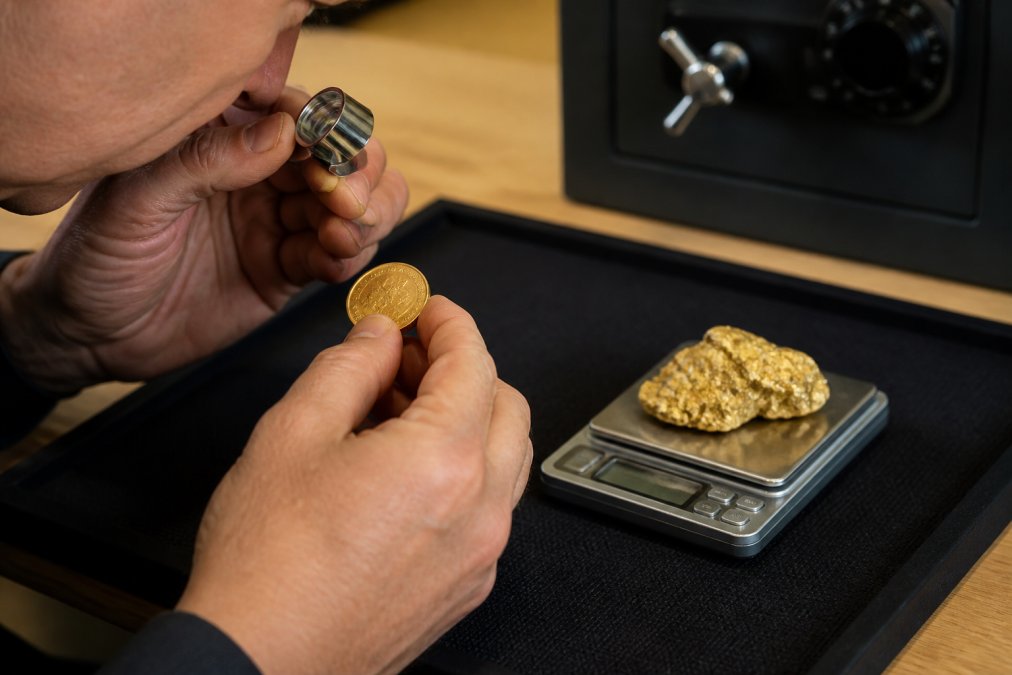
Counterfeit detection matters because the market for convincing fake coins and bars is mature. Weigh every coin against its stated specification and check dimensions, not just appearance. A sovereign should contain 0.2354 troy ounce of fine gold; a coin that is light or the wrong diameter is a warning sign. A jeweller's loupe and precision scale catch most fakes before they reach your safe.
Building a Profitable Gold Strategy
A profitable gold strategy combines the right vehicle, the right tax wrapper and a realistic exit plan. Asset allocation is the starting point: most advisers suggest gold forms a modest slice of a diversified portfolio, held as portfolio hedging rather than a core position.
- Match the vehicle to your holding period: sovereign coins for long holds, ETFs for short-term exposure
- Buy legal tender coins first if tax efficiency matters
- Keep records of every purchase, weight and certificate
- Review your storage and insurance annually
- Plan your exit before you buy, and know your likely buyer
Frequently Asked Questions
Is it too late to invest in gold in 2026?
No, but the easy gains have already happened. Gold has spent recent years hitting all-time highs, so buying now means accepting more market volatility than buyers who entered earlier. The practical approach is to phase purchases rather than commit a lump sum at one spot price. Decide your target asset allocation first, then buy in tranches. That way a market correction works in your favour instead of against you. If you want to invest in gold as a long-term store of value, timing matters far less than consistency.
How does capital gains tax on gold coins UK rules affect my returns?
UK gold coins that are legal tender, such as the gold sovereign, are exempt from Capital Gains Tax. That exemption is the single biggest tax advantage of coins over bars. Gold bars and most foreign coins are treated as chargeable assets, so gains above your annual exempt amount may attract CGT. If you are weighing coins against bars, the tax treatment can outweigh a slightly lower dealer premium. Keep your purchase invoices: you will need them to prove the acquisition cost when you sell.
What is the difference between gold coins and gold bars for investment?
Coins carry a higher dealer premium but are easier to sell in small amounts and, if they are UK legal tender, are CGT-exempt. Bars usually cost less per gram but are harder to split, so you sell the whole bar or nothing, and gains are generally taxable. Coins also let you average in and out of the market gradually. For most private investors building a position over time, sovereign coins offer the better balance of liquidity, tax treatment and flexibility.
How easily can I sell physical gold coins later?
The liquidity of physical gold coin investments depends on the coin and the buyer. Widely recognised sovereigns sell quickly to dealers, pawnbrokers and auction houses, and the buy-sell spread is usually tighter than for obscure or graded coins. Expect to lose the dealer premium when you sell, so treat it as a cost of ownership rather than a loss. Keep certificates, original packaging and invoices. Selling in smaller tranches over time often gets a better average price than one large disposal.
Ready to buy?
See our current gold sovereigns and collectable gold coins, with fast insured UK delivery.
Shop gold coins →


0 comments