

Table of Contents
- What Are Natural Gold Nuggets and Jewellery?
- How to Identify a Natural Gold Nugget
- Understanding Natural Gold Nugget Value
- Natural Gold Nuggets for Sale: What to Look For
- Gold Nugget Jewellery Care and Maintenance
- Why Natural Gold Nuggets Make Sound Investments
- Frequently Asked Questions
Last Updated: October 15, 2026
What Are Natural Gold Nuggets and Jewellery?
Natural gold nuggets and jewellery are among the most distinctive precious metal pieces available to collectors and investors.

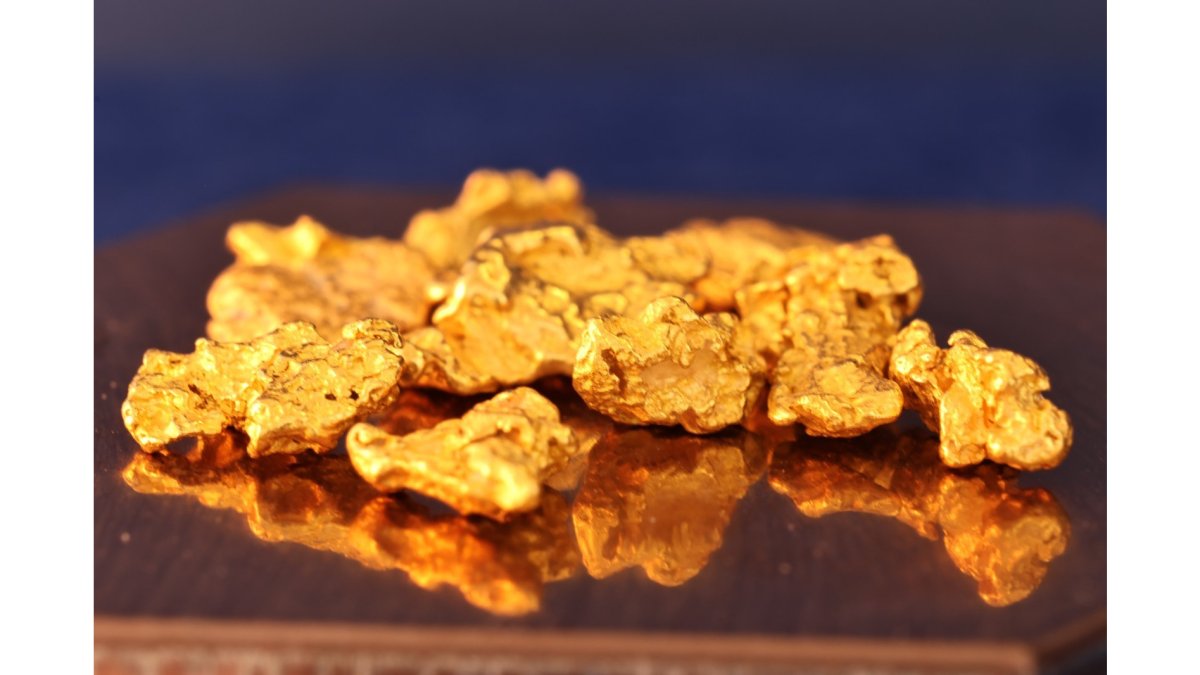
A natural gold nugget is pure or near-pure gold crystallised naturally within the earth, shaped by geological forces rather than human refinement.
Beyond aesthetics, collectors value natural gold nuggets for their connection to the earth, scarcity, and inflation resistance.
How to Identify a Natural Gold Nugget
Distinguishing genuine natural gold nuggets from treated specimens or imitations means combining visual inspection with weight and purity testing.

Visual characteristics and surface texture
A genuine natural gold nugget shows organic irregularities, natural cavities, ridges, and textures formed as it crystallised within quartz veins and rock.
Authentic specimens exhibit "natural character", a three-dimensional quality that catches light differently across the surface.
Fine striations, small pits, and crystalline patterns are hallmarks of authentic formation; artificially shaped or melted gold displays a smooth, uniform surface lacking these signatures.
Weight, purity testing, and authenticity markers
Weight alone cannot confirm authenticity, but a natural gold nugget should feel proportionally heavy for its size, gold's density is approximately 19.3 grams per cubic centimetre, denser than most metals.
Purity testing establishes value and authenticity. Assayers use the acid test (nitric acid on a small sample), X-ray fluorescence (non-destructive elemental measurement), and weight-to-volume calculations.
Documentation and provenance are critical authenticity markers. Reputable dealers provide records of origin, weight, estimated purity, and acquisition history, establishing the nugget's journey from discovery to collection.
Understanding Natural Gold Nugget Value
A nugget's value is a measurable metal value plus premiums that collectors, jewellers, and investors each weigh differently. Understanding how those layers stack separates a fair price from overpaying.
The metal value: weight, purity, and spot
Every valuation starts with the melt value (intrinsic or bullion value):
Melt value = weight (grams) × purity (as a decimal) × spot price per gram of fine gold
A 5-gram nugget at 95% purity holds roughly 4.75 grams of fine gold; at £60 per gram of fine gold, melt value is about £285, the floor, not the price.
Purity is rarely 100%: most specimens fall between 92% and 99% fine, with silver, copper, and trace minerals making up the balance. Two nuggets of identical weight can differ in metal value by several percent, so an assay or XRF reading matters more than a seller's adjective.
The premiums that sit on top
Above melt value, natural nuggets typically carry one or more premiums:
- Natural nugget premium, the uplift over refined bullion for the fact that the piece is a genuine, unrefined specimen. This is the core premium and applies to almost every natural nugget.
- Size premium, larger specimens attract a higher price per gram. Nuggets above roughly 5 grams tend to command noticeably more per gram than small fragments, because they are rarer and easier to set.
- Character premium, unusual shapes, crystalline formations, or distinctive surface topography add value beyond weight.
A well-documented, characterful nugget from a recognised goldfield can trade at a meaningful multiple of melt value, while an undocumented fragment may sell close to melt, the gap is almost entirely about evidence.
UK-specific factors buyers should know
Three UK rules shape what you pay and what you can later reclaim or offset:
- VAT, Investment gold (broadly, gold of at least 99.5% purity in certain forms) is zero-rated for VAT in the UK. Natural nuggets are not investment gold in that technical sense, so their treatment depends on how they are supplied and whether they are sold as collectibles or as jewellery. Jewellery is standard-rated. Always confirm the VAT position in writing before purchase.
- Capital gains tax, Gold coins that are legal tender (such as certain sovereigns and Britannias) are exempt from CGT. Natural nuggets are not legal tender, so any gain on disposal is generally within the scope of CGT, subject to your annual exempt amount and personal circumstances. Keep purchase records.
- Hallmarking, If a nugget is set into a piece of jewellery, the precious metal parts (the mount, chain, or band) must be hallmarked by an assay office if they exceed the legal weight thresholds. The nugget itself is not hallmarked, because it is not a manufactured precious metal article. A missing hallmark on the mount is a red flag.
How to sanity-check a quoted price
A three-step check works for most listings:
- Confirm the weight on a calibrated scale, or ask for a recent weight certificate.
- Confirm purity by assay or XRF, or accept a documented estimate with the caveat noted.
- Multiply weight × purity × current spot for melt value, then compare the asking price. The difference is the premium, judge whether provenance, character, and size justify it.
| Factor | How it affects value | Practical check |
|---|---|---|
| Weight and purity | Sets the melt-value floor | Request weight certificate and assay or XRF result |
| Geographic origin | Collector premium for recognised goldfields | Ask for origin documentation |
| Provenance records | Confidence and resale liquidity | Request full acquisition chain |
| Size and character | Higher price per gram for larger, distinctive pieces | Compare price per gram across listings |
| Setting and craftsmanship | Adds jewellery premium | Ask for a breakdown of nugget vs mount value |
Rarity, provenance, and collector demand
Collector demand turns a metal purchase into a collectible.
Specimens above roughly 5 grams, or with unusual crystalline shapes, are sought after as rarer and more displayable. A well-matched, documented multi-nugget lot can carry a presentation premium.
Value is melt value plus a premium you can see, question, and verify. Buyers who ask for the calculation, the assay, and the provenance get fair pricing.
Natural Gold Nuggets for Sale: What to Look For
Purchasing natural gold nuggets requires understanding sourcing practices, ethics, and the available options.
8.055g Natural Gold Nugget – The Boss – Premium Australian Specimen →
Sourcing, ethical considerations, and documentation
Responsible sourcing matters to collectors and investors who want their purchases to support ethical practices. Reputable dealers maintain transparent supply chains, documenting origin and recovery.
When evaluating natural gold nuggets for sale, request weight verification, purity assessment, and origin records.
Gold2u specialises in Australian natural gold nuggets with documented sourcing and complete assay information, including geological origin, weight verification, and estimated purity.
Specimen types and jewellery options
Natural gold nuggets come in distinct categories. Raw specimens, unaltered nuggets in their natural state, appeal to purists prioritising gold content and geological authenticity, retaining complete surface character as both collectibles and tangible assets.
Jewellery-grade nuggets are set into handcrafted pieces. Necklaces with natural nugget pendants showcase the organic form; bracelets use smaller nuggets as beads or focal elements; earrings and rings embed nuggets in precious metal settings that enhance their natural beauty.
Gold Nugget Jewellery Care and Maintenance
Natural gold nugget jewellery is not fragile, but it is irregular: the cavities, ridges, and asymmetric forms that make each piece distinctive also trap dirt and can loosen settings. Care is about preservation, not polishing.
Cleaning without damaging the specimen
Gold does not tarnish, but alloyed metals in a nugget (silver, copper, trace elements) can dull, and the mount or chain may be a different alloy.
A safe routine for most pieces:
- Use warm water with a drop of mild washing-up liquid.
- Agitate gently with a soft-bristled brush, such as a baby toothbrush, working along the natural contours rather than into deep cavities.
- Rinse under warm running water with the plug in, or over a bowl, so a loose nugget cannot escape down the drain.
What to avoid:
- Ultrasonic cleaners, the vibration can loosen settings and, on pieces with inclusions or fragile crystalline structures, can cause damage that is not repairable.
- Steam cleaners, the pressure and heat can drive moisture into cavities and behind settings.
- Abrasive polishes and cloths, these remove the natural patina and micro-texture that give a nugget its character. Once polished smooth, that surface is gone.
Storage that protects both nugget and setting
Storage is where most avoidable damage happens: loose pieces rub against each other, and clasps and prongs catch on neighbouring items.
- Store each piece individually in a soft pouch or a lined compartment.
- Keep pieces in a cool, dry place away from direct sunlight, which can fade some mount alloys and degrade elastic or cord elements.
- For high-value pieces, consider a home safe or a bank safe deposit box, and keep a separate photographic record for insurance.
Wearing natural nugget jewellery: practical trade-offs
A natural nugget is not a smooth cabochon; its irregular surface catches on knitwear, fine chain, and hair. A few habits extend its life:
- Put jewellery on last, after dressing and applying cosmetics or perfume.
- Remove it first at the end of the day.
- Take rings off before heavy manual work, gardening, or gym sessions.
Repair, restoration, and UK hallmarking
When a piece needs repair, a loosened setting, worn clasp, stretched chain, the work should preserve the nugget, not refinish it. Standard workshop practice often polishes the whole piece, removing the natural surface, so ask specifically that the nugget not be polished or buffed.
Two UK-specific points matter here:
- Hallmarking, if a repair involves replacing or altering a precious metal mount, chain, or band above the legal weight thresholds, the item may need to be re-hallmarked by an assay office. A reputable jeweller will handle this and return the piece with the correct marks.
- Insurance valuation, for pieces of significant value, an insurance valuation is separate from a purchase receipt. It should describe the nugget (weight, estimated purity, origin if documented) and the mount (metal, hallmark, stone content if any), and it should be updated periodically as gold prices move. Insurers typically want a professional valuation rather than a self-declared figure.
When to seek a specialist
Not every jeweller has handled natural specimens. For a complex setting, unusual shape, or documented provenance, find a craftsperson experienced in natural gold and bespoke settings.
Why Natural Gold Nuggets Make Sound Investments
Natural gold nuggets offer a distinctive asset class combining tangible value, scarcity, and historical performance, direct ownership of a finite natural resource with proven long-term appreciation.
Gold's inflation resistance is well demonstrated: over the past two decades, gold in pounds has delivered substantial returns, particularly during economic uncertainty, making natural gold nuggets effective portfolio diversification.
Scarcity enhances appeal. Each nugget is geologically unique and high-quality specimens are finite; as demand grows and pieces are held, remaining specimens appreciate.
Natural gold nuggets and jewellery represent a compelling intersection of geological rarity, aesthetic appeal, and investment potential. Explore our curated collection of Australian gold nuggets, including specimens like The Boss (8.055g at £2,899.57) and The Trader's Lot (5.311g at £1,407.41), and discover how natural gold nuggets can enhance both your collection and your portfolio.

Frequently Asked Questions
How much is a natural gold nugget worth?
A natural gold nugget's value depends on weight, purity, and rarity. A 5-gram nugget with 92-98% purity typically ranges from £1,200 to £1,400, whilst larger specimens like 8-gram pieces reach £2,800 or more. Market price fluctuates with gold prices; historically, gold in pounds has risen approximately 12.6% annually over the past 20 years. Collector demand and provenance can increase value beyond spot price.
How can you tell if a gold nugget is natural?
Authentic natural gold nuggets display irregular, organic surface textures with natural cavities and formations that cannot be replicated. Test weight using precision scales; natural nuggets feel dense and consistent. Check for documentation of origin (Australian sourcing is highly regarded) and purity certification. Artificially treated nuggets show uniform surfaces or signs of melting. Reputable dealers provide authenticity guarantees and detailed provenance records.
Can natural gold nuggets be used in jewellery?
Yes, natural gold nuggets are increasingly used in bespoke and handmade jewellery designs. They are incorporated into necklaces, bracelets, earrings, and rings, often set in precious metal mountings to preserve their natural texture. Jewellery-grade nuggets are selected for aesthetic appeal and durability.
What affects the value of a natural gold nugget?
Key factors include weight (measured in grams), purity level (typically 82-99%), origin (Australian and Western Australian nuggets command premium values), size consistency, and visual appeal. Rarity, historical provenance, and collector demand also influence pricing. Market gold prices in pounds affect baseline value; ethical sourcing and full documentation increase desirability. Larger, well-formed specimens with distinctive character typically command higher prices than smaller or common-looking pieces.


0 comments