

Table of Contents
- 1. Understand the Difference Between Antique, Vintage, and Estate Jewellery
- 2. Learn How to Identify Antique Jewellery Through Hallmarks and Maker's Marks
- 3. Know How to Date Antique Jewellery by Historical Era and Style
- 4. Assess Condition, Wear, and Repairs Before You Buy
- 5. Set a Realistic Budget and Understand Total Cost of Ownership
- 6. Find Reputable Dealers and Ask the Right Questions
- 7. Inspect Online Listings Carefully and Request Documentation
- 8. Verify Authentication and Seek Professional Assessment When Needed
- Frequently Asked Questions
Last Updated: October 18, 2026
1. Understand the Difference Between Antique, Vintage, and Estate Jewellery
When buying antique jewellery for beginners, know that these three categories are not interchangeable, yet many sellers use them loosely. Understanding these distinctions is critical before you spend a single pound.
Antique jewellery is defined as pieces at least 100 years old, so anything made before 1926 qualifies.
Vintage jewellery refers to pieces between 20 and 100 years old, typically from the 1920s to the mid-2000s.
Estate jewellery is a broader category encompassing any pre-owned jewellery, regardless of age. An estate piece could be 5 years old or 150 years old.
The distinction matters because buying antique jewellery for beginners means you're often paying for historical provenance and craftsmanship. Know which category you're actually purchasing, and you'll avoid overpaying for something marketed as older than it actually is.
2. Learn How to Identify Antique Jewellery Through Hallmarks and Maker's Marks
(/products/vintage-18ct-gold-diamond-cluster-ring-1-8ct-total-emerald-cut-brilliant), 950 for platinum)- The assay office mark (the town where it was tested)
- The date letter (a letter that changes yearly, indicating when the piece was hallmarked)
- The maker's mark (the jeweller's or manufacturer's initials)
Maker's marks are the jeweller's personal or company stamp, identifying who created the piece. Some are recognizable to specialists; others require research. A maker's mark doesn't guarantee authenticity alone, but combined with other hallmarks and construction, it provides crucial provenance information.
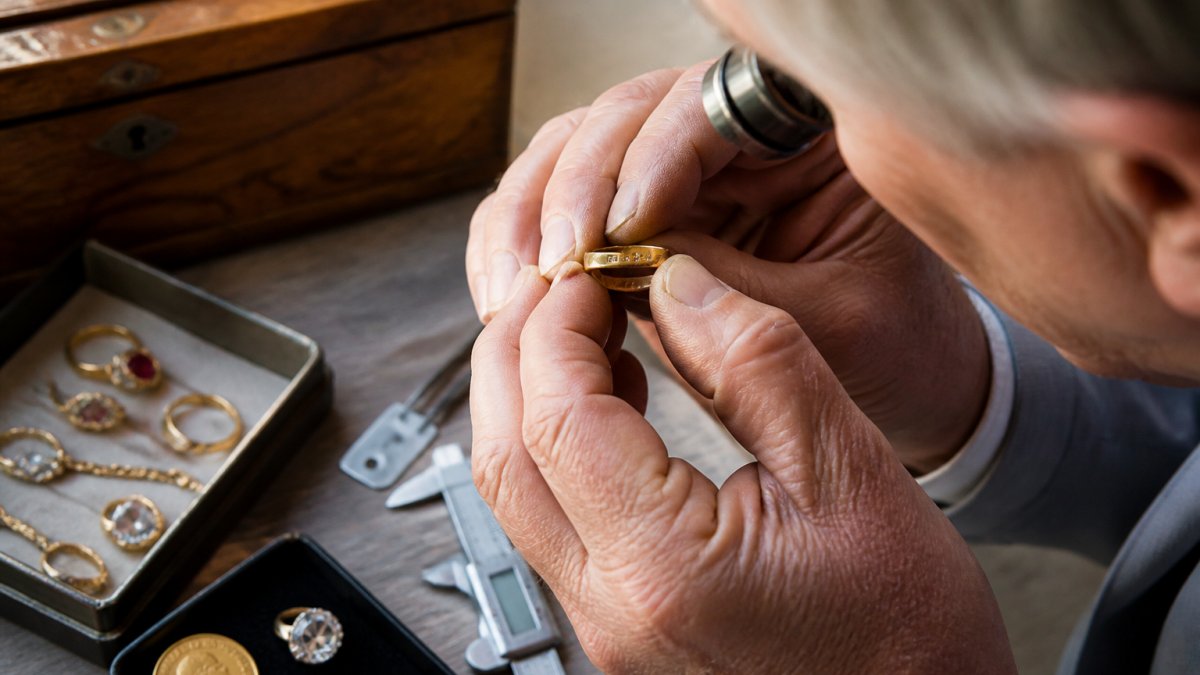
When examining hallmarks, use a jeweller's loupe (at least 10x magnification). Look inside rings, on bracelet clasps, or hidden spots on pendants.
3. Know How to Date Antique Jewellery by Historical Era and Style
Dating antique jewellery by historical era and style is how experienced collectors quickly assess whether a piece is genuine and fairly priced. Each era has distinctive design elements, construction methods, and metal choices.
Victorian Era (1837-1901) produced romantic, ornate designs. Jewellery featured intricate filigree, heavy gold, and dark stones (jet, onyx, garnet). Construction was entirely by hand.
Edwardian Era (1901-1915) shifted toward delicate, lacy designs. The 6.5 Carat Edwardian Platinum Graduated Old Cut Diamond Bracelet at Gold2u exemplifies this era, with hand-pierced filigree galleries and individually riveted articulated links that showcase true Edwardian bench work.

Art Deco (1920-1935) introduced geometric patterns, bold colours, and simplified designs, with rubies, sapphires, and emeralds alongside diamonds. Art Nouveau (1890-1910) featured nature-inspired motifs, flowing lines, insects, flowers, and mythological themes, valuing artistic expression over symmetry.
Understanding these eras helps you spot fakes: a piece claiming to be Victorian but featuring Art Deco geometry is either misdated or misrepresented.
4. Assess Condition, Wear, and Repairs Before You Buy
Condition directly impacts both wearability and resale value. When buying antique jewellery for beginners, learning to assess condition separates smart purchases from costly mistakes.
Expected wear on antique jewellery is normal and acceptable. Light surface scratches on gold, slight dulling of polish, and minor dings tell the story of a piece's age and actually add character.
Structural concerns require closer inspection. Check that:
- All stones are secure and not loose in their settings
- Prongs holding gemstones aren't bent or damaged
- Clasps function smoothly (for bracelets and necklaces)
- No cracks run through the metal or any stones
- Hinges on lockets or boxes open and close properly
Previous repairs are common and aren't automatically negative, but poor repairs reduce value. Look for sloppy soldering, mismatched metal, or misaligned settings. Ask the dealer specifically about any repairs: when were they done, by whom, and what was repaired?
Resizing and re-polishing are frequent interventions on rings. A resized ring loses some original weight and historical integrity; re-polishing removes patina and surface finish. These aren't disqualifying, but they should be reflected in pricing, a virgin, never-altered piece commands a premium.
5. Set a Realistic Budget and Understand Total Cost of Ownership
Setting a budget for buying antique jewellery for beginners requires understanding not just the purchase price but the full cost of ownership. Many first-time buyers overlook ongoing expenses.
Purchase pricing varies dramatically by era, materials, and condition. At Gold2u, our Victorian-Era Old Cut Diamond Three Stone Ring is priced at £3,500, reflecting its hand-cut diamond quality and mid-century vintage status.

Insurance costs are essential. Antique jewellery should be insured for its replacement value, not just its purchase price. Annual insurance typically runs 1-2% of the piece's appraised value. A £3,500 ring costs roughly £35-70 per year to insure.
6.5 Carat Edwardian Platinum Graduated Old Cut Diamond Bracelet →
Total cost of ownership over five years for a £3,500 piece could easily reach £4,000-4,500 when insurance, maintenance, and potential repairs are factored in. Budget accordingly before committing to a purchase.
6. Find Reputable Dealers and Ask the Right Questions
Where you buy matters as much as what you buy. Finding reputable dealers when buying antique jewellery for beginners is your primary defence against fraud and overpricing.
Dealer reputation indicators include:
- Membership in professional organizations (British Antique Dealers' Association, Gemmological Association of Great Britain)
- Detailed product descriptions with era, materials, and condition clearly stated
- Professional photography showing pieces from multiple angles and in natural light
- Transparent pricing with no hidden fees
- Clear return or authentication guarantee policies
- Physical showroom or verifiable business history
Questions to ask any dealer:
- "Can you provide documentation of this piece's age and provenance?" Legitimate dealers can explain their dating methodology.
- "Has this piece been professionally authenticated?" Reputable dealers often have pieces tested by gemmologists.
- "What is your return or guarantee policy if the piece doesn't match the description?"
- "Are the hallmarks original or have they been re-struck?" Re-struck marks reduce authenticity and value.
- "What repairs or resizing has this piece undergone?"
- "Do you provide certificates or documentation with purchase?"
Gold2u provides detailed product descriptions, professional GIA diamond testing, and documentation with purchases. Our pieces are tested in natural sunlight and filmed so you see true brilliance.
7. Inspect Online Listings Carefully and Request Documentation
Online buying of antique jewellery introduces new risks. You can't physically examine the piece before committing funds. Protecting yourself requires meticulous attention to listings and proactive documentation requests.
Photograph quality matters enormously. High-quality listings include multiple angles, natural lighting showing true colour and brilliance, detail shots of wear and repairs, close-ups of hallmarks, and video footage in natural sunlight.
Request specific documentation before purchasing:
- Professional photographs of hallmarks (with magnification if possible)
- Written description of condition, including any repairs or alterations
- Gemmological certificate or appraisal if the piece includes significant gemstones
- Certificate of authenticity if claimed
- Return policy in writing, specifying timeframe and condition for returns
Video inspection calls are increasingly common for high-value pieces. Request a live video under natural light so you can examine the piece closely and ask questions in real time. Payment security matters too: use credit cards or secure methods offering buyer protection, and never wire funds directly without recourse.
When buying antique jewellery for beginners online, documentation is your insurance policy. The more a dealer provides upfront, the more confident you can be in the purchase.
8. Verify Authentication and Seek Professional Assessment When Needed
Authentication is the final checkpoint before committing significant funds to antique jewellery. Even experienced collectors sometimes seek professional verification for high-value pieces.
DIY authentication checks include:
- Hallmark verification against official UK assay office records (available online for most pieces)
- Visual inspection of construction methods (hand-fabricated pieces show telltale signs of bench work)
- Gemstone testing with a diamond tester (real diamonds conduct heat differently than simulants)
- Weight assessment (a piece that feels too light or too heavy may be misrepresented)
- Magnetic testing (if a piece claiming to be solid gold is magnetic, something is wrong)
When professional assessment is essential:
- Pieces valued over £2,000
- Significant gemstones where quality directly impacts price
- Pieces with unclear provenance or conflicting information
- Rare or unusual pieces where expertise is genuinely needed
- Insurance or investment purposes
Professional gemmologists and jewellery appraisers provide written reports detailing metal composition and purity, gemstone quality and treatments, estimated age and era, condition, and fair market value. Gold2u tests significant pieces on professional GIA diamond testers and films them in natural sunlight so you see authentic brilliance. Our 3 Carat Old Cut Diamond Ring includes an AnchorCert, providing documented authentication.

Buying antique jewellery for beginners doesn't require expert knowledge, but it does require diligence. Understanding how to identify genuine pieces, assess condition, and find trustworthy dealers transforms you from a vulnerable buyer into an informed collector. Gold2u specializes in authenticated antique old mine cut diamond jewellery and rare historical pieces, each tested professionally and documented thoroughly.
Frequently Asked Questions
How can I tell if antique jewellery is authentic?
Authentic antique jewellery typically bears hallmarks indicating metal purity and maker's marks. Examine the craftsmanship closely, genuine pieces show hand-finishing, uneven patina, and signs of age-appropriate wear. Old mine cut diamonds have distinctive chunky facets and soft fire that modern cuts cannot replicate. Request certification from a qualified gemmologist and ask the seller for provenance documentation. Be cautious of pieces that look too perfect or unmarked; genuine antiques usually show evidence of their history.
What should I look for when buying vintage jewellery for the first time?
Start by understanding the historical era and style, Victorian, Edwardian, Art Deco, and mid-century pieces have distinct characteristics. Inspect the condition carefully: check for secure stones, intact clasps, and any repairs or resizing. Verify the metal type and purity through hallmarks. Ask the dealer detailed questions about provenance, previous ownership, and any restoration work. Buy from reputable dealers who offer documentation and authentication. Consider your budget not just for purchase but for future maintenance, cleaning, and potential repairs.
What questions should you ask an antique jewellery seller?
Ask about the piece's age, origin, and historical context. Request information on previous ownership and provenance. Inquire whether stones have been tested or certified by an independent gemmologist. Ask about any repairs, resizing, or re-polishing the piece has undergone. Find out if the seller offers a return guarantee or authentication warranty. Request documentation, certificates, or photographs showing hallmarks and condition. Ask about the seller's expertise and how long they have been trading. Understand their policy on future authentication disputes or concerns.
How do I know if an antique piece has been repaired or restored?
Signs of repair include solder lines (visible seams where metal has been joined), inconsistent patina, or mismatched metal colours. Resizing often leaves marks on the band or shank. Re-polishing removes the natural patina and can obscure hallmarks. Inspect the back and interior carefully with a jeweller's loupe. Ask the seller directly about any work performed. Professional restoration can be acceptable if disclosed, but undisclosed repairs reduce value and authenticity. A qualified gemmologist can identify repairs during inspection.
What is the total cost of owning antique jewellery beyond the purchase price?
Budget for professional cleaning, which typically costs £30-£100 depending on complexity. Insurance premiums usually run 1-2% of the piece's value annually. Repairs, replacing clasps, tightening stones, or fixing settings, can range from £50 to several hundred pounds. Periodic professional inspections (every 2-3 years) cost £20-£50. Resizing or adjustments add £40-£150. Storage solutions to prevent damage cost £10-£50. Authentication or appraisal services for insurance purposes run £75-£200. Factor these ongoing costs into your budget when selecting pieces.


0 comments