

Table of Contents
- What Are Natural Gold Nuggets and Synthetic Gold?
- How Natural and Synthetic Gold Are Produced
- Chemical Composition: Are They Identical?
- How to Identify Fake Gold and Distinguish Natural Specimens
- Natural Gold Nugget Value and Market Assessment
- Gold Nugget Authenticity: Certification and Provenance
- Buying Natural Gold Nuggets: What Collectors Should Know
- Natural Gold Nuggets vs Synthetic Gold: Quick Comparison
- Frequently Asked Questions
Last Updated: October 18, 2026
What Are Natural Gold Nuggets and Synthetic Gold?
Natural gold nuggets vs synthetic gold is a critical distinction for collectors and investors seeking authentic precious metal assets.
Natural gold nuggets defined
A natural gold nugget is elemental gold formed over millions of years through geological processes, typically found in alluvial deposits or quartz veins.
Natural gold nuggets have never been melted, refined, or artificially altered. Purity typically ranges from 92 to 99%, depending on the deposit, with all surface cavities, textures, and mineral inclusions preserved intact.
Collectors prize natural gold nuggets for their geological rarity, historical significance, and tangible connection to the earth's natural wealth. At Gold2u, we source Australian natural gold nuggets because Australia is one of the world's most respected gold-producing regions.
What synthetic or lab-grown gold means
Synthetic gold, also called lab-grown gold, is elemental gold (Au) created through laboratory methods rather than mined. Its chemical composition is indistinguishable from natural gold, both are pure metallic gold at the atomic level. The difference lies entirely in origin and production method.
Lab-grown gold is produced through electrolysis, chemical precipitation, or other controlled processes that accelerate gold crystal formation. These methods yield crystalline gold, gold flakes, or refined bullion in hours or days, not millions of years.
Synthetic gold is chemically identical to natural gold but lacks the geological history, natural formation process, and collector value natural specimens command, a difference that matters significantly to investors seeking assets with historical provenance.
How Natural and Synthetic Gold Are Produced
Natural gold formation and mining
Natural gold nuggets form over vast timescales. Gold originates deep within the earth's crust, typically in quartz veins or as dispersed particles.
The most common method is placer mining, extracting gold from alluvial deposits using gravity separation and water.
Hard rock mining extracts gold from solid quartz veins, typically producing ore that must be crushed and refined. Nuggets large enough to be separated before processing can still be recovered intact, the rarest and most valuable specimens.
Australian natural gold nuggets are particularly prized because the region's geology has produced some of the world's largest specimens.
Laboratory production methods
Synthetic gold is produced through controlled chemical and electrical processes without mining. The most common method is electrochemistry: passing an electric current through a gold salt solution to deposit metallic gold onto a cathode.
Chemical precipitation adds a reducing agent to a gold salt solution, causing gold to precipitate as a solid, used in laboratories and some industrial applications. The gold can be formed into crystals, flakes, or ingots.
The key advantage of synthetic production is control: laboratories produce gold to exact purity, weight, and form specifications within hours, with no geological waiting, yield uncertainty, or mining disruption. The cost is the historical and geological significance natural specimens possess.
Chemical Composition: Are They Identical?
Natural gold nuggets and synthetic gold are chemically indistinguishable at the atomic level, both are elemental gold (Au, atomic number 79) with identical density, melting point, conductivity, malleability, and corrosion resistance.
An assay, the standard purity test, cannot distinguish natural from synthetic gold because it measures only the percentage of pure gold.
Natural gold nuggets often contain trace mineral inclusions and alloys, silver, copper, or iron compounds, formed during geological development.
The metallic properties are identical, but the origin story is not. If your goal is pure elemental gold as a store of value, synthetic and natural gold serve the same purpose.
:::pro-tip An assay test will confirm gold purity but cannot reveal whether gold is natural or synthetic. For collectors, provenance documentation and visual inspection of surface characteristics are the only reliable ways to verify authenticity.
How to Identify Fake Gold and Distinguish Natural Specimens
Visual inspection and surface characteristics
The first step in authenticating natural gold nuggets is careful visual examination. Natural gold displays distinctive surface features that synthetic gold or imitations cannot replicate:
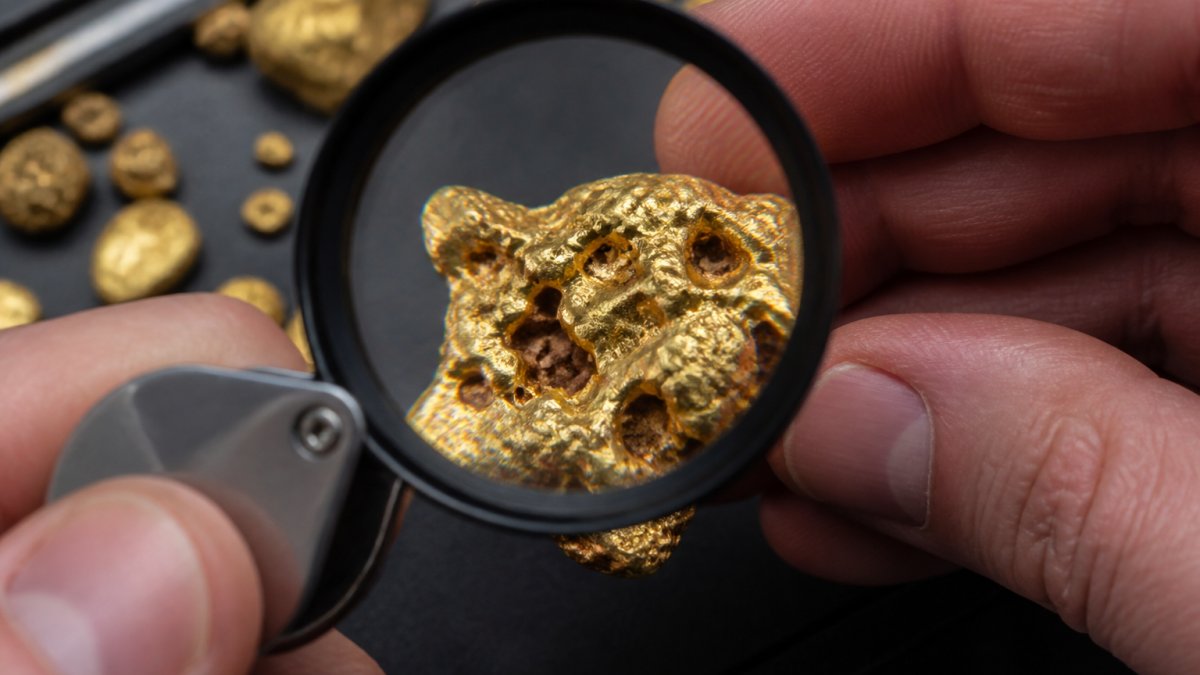
Surface texture and cavities: Natural gold nuggets show irregular, organic patterns with pits, cavities, and ridges formed over millions of years. These features are random and asymmetrical, never uniform or repetitive.
Colour consistency: Pure natural gold displays a warm, consistent yellow across the entire surface. Colour variation, dull patches, or discolouration suggest lower purity, oxidation, or imitation material.
Weight and density: Natural gold is extremely dense, so a genuine nugget feels surprisingly heavy for its size. Fool's gold (pyrite) and imitations are noticeably lighter, a simple hand-weight test eliminates obvious counterfeits.
Malleability: A tiny scratch test on an inconspicuous area shows gold's characteristic softness, real gold scratches easily and shows a bright yellow mark, while fool's gold is brittle and will not scratch cleanly.
Testing methods and authentication
Professional authentication goes beyond visual inspection with these definitive methods:
Acid testing: A small sample is exposed to nitric acid. Real gold does not react, while most imitations and base metals dissolve or change colour. Destructive but conclusive.
Density testing: Precise weight and volume measurements allow density calculation. Gold's density is 19.3 g/cm³; any significant deviation indicates the specimen is not pure or not genuine.
X-ray fluorescence (XRF): This non-destructive method bombards the specimen with X-rays and measures the fluorescent radiation emitted, revealing elemental composition without damage.
8.055g Natural Gold Nugget – The Boss – Premium Australian Specimen →
Magnet testing: Real gold is non-magnetic.
Certification and documentation: Reputable sellers provide certificates of authenticity including assay results, weight, estimated purity, origin, and photographic documentation. Always request this documentation.
The most reliable approach combines multiple methods. Professional dealers use XRF as standard because it is non-destructive, accurate, and leaves the specimen undamaged for resale or collection.
Natural Gold Nugget Value and Market Assessment
Natural gold nugget value is determined by several factors beyond weight in gold:
Spot gold price: The base value is weight multiplied by the current spot price, providing a floor value if melted down. Natural nuggets almost always command a premium above spot due to collector demand.
Rarity and size: Larger nuggets are exponentially rarer, a 5-gram nugget is significantly rarer than five 1-gram nuggets. Specimens over 10 grams are exceptional and command substantial collector premiums.
Geological character: Nuggets with distinctive shapes, exceptional surface texture, or unusual features are more valuable.
Provenance and documentation: Specimens with clear documentation of origin, ownership, and authentication history are more valuable, especially historically significant nuggets or those from renowned deposits.
Market demand: Collector interest fluctuates with economic conditions, investment trends, and media attention. During economic uncertainty, demand for tangible precious metals typically increases, supporting higher valuations.
A natural gold nugget's value is rarely just weight times spot price.
Gold Nugget Authenticity: Certification and Provenance
Certification and provenance documentation are the foundation of confidence when purchasing natural gold nuggets, verifying authenticity, establishing value, supporting insurance claims, and facilitating resale.
Assay reports: An independent assay provides definitive proof of purity.
Seller reputation: Buy only from established dealers with verifiable track records, transparent authentication, and professional certifications. Gold2u's commitment to authenticated specimens with full provenance documentation.
Storage and insurance: Insurers require documented proof of value and authenticity before covering valuable specimens. Professional documentation protects your investment and provides recourse if damage or loss occurs.
Buying Natural Gold Nuggets: What Collectors Should Know
Purchasing natural gold nuggets requires understanding the market, knowing what to look for, and making informed decisions about value and authenticity.
Start with education: Before committing significant funds, learn to recognize quality specimens, understand pricing, and familiarize yourself with authentication methods.
Budget considerations: Natural gold nuggets span a wide price range. Beginners can start small, Gold2u's 0.2043g Natural Australian Gold Nugget at £105.50 provides authentic exposure without significant capital commitment, ideal for building knowledge gradually.
Mid-range specimens: For experienced collectors, 4-5 gram specimens offer better value per gram and stronger visual presence. Gold2u's 4.407g Natural Gold Nuggets collection at £1,167.86 and 4.632g Natural Gold Nuggets collection at £1,227.48 offer strong geological character and authentic Australian provenance.

Premium specimens: Serious collectors should consider larger, more distinctive nuggets. Gold2u's 5.311g Natural Gold Nuggets - The Trader's Lot at £1,407.41 and 8.055g Natural Gold Nugget - The Boss at £2,899.57 represent exceptional specimens with significant presence and collector appeal.


Liquidity and resale: Natural gold nuggets are liquid assets, but resale value depends on market conditions, specimen quality, and buyer availability.
Authentication before purchase: Always request full authentication documentation, assay results, and provenance before completing a purchase. Do not accept verbal assurances or vague claims.
Natural Gold Nuggets vs Synthetic Gold: Quick Comparison
| Characteristic | Natural Gold Nuggets | Synthetic Gold |
|---|---|---|
| Origin | Geological formation over millions of years | Laboratory production in hours or days |
| Chemical Composition | Elemental gold (Au) with natural trace inclusions | Pure elemental gold (Au) |
| Purity | Typically 92-99%, varies by deposit | Can be 99.9%+ with precise control |
| Appearance | Unique, irregular form with natural surface texture | Uniform, controlled appearance |
| Collector Value | Significant premium above spot price | Minimal premium above spot price |
| Provenance | Geological history and authenticity documented | Production method documented but no geological significance |
| Resale Market | Established collector demand, strong liquidity | Limited collector interest, commodity pricing |
| Authentication | Visual inspection, assay, XRF analysis confirm origin | Assay confirms purity but cannot distinguish from natural |
| Investment Appeal | Tangible asset with collector premium potential | Pure metal value only, subject to spot price fluctuations |
| Best For | Collectors seeking rare specimens, diversified portfolios | Investors focused purely on metal weight and purity |
For collectors and investors seeking authentic, rare precious metal assets with genuine geological provenance, natural gold nuggets represent a fundamentally different proposition than synthetic gold. The chemical identity may be the same, but value, authenticity, and collector appeal diverge significantly.
At Gold2u, we specialise in sourcing authenticated natural gold nuggets from Australia's premier deposits. Our specimens come with full provenance documentation. Whether you're beginning with an entry-level specimen or acquiring a flagship piece, our curated selection ensures genuine, authenticated natural gold with enduring value and historical significance.
Frequently Asked Questions
What is the difference between a natural gold nugget and synthetic gold?
Natural gold nuggets form over millions of years through geological processes in the earth, developing unique shapes, cavities, and surface textures. Synthetic or lab-grown gold is produced in laboratories using chemical or physical processes that create elemental gold chemically identical to natural gold. The key difference lies in origin and formation time, not chemical composition. Natural nuggets are prized by collectors for their uniqueness and geological significance, while synthetic gold is typically used for industrial or jewellery applications where purity and consistency matter more than natural character.
How can you tell if a gold nugget is natural or artificial?
Natural gold nuggets display distinctive surface characteristics: irregular shapes, natural cavities, oxidised surfaces with colour variation, and mineral inclusions from their geological formation. Artificial or imitation nuggets often show uniform texture, smooth surfaces, or signs of casting or moulding. Authentic natural nuggets can be tested using density measurements, acid testing, or professional assay. Reputable sellers provide documentation of origin and purity.
Are natural gold nuggets worth more than refined gold?
Natural gold nuggets often command premium prices above spot gold price due to their collector value, rarity, and unique geological character. However, value depends on size, purity, condition, and collector demand. Refined bullion offers price stability tied directly to daily market rates, while nugget value fluctuates based on collector interest and scarcity. For investors seeking tangible assets, natural nuggets combine the security of physical gold with the appreciation potential of rare collectibles.
What certifications or documentation should I look for when buying natural gold nuggets?
When buying natural gold nuggets, seek sellers who provide weight verification, estimated purity range (typically 92-99% for authentic specimens), origin documentation, and photographs of the specific piece you're purchasing. Reputable dealers like Gold2u offer detailed product descriptions and provenance information.
Can gold be made synthetically, and is it chemically identical to natural gold?
Yes, gold can be synthesised in laboratories through chemical processes that create pure elemental gold (Au) chemically identical to natural gold. Synthetic gold is produced using methods such as chemical vapour deposition or electroplating, creating material with identical atomic structure and properties to naturally occurring gold. The distinction is purely one of origin and production method, not chemical composition. Both natural and synthetic gold have the same density, conductivity, malleability, and luster. However, synthetic gold lacks the geological history and unique physical character of natural nuggets, which is why collectors value natural specimens despite their chemical equivalence.


0 comments