

Table of Contents
- What Determines the Value of Natural Gold Nuggets
- Gold Nugget Purity and Its Impact on Price
- Calculating Price Per Gram and Per Ounce
- How to Identify a Real Gold Nugget
- Collector Premiums: When Natural Gold Nuggets Exceed Melt Value
- Selling Natural Gold Nuggets: Options and Realistic Offers
- Current Market Pricing and Investment Outlook
- Frequently Asked Questions
Last Updated: October 11, 2026
What Determines the Value of Natural Gold Nuggets
Understanding what natural gold nuggets worth depends on far more than just the weight of gold inside. Many collectors and investors assume that a nugget's worth tracks directly with current spot price, a straightforward calculation of grams multiplied by the daily rate. That's only half the story.
A natural gold nugget's price reflects three distinct layers: its melt value (the raw gold content), its specimen quality (rarity, shape, visual appeal), and collector premiums (provenance, locality, historical significance). The melt value sets a floor. Everything above that floor is premium, and premiums can be substantial.
According to World Gold Council research on precious metals, gold has maintained its purchasing power across decades, making it a preferred store of value. For natural nuggets specifically, the interplay between these three layers determines whether you're looking at a straightforward bullion-equivalent piece or a rare collector's treasure.
A 6-gram piece might sell for £1,450 or £3,000 depending entirely on shape, surface character, and provenance. The difference isn't arbitrary, it reflects genuine collector demand for specific attributes.

Gold Nugget Purity and Its Impact on Price
Purity is the percentage of pure gold within the nugget. Natural Australian nuggets typically range between 92% and 99% pure gold, with most specimens falling in the 92-98% band. This matters because it determines melt value, but it also signals something about the nugget's origin and geological history.
Higher purity doesn't always mean higher price. A 95% pure nugget with exceptional shape and surface character often sells for more than a 99% pure nugget that looks like a generic lump. Collectors value the whole package, not just the assay result.
Purity is expressed in several ways. Fineness describes it as parts per thousand (e.g., 950 fineness = 95% pure). Karat is used less often for natural nuggets but appears in some contexts (24 karat = 100% pure, though natural nuggets never reach this). Most dealers and collectors in this market use percentage or fineness.
The purity of a natural nugget reflects where and how it formed. Nuggets from alluvial deposits (surface or shallow placer mining) often show lower purity because they've been exposed to weathering and mineral inclusions. Deep nuggets from primary deposits tend toward higher purity. Neither is inherently "better", each tells a different geological story, and collectors value both narratives.
When calculating melt value, purity is essential. A 5-gram nugget at 95% purity contains approximately 4.75 grams of pure gold. At current rates, that's your baseline value. Everything else, shape, rarity, provenance, adds to that foundation.
Calculating Price Per Gram and Per Ounce
Understanding price per unit is essential for comparing nuggets and spotting fair value. The gold market operates in two primary units: grams and troy ounces. One troy ounce equals approximately 31.1 grams, different from the avoirdupois ounce used for everyday weights.
To calculate melt value:
- Determine the nugget's weight in grams
- Multiply by its purity (as a decimal; 95% = 0.95)
- Multiply by the current gold spot price per gram
Example calculation: A 6.6-gram nugget at 95% purity, with gold at £60 per gram (approximate current rate), has a melt value of: 6.6 × 0.95 × £60 = £376.20.
The spot price fluctuates daily. London Bullion Market Association daily fixing provides the official reference rate used across the industry. Many dealers use this as their baseline, then add their margin.
Price per ounce is useful for comparing larger quantities or understanding broader market trends. At roughly £60 per gram, that translates to approximately £1,860 per troy ounce, though this varies with market conditions. When you see headlines about gold prices, they're typically quoting the per-ounce figure.
A common mistake is confusing troy ounces with standard ounces. If a dealer quotes "£1,800 per ounce," clarify whether they mean troy ounces (standard in gold markets) or avoirdupois ounces (everyday measurement). The difference is significant.
| Unit | Weight in Grams | Common Use |
|---|---|---|
| Troy ounce | 31.1g | Gold trading, official spot price |
| Gram | 1g | Natural nuggets, small pieces |
| Kilogram | 1,000g | Large bullion quantities |
How to Identify a Real Gold Nugget
Authenticity matters enormously. The market for natural nuggets has attracted some counterfeiters, and distinguishing genuine nuggets from treated or artificially enhanced pieces requires knowledge.
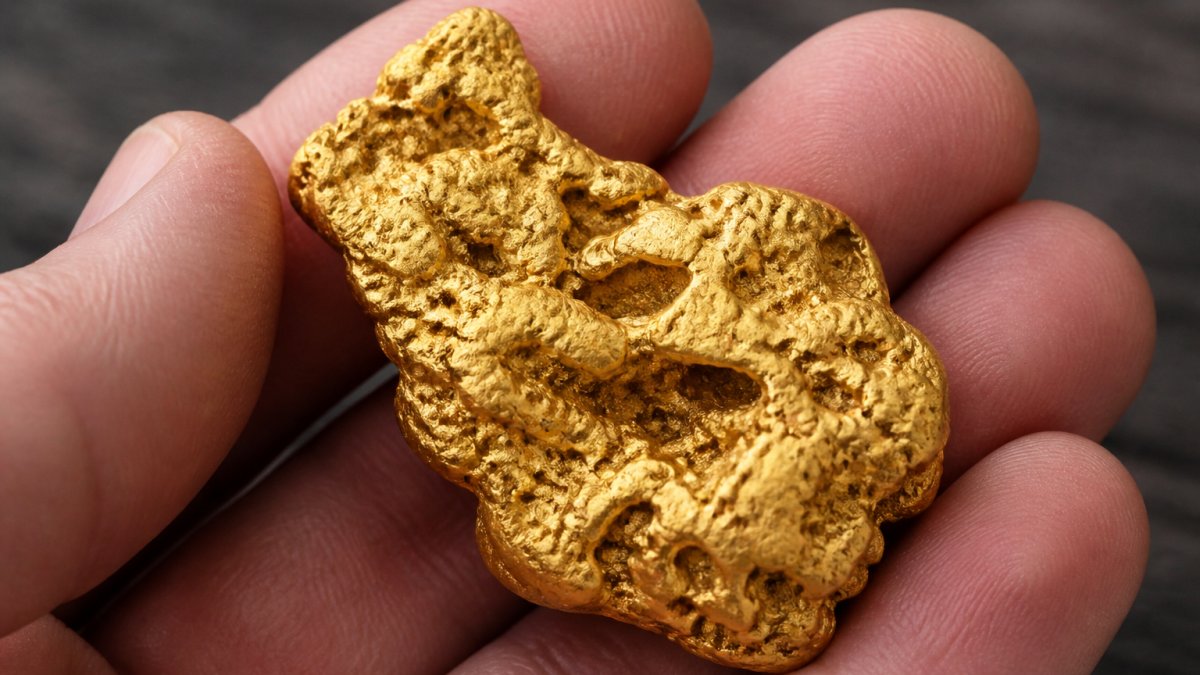
A genuine natural gold nugget displays specific characteristics. The surface should show irregular texture, natural formations create unique patterns of cavities, ridges, and organic contours that manufactured pieces cannot replicate convincingly. The colour should be consistent golden yellow, not artificially bright or painted. Real nuggets have weight that feels proportionate to their size; gold is dense, so a 5-gram nugget is surprisingly heavy for its volume.
Examine the surface under magnification. Natural nuggets often show mineral inclusions, tiny flecks of quartz, iron oxide, or other minerals embedded in the gold. These are signs of authenticity. Artificially enhanced nuggets sometimes have a suspiciously uniform surface or visible seams from casting or bonding.
Ask for documentation. Reputable dealers like Gold2u provide detailed records of origin, weight, estimated purity, and in some cases, photographic provenance showing the nugget's journey from discovery to sale. This documentation is a strong authenticity signal.
Avoid nuggets with suspiciously perfect shapes or unusually high purity claims without assay documentation. Natural formation produces variation; perfection suggests human intervention.
Collector Premiums: When Natural Gold Nuggets Exceed Melt Value
This is where natural gold nuggets diverge from bullion. A piece of cast gold bar is worth its melt value, period. A natural nugget often commands a premium, sometimes 50%, sometimes 200% above melt value.
Collector premiums exist because natural gold nuggets worth reflects their status as geological rarities. Each one is unique. They cannot be manufactured, only discovered. Collectors value this scarcity, the narrative of formation, and the aesthetic qualities that distinguish one nugget from another.
Rarity and scarcity drive premiums. Nuggets over 10 grams are uncommon. Pieces over 50 grams are genuinely rare. The larger and more unusual the nugget, the higher the collector premium typically rises.
6.6 Gram Natural Australian Gold Nugget →
Specimen quality matters significantly. A nugget with outstanding visual appeal, interesting shape, beautiful surface texture, rich colour, attracts premium prices. Collectors display these pieces, so aesthetics are not secondary; they're central to value.
Locality and provenance add premiums. Nuggets from famous gold regions (Australian sources, for instance) carry historical weight. A nugget with documented provenance, "discovered in Victoria, 1995", sells for more than an identical nugget with unknown origin. The story adds value.
Gem or specimen quality is a subjective but real factor. Some nuggets are so visually striking that they transcend commodity status and become collectible art objects. These command the highest premiums.
The Gold2u collection includes pieces like the 8.055-gram "Boss" specimen priced at £2,899.57, significantly above its melt value. This premium reflects the nugget's specimen quality, documented Australian origin, and rarity. Buyers are paying for uniqueness, not just gold content.

Selling Natural Gold Nuggets: Options and Realistic Offers
When you own a natural nugget and decide to sell, your options and realistic offers depend on the piece's characteristics and your priorities.
Selling to dealers is the fastest route. Dealers like Gold2u buy natural nuggets regularly and offer immediate payment. The trade-off: dealers pay below retail value because they need margin to resell. Expect offers at melt value plus 10-25% premium, depending on the piece's quality and rarity. A highly desirable specimen might command 40-50% above melt; a common piece might get only melt value plus 5%.
Auction houses can fetch higher prices, especially for rare or historically significant pieces. Auction houses market to collectors willing to pay premiums. The cost: auction fees typically run 10-15% of the hammer price, and the process takes weeks or months. Auction is best for pieces you believe are genuinely rare or have compelling provenance.
Private collectors sometimes offer the best prices if you connect with the right buyer. Online forums, collector groups, and specialist networks can link you to serious collectors. This route requires patience and marketing effort but can bypass dealer margins entirely.
Melt-down refining is a last resort. Some refineries will melt your nugget and pay you for pure gold content minus refining fees (typically 2-3%). This destroys the piece's uniqueness and collector value, so it's only sensible for damaged or low-quality nuggets.
Realistic offers vary widely. A 5-gram nugget at 95% purity with decent specimen quality might attract offers ranging from £800 (pure melt value) to £1,400 (with collector premium). The spread reflects buyer perception of rarity and desirability.
Current Market Pricing and Investment Outlook
Gold prices in pounds have shown significant appreciation over recent years.
Recent performance has been particularly strong. In 2025, gold rose approximately 52.9% in pounds, reflecting broader economic and geopolitical factors that drive precious metal demand.
Current market pricing for natural nuggets reflects this gold price backdrop plus the collector premiums discussed above. A 5.6-gram Australian nugget at Gold2u is priced at £1,484, representing both its gold content value and its specimen premium. The 6.6-gram piece sits at £1,450.

For investors, natural nuggets offer several advantages over bullion bars. They're tangible assets with intrinsic value that cannot be digitally erased or easily counterfeited. They're aesthetically appealing, which broadens their appeal beyond pure investors to collectors.
The investment outlook for gold remains positive, supported by inflation concerns, currency fluctuations, and demand from central banks and private collectors.
Bank of England guidance on precious metals as alternative assets acknowledges the role of precious metals in diversified portfolios, though individual investors should assess their own risk tolerance and investment objectives.
Understanding what natural gold nuggets are worth requires looking beyond a simple spot price calculation. Melt value provides the floor; purity, weight, and specimen quality determine where the piece sits above that floor. Collector premiums reflect genuine scarcity and aesthetic value that justifies prices well above commodity levels.
At Gold2u, we specialise in sourcing and authenticating natural Australian nuggets that combine geological rarity with investment merit. Our collection includes pieces across a range of weights and price points, each with documented provenance and estimated purity.
Frequently Asked Questions
How much do natural gold nuggets typically cost?
Prices vary significantly based on weight, purity, and collector appeal. A 5.6 gram natural Australian gold nugget with 92-98% purity costs around £1,484, whilst an 8 gram specimen commands approximately £2,900. Melt value alone accounts for roughly 60-75% of the price; the remainder reflects rarity, provenance, and visual appeal. Spot gold prices fluctuate daily, so costs change regularly.
What is the gold nugget price per gram in current market conditions?
Dividing current retail prices by weight gives a practical per-gram reference. A 6.6 gram nugget priced at £1,450 works out to approximately £220 per gram, whilst an 8 gram specimen at £2,900 averages £362 per gram. The variation reflects collector premiums for larger, more visually distinctive specimens. Always cross-reference current spot prices to assess whether you are paying a fair premium above pure gold content.
Can you really sell a natural gold nugget for more than its gold content is worth?
Yes. Collectors pay premiums for authenticated, rare specimens with strong provenance and visual character. A nugget's melt value might be £1,000, but if it has exceptional shape, comes from a renowned deposit like Australian alluvial fields, or has documented history, buyers may pay 20-50% more. Specimen quality, rarity, and certification all influence whether you can command a premium when selling.
How do I know if a gold nugget is real and assess its purity?
Authentic natural nuggets show irregular, organic shapes with varied surface texture, never perfectly smooth or uniform. Real gold is dense; a 5 gram nugget should feel substantial in your hand. Professional assay testing provides definitive purity confirmation and is essential before selling. Reputable dealers provide certificates of authenticity. Avoid nuggets with suspiciously uniform appearance or sellers unwilling to document provenance.


0 comments