

Last Updated: October 23, 2026
Quick Summary
To insure antique diamond jewellery, obtain a professional valuation from a specialist in period pieces, then choose between a home contents add-on (£30-£80 yearly for items under £5,000) or a standalone specialist policy (£50-£150 yearly for pieces over £5,000). Standalone policies recognise antique pieces as irreplaceable and offer better coverage for restoration and like-for-like replacement rather than generic modern substitutes.
- Standard home contents insurance caps jewellery payouts at £500-£2,000, insufficient for most antique diamond pieces.
- A specialist valuer should document cut type, period, condition, and insurance replacement value, not resale or auction value.
- Standalone specialist policies cover the full valued amount with accidental damage included, while home contents add-ons typically cap jewellery at £5,000-£10,000 total.
- Insurance premiums typically cost 0.5% to 1.5% of the item's value annually.
- Keep professional valuation reports, photographs, receipts, and provenance documentation in separate secure storage for claims.
Table of Contents
- Why Antique Diamond Jewellery Needs Specialist Insurance
- Getting a Professional Valuation for Antique Diamonds
- Home Insurance Jewellery Cover versus Standalone Policies
- Understanding Jewellery Insurance Cost and Coverage Limits
- Documentation and Proof of Ownership Checklist
- Filing a Jewellery Insurance Claims After Loss or Damage
- Keeping Your Antique Diamond Jewellery Protected
- Frequently Asked Questions
Why Antique Diamond Jewellery Needs Specialist Insurance
Standard home contents insurance often fails to insure antique diamond jewellery properly.
Antique diamond jewellery is fundamentally different from modern pieces.
The real gap appears when you file a claim. Home contents insurers often pay out based on "new for old" replacement value. With antique jewellery, that's nearly impossible.
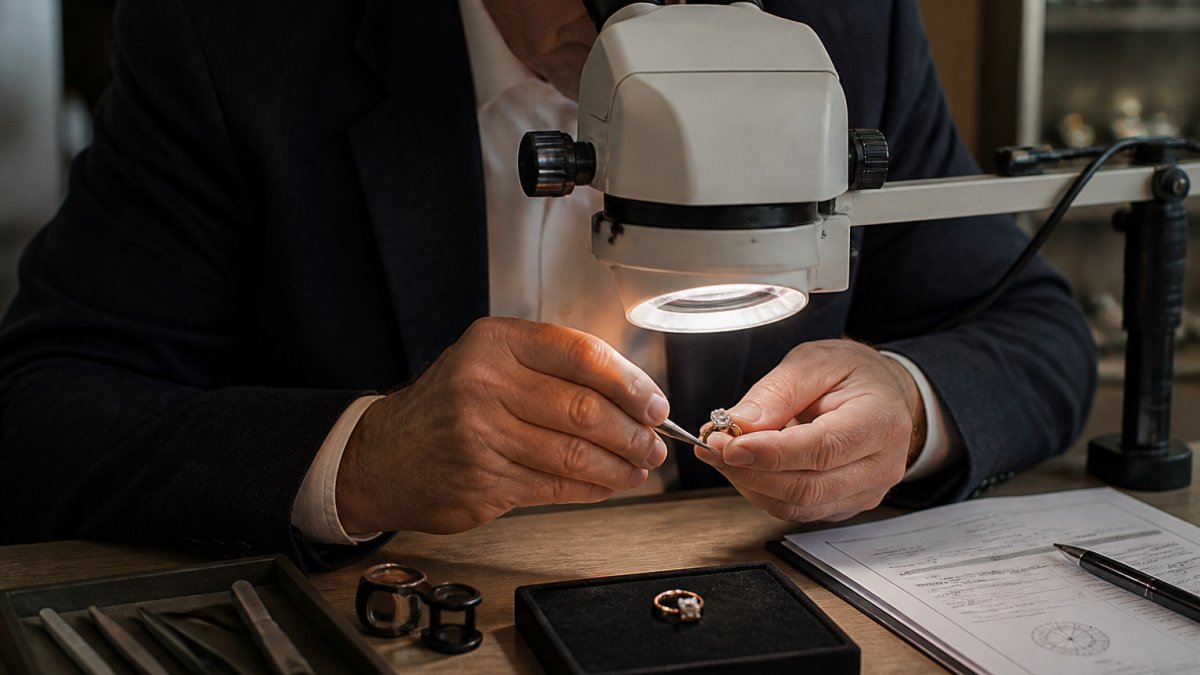
Getting a Professional Valuation for Antique Diamonds
A professional valuation is the foundation of any antique diamond insurance claim. Learn how professional valuations work and how they differ from auction house assessments. Without it, you have no proof of value if loss or damage occurs, and for antique pieces, a generic high street valuation is often worse than none at all, because it can lock you into a figure that neither reflects replacement cost nor survives scrutiny at claims stage.
Who should value the piece
Look for a valuer who specialises in antique and period jewellery, not a general high street jeweller. Relevant credentials to ask about include fellowship or membership of a recognised professional valuation body, experience with period cuts and settings, and familiarity with auction results for comparable pieces. A useful test is to ask how they would value an old mine cut diamond with warm colour and a slightly irregular outline: a specialist will discuss cut, period and setting as value drivers, while a general jeweller may simply grade it against modern brilliant-cut criteria and undervalue it.
Insurance replacement value versus resale and auction value
These are three different numbers, and insurers care about only one of them:
- Insurance replacement value, the cost of replacing the piece with a comparable antique of similar period, cut, setting and condition, sourced through a dealer. This is the figure your policy should be based on.
- Resale or trade value, what a dealer would pay you for the piece. This is typically lower and is not the right basis for cover.
- Auction estimate, a range reflecting what the piece might fetch at auction, which can sit above or below replacement value depending on demand for that period or maker.
Ask the valuer explicitly to state that the figure is an insurance replacement value, and to explain the comparables used. If the report only gives a single number with no basis, ask for the methodology in writing.
What the report should document
A report fit for insurance purposes should include:
- Exact diamond weight and carat details, with the basis of measurement
- Cut type (old mine, old European, transitional or other period cut)
- Estimated colour and clarity grades, with the grading scale stated
Photographs should be appended to the report, not just kept separately, so the document is self-contained if the piece is lost.
How often to update
Review the valuation every three to five years, and sooner if diamond or antique jewellery prices move sharply, if you have restoration work done, or if you change the setting. Keep the previous reports: a chain of valuations showing the piece's history strengthens a claim and helps demonstrate condition over time.
Home Insurance Jewellery Cover versus Standalone Policies
You have two routes: add jewellery cover to your existing home contents policy, or buy a standalone specialist jewellery insurance policy.
Home contents add-on:
- Raises your jewellery limit from £500-£2,000 to perhaps £5,000-£10,000
- Costs less upfront (usually £30-£80 per year extra)
- Still treats jewellery as contents, not as unique items
Standalone specialist policy:
- Covers individual items for their full valued amount
- Includes accidental damage and loss of stones as standard
- Offers worldwide cover (useful if you travel with pieces)
To insure antique diamond jewellery worth more than £5,000, standalone cover makes sense. You get proper protection for irreplaceable pieces.
The key difference: a standalone policy recognises your antique diamond jewellery as unique.
Antique diamond jewellery can be insured through a home contents add-on or a standalone specialist policy, each with distinct advantages.
| Cover Type | Annual Cost | Coverage Limit | Best For |
|---|---|---|---|
| Home contents add-on | £30-£80 | £5,000-£10,000 | Smaller antique items under £5,000 |
| Standalone specialist policy | £50-£150 | Full valued amount | Antique diamond jewellery over £5,000 |
Understanding Jewellery Insurance Cost and Coverage Limits
Insurance cost depends on the item's value, the cover type, and your location.
Most insurers calculate premium as a percentage of the item's value, typically 0.5% to 1.5% per year for standard antique diamond jewellery cover.
Coverage limits matter. A standalone policy usually covers the full valued amount with no upper limit per item.
Excess also varies. Standard excess is often £50-£100 per claim.
Key coverage points to check:
- Does it cover accidental loss of individual stones?
- Does it cover damage during repair or restoration?
- Is worldwide cover included, or only UK cover?
Read the policy wording carefully.
6.5 Carat Edwardian Platinum Graduated Old Cut Diamond Bracelet →
Documentation and Proof of Ownership Checklist
Insurance claims fail without proper documentation. Gather these before you buy a policy:
- Professional valuation report - dated, signed, with full diamond and metal details
- Photographs - clear, well-lit images of the front, back, and sides of the piece
- Original receipt or purchase invoice - if you bought the piece from a dealer
You can learn more about documenting provenance and ownership to ensure you meet insurance requirements. Many collectors also understand the importance of buying antique jewellery with a certificate, it simplifies the insurance process and proves authenticity.
Store these documents separately from the jewellery itself. Use a waterproof folder at home and a digital copy in cloud storage. If the jewellery is stolen or damaged, you'll need instant access to prove its value and ownership.
Filing a Jewellery Insurance Claims After Loss or Damage
When loss or damage occurs, act quickly. Most policies require you to notify the insurer within a set timeframe (typically 7-30 days). For antique pieces, the decisions you make in the first few days, especially who inspects the piece and whether you authorise work, shape the whole settlement.
First steps by type of loss
For theft:
- Report the theft to the police and get a crime reference number
- Contact your insurer immediately with the crime number
- Provide photographs and your valuation report
- The insurer will arrange assessment or settlement
For damage:
- Stop wearing or handling the piece
- Take photographs of the damage before anything is moved or cleaned
- Contact your insurer and describe the damage
- Ask whether the insurer wants its own assessor to inspect the piece before any repair estimate is obtained
- Agree on settlement before repair work begins
For loss of a stone:
- Photograph the empty setting if possible, and keep the stone if it is recovered
- Report to your insurer with your valuation report
- The insurer will offer either repair cost or a cash settlement
Restoration versus modern replacement
This is the point where antique claims diverge from ordinary jewellery claims. A standard policy may settle on a modern equivalent, a new brilliant-cut stone in a new setting, which is cheaper for the insurer but destroys the character of the piece.
Before you claim, check the policy wording for:
- Whether the insurer will pay for restoration by a specialist restorer of your choosing, or only through its approved network
- Whether matched stones must be replaced as a set to preserve appearance
- Whether original settings and mounts are covered as part of the item's value
If the wording is silent, ask the insurer to confirm its approach in writing before you buy the policy, not after a loss.
Settlement choices: repair, replacement or cash
Insurers typically offer one of three outcomes:
- Repair or restoration, the insurer arranges or reimburses approved work. Best for pieces with original settings or matched stones, provided the restorer is suitably experienced.
- Like-for-like replacement, the insurer sources a comparable antique. Workable for pieces where the setting is not the main value, but harder for unusual cuts or signed pieces.
- Cash settlement, the insurer pays a sum, often based on the valuation or a negotiated figure. Cash gives you control, but check whether the figure reflects replacement cost or a depreciated value, and whether it is reduced for excess.
Ask how the insurer treats depreciation on antique pieces. Some policies apply betterment or depreciation deductions to older items; specialist antique cover usually does not, but you need it confirmed in the wording.
Keeping the claim on track
Keep every receipt and invoice from inspection, restoration and replacement work, these become part of your claim history and feed into future valuations. If the insurer's first offer seems low, ask for the comparables behind it and provide your valuer's report and any auction evidence for similar pieces. A documented, specialist valuation is the strongest lever you have at this stage.
Keeping Your Antique Diamond Jewellery Protected
Insurance protects the financial loss. Proper care reduces the risk of needing a claim.
Daily care:
- Remove antique diamond jewellery before washing hands, showering, or swimming
- Store in a soft pouch or jewellery box away from direct sunlight
- Keep away from extreme heat or temperature changes
Security:
- Store high-value pieces in a home safe or safety deposit box
- Avoid wearing extremely valuable pieces in public regularly
- If you travel with antique jewellery, use a hotel safe
Maintenance:
- Have the piece professionally cleaned every 1-2 years
- Check settings annually to ensure stones are secure
- Get any loose stones re-set promptly
Insurance updates:
- Review your policy annually
- Update your valuation if you've had restoration work done
- Photograph any changes to the piece
Antique diamond jewellery is meant to last generations. With specialist insurance and proper care, it will. The investment in a professional valuation and standalone policy protects not just the monetary value, but the history and craftsmanship you've inherited or collected.
Frequently Asked Questions
Do I need a professional valuation to insure antique diamond jewellery?
Yes. Most specialist insurers require a professional valuation from a qualified gemmologist or jeweller before they'll provide coverage. A valuation establishes the replacement value of your antique diamond jewellery, documents the condition and authenticity of the stones, and protects both you and the insurer in a claims scenario. Without one, you risk underinsurance or claim rejection. Valuations typically cost £100-300 depending on complexity and should be updated every 3-5 years as market values change.
How much does it cost to insure high-value antique diamond jewellery?
Jewellery insurance cost varies based on the item's replacement value, your location, security measures, and the level of cover. Specialist policies vary in cost based on the item's insured value, your location, security measures, and the level of cover. For example, insuring a £3,500 antique diamond ring might cost £70-£120 per year to insure standalone. Always compare quotes from multiple insurers, as rates differ significantly. Some policies offer worldwide cover at higher premiums, whilst others restrict cover to your home.
Does home insurance cover antique diamond jewellery?
Standard home contents insurance typically covers jewellery only up to a single-item limit (often £500-2,000), which is rarely enough for valuable antique diamonds. Specialist standalone jewellery policies offer much higher limits and better protection against accidental damage, theft, and loss. Standalone cover is specifically designed for high-value pieces and usually includes worldwide travel protection. Check your home policy wording first, many require you to list valuable items separately, and some exclude jewellery altogether or cap cover at a fraction of its true value.
What should I do if an antique diamond ring is lost or damaged?
Report the loss or damage to your insurer immediately, ideally within 30 days. Provide your original valuation certificate, photographs, purchase receipt (if available), and any proof of ownership. For theft, file a police report and provide the incident number to your insurer. For damage, obtain a repair quote from a qualified jeweller. Your insurer will typically either arrange repair, provide a cash settlement based on replacement value, or (for antique pieces) may offer to source a matching replacement. Keep all documentation and communication records throughout the claims process.
Protecting antique diamond jewellery requires more than standard home contents cover. At Gold2u, we understand why these pieces matter, they're irreplaceable heirlooms and investments. A specialist insurance policy combined with proper documentation gives you peace of mind. Browse our collection of antique diamond jewellery to see the kinds of pieces that deserve dedicated protection, from Victorian three-stone rings to Edwardian platinum bracelets.


0 comments