

Last Updated: October 23, 2026
Quick Summary
Choose minted gold bars for pure, verifiable gold with low premiums and easy resale, or gold nuggets for unique collectibles with rarity value. Compare both on contained fine gold, not gross weight, since a nugget's estimated purity is lower than a bar's stated fineness.
- Minted bars are refined to .999 or .9999 fineness and carry a hallmark, stated weight and often a serial number.
- Gold nugget purity is estimated, usually in the low-to-high 90s, with the balance being natural silver and trace minerals.
- A 10g nugget at an estimated 92% purity holds about 9.2g of fine gold, versus almost 10g in a .9999 bar.
- Dealers buying nuggets as scrap typically pay on contained gold only, ignoring the collector premium you paid.
- Keep the assay card and certificate for bars, and the seller's written weight, purity and origin description for nuggets.
Table of Contents
- Gold Nuggets vs Minted Gold Bars: The Core Differences
- Gold Nugget Purity Compared With Minted Bar Fineness
- Minted Gold Bar Premiums and What Drives Them
- Understanding Natural Gold Nugget Value
- Authentication, Hallmarks and Verifying What You Buy
- Gold Bar Resale Value and Nugget Liquidity
- Which Should You Choose? A Scenario-Based Verdict
- Conclusion
- Frequently Asked Questions
Gold Nuggets vs Minted Gold Bars: The Core Differences
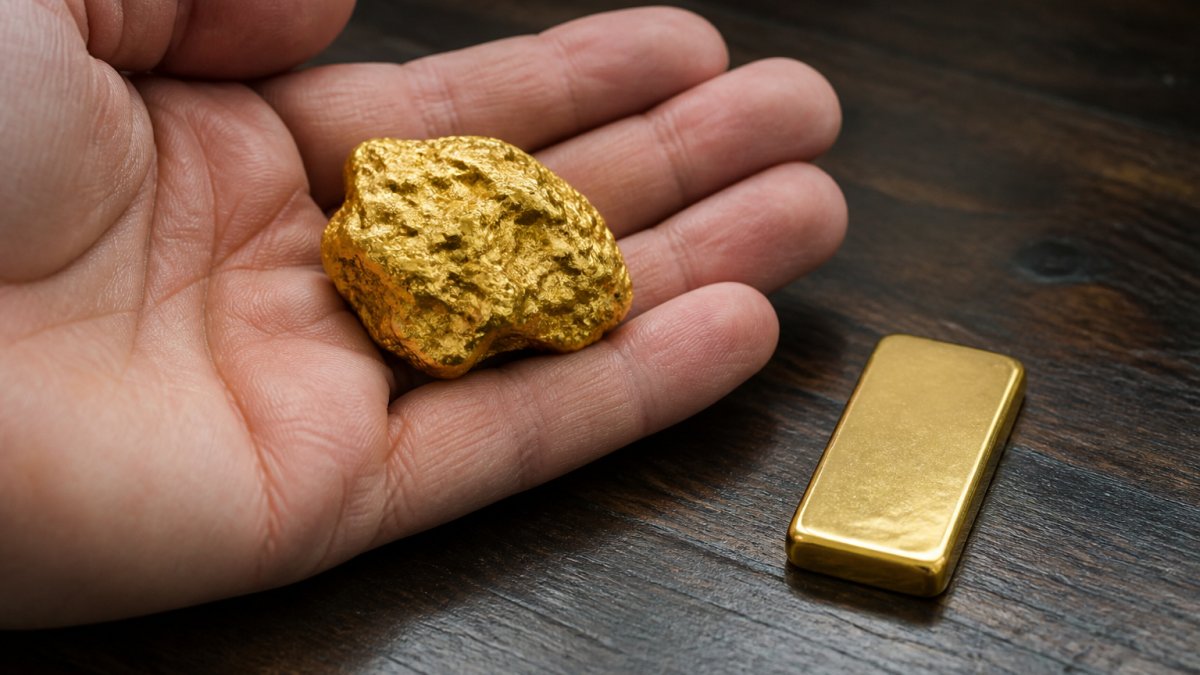
Choosing between gold nuggets and minted gold bars comes down to one question: do you want gold as a pure weight-and-purity asset, or gold as a unique physical object with collector appeal? To browse the premium gold nuggets available to buy, see the current selection.
That distinction drives everything else: how each is priced, how you verify it, and how easily you can sell it later. Below, we break down both forms honestly, including where bars beat nuggets outright.
How Each Type Is Formed and Produced
Minted gold bars start as refined gold, typically .999 or .9999 fineness, which is melted, cast into a blank and then struck or pressed by a mint. The result is a uniform product with a hallmark, a stated weight and often a serial number.
Natural gold nuggets form underground over millions of years and are recovered as they are, never melted or reshaped. A nugget's weight, shape and surface texture are entirely its own.
Gold Nugget Purity Compared With Minted Bar Fineness
Minted bars carry a stated fineness, so you know exactly what you hold. Gold nugget purity is estimated rather than exact, usually somewhere in the low-to-high 90s, with the balance made up of natural silver and trace minerals.
That silver content is not a flaw. For a full explanation of how purity and silver content work in natural gold, read our guide to natural gold nugget purity and silver content.
Minted Gold Bar Premiums and What Drives Them
A minted gold bar is priced at the spot price plus a premium. That premium covers refining, minting, assaying, packaging and the dealer's margin, and it is usually modest on larger bars and higher on small ones.
Production cost is the main driver. The smaller the bar, the more of its price is premium rather than metal. You can view the minted gold bars on offer and their pricing.
Understanding Natural Gold Nugget Value
Natural gold nugget value is built from three layers: contained gold, rarity, and collectibility. Two nuggets of identical weight can sell for very different sums because shape, texture, origin and crystal structure all move the price. Most supplied comparisons of bars with coins never explain how a nugget is actually valued, so this section sets out the method a buyer can apply.
Layer one: contained gold
Start with the calculation any dealer will run. Contained fine gold equals gross weight multiplied by estimated fineness. A 10g nugget at an estimated 92% purity holds about 9.2g of fine gold; the same weight in a .9999 minted bar holds almost 10g. That is why you compare nuggets and bars on contained gold first, then judge the premium on top.
Layer two: rarity and geological character
Once contained gold is established, the premium reflects how unusual the piece is. The factors that move it most are:
- Crystal structure. Crystalline, hoppered or reticulated pieces carry a premium over smooth, water-worn nugget material because they show how the gold formed.
- Shape and aesthetics. A recognisable or sculptural shape sells for more than an amorphous lump of the same weight.
- Condition. Sponge gold is a good example. Its porous, lace-like structure is fragile and rarely survives intact, so it commands a premium over standard nugget material. Our Natural Australian Sponge Gold Nugget from the Pilbara at £5,528.26 is the kind of piece where geological rarity, not just weight, sets the price.
Layer three: collector demand
Collector demand is the least predictable layer and the one that separates a specimen from bullion. It depends on how many buyers are actively looking for a piece like yours at the time you sell. A rare crystal form with documented provenance may attract several interested buyers; a plain nugget may attract only scrap buyers. For a deeper look at the factors at play, see our guide to gold nugget value, authenticity and investment.

Authentication, Hallmarks and Verifying What You Buy
Minted bars are easy to verify. A genuine bar carries a hallmark, a stated fineness, a weight and often a serial number, and it may come with a certificate of authenticity or sealed assay card.
8.055g Natural Gold Nugget – The Boss – Premium Australian Specimen →
Nuggets are harder, and this is where buyers get caught out. Every nugget we list, such as The Boss, an 8.055g Australian specimen at £2,899.57, comes with its weight, origin and estimated purity set out in full.

| Check | Minted Gold Bar | Natural Gold Nugget |
|---|---|---|
| Hallmark or stamp | Yes, standard | No |
| Serial number | Usually | No |
| Stated fineness | Exact | Estimated range |
| Certificate of authenticity | Common | Varies by seller |
| Counterfeit risk | Lower, easier to verify | Higher, needs provenance |
| Provenance | Refiner and mint | Origin and recovery history |
Gold Bar Resale Value and Nugget Liquidity
Gold bars are the more liquid of the two. Standardised weights and recognised hallmarks mean most dealers will buy them back readily, usually close to spot less a small margin.
Nuggets are less liquid in the mainstream sense. A dealer buying scrap will typically pay on contained gold, ignoring the collector premium you paid. For a fuller picture of how physical gold liquidity works, read our guide to physical gold liquidity.
Selling a minted bar: the practical steps
- Identify the bar precisely. Note the refiner, weight, fineness and serial number, and keep the assay card or certificate with the bar.
- Get a quote against spot. A dealer will quote a buy-back price as spot less a margin; the margin is usually tighter on larger, widely recognised bars.
- Choose the buyer. Refiners, bullion dealers and specialist buyers all operate in this market, and a recognised hallmark widens your options.
- Complete the transfer. Expect identity checks and payment by bank transfer for larger sums; keep the paperwork.
Selling a nugget: the practical steps
- Assemble the evidence. Weight, estimated fineness, origin, recovery history and any assay result you hold. Documentation is what lets a buyer pay above scrap.
- Decide which market you are selling into. A scrap or refining buyer will pay on contained gold only. A specimen or collector buyer may pay a premium, but only if the piece has the rarity and presentation to justify it.
- Expect valuation uncertainty. Two buyers can quote materially different sums for the same nugget because the collector element is subjective. Get more than one view before committing.
- Allow for time. A specimen sale can take weeks or longer to find the right buyer; a scrap sale can complete quickly at a lower price.
Documentation that protects resale value
For both forms, keep the paperwork that proves what you own. For a bar, that is the assay card, certificate and purchase receipt. For a nugget, it is the seller's written description of weight, estimated purity and origin, plus any independent assay. A nugget sold without that record is valued as scrap by default, which is where many buyers lose the premium they paid.
A risk-aware buying checklist
Before you buy either form, check:
- Seller reputation. Look for a trading history and clear contact details.
- Written description. Weight, fineness or estimated purity, and origin should be stated, not implied.
- Assay evidence. Ask whether purity is estimated or independently tested, and by whom.
Which Should You Choose? A Scenario-Based Verdict
There is no single winner. The right choice depends on why you are buying.
- You want pure, verifiable gold at a low premium: choose minted bars. Standardised, hallmarked and easy to resell.
- You want a portfolio hedge you can exit quickly: choose minted bars in recognised weights.
- You want a unique collectible with rarity value: choose natural gold nuggets.
A middle path works well for many buyers: hold bars as the liquid core of a gold position, and add a nugget or two for the collector element.
Conclusion
The real challenge is not picking a side but matching the form to your goal. Bars give you standardised, verifiable gold with reliable resale. Nuggets give you rarity, character and a specimen no one else owns.
At Gold2u, our collection of natural Australian gold nuggets is chosen for exactly that: authenticity, clear weight and purity details, and genuine geological character.
Frequently Asked Questions
Are gold nuggets worth more than their gold content?
Often, yes. A natural gold nugget's price can exceed its melt value because collectors pay for rarity, shape and provenance. Nuggets with unusual crystalline structures or documented origins carry a collectibility premium on top of the metal itself. That said, the premium varies widely and depends on finding a buyer who values those qualities. Minted bars, by contrast, trade much closer to the spot price, so their value is easier to predict and benchmark. If you want a predictable return tied to the gold price, bars are simpler; if you want scarcity-driven upside, nuggets can deliver it, but with less certainty.
How can you check the authenticity of a gold nugget?
Start with weight and dimensions, then look at surface texture: natural nuggets show irregular cavities and mineral inclusions that are difficult to replicate. A reputable dealer should supply documentation covering origin, estimated purity and weight. Non-destructive testing such as X-ray fluorescence (XRF) gives a reliable purity reading without damaging the piece. For higher-value specimens, an independent assay provides extra assurance. Be cautious of pieces that look too uniform or have suspiciously smooth surfaces, and always buy from a seller who offers a clear returns policy if the item does not match its description.
Are minted gold bars easier to sell than natural gold nuggets?
Generally, yes. Minted gold bars are standardised, hallmarked and widely recognised, so bullion dealers can quote a buyback price quickly, often close to spot. Natural gold nuggets sit in a narrower collector market: a specialist dealer or private collector may pay a strong premium, but the process takes longer and the pool of buyers is smaller. If liquidity matters to you, bars are the safer choice. If you can hold a nugget until the right buyer appears, the potential return can be higher, though less predictable.
Does gold purity affect the value of a nugget or bar?
Purity affects both melt value and, for nuggets, collector appeal. Minted bars are usually refined to 999.9 fineness, so their gold content is precise and easy to price. Natural gold nuggets typically run between 92% and 99% gold, with the remainder made up of silver, copper and other minerals. That means a nugget's pure gold content is lower than its total weight, and valuation should account for this. Always ask for an estimated purity figure and use it when comparing a nugget's price against the spot price for fine gold.
Which is better for long-term investment: gold nuggets or minted bars?
It depends on your goal. Minted bars suit investors who want tight pricing, standardised weights and easy resale, with value tracking the gold price closely. Natural gold nuggets suit buyers who want a tangible, one-of-a-kind asset with collectible potential and possible scarcity premiums. Many portfolios combine both: bars for liquidity and core exposure, nuggets for rarity and diversification. Whichever you choose, buy from a seller who provides clear documentation, accurate weights and a straightforward returns policy, and store both types securely.


0 comments