

Table of Contents
- What Makes Antique Diamond Rings Special for Engagement
- Quick Comparison: Our Top 5 Antique Diamond Rings
- 1. Victorian-Era Old Cut Diamond Three Stone Ring - 1.75 Carats
- 2. 3 Carat Old Cut Diamond Ring - Edwardian Platinum & Gold
- 3. Vintage 18ct Gold Diamond Cluster Ring - 1.8 Carats
- How to Buy an Antique Engagement Ring: What to Check
- Old Mine Cut Diamond Value and Why These Stones Matter
- Antique Versus Vintage Engagement Rings: Key Differences
- Frequently Asked Questions
Last Updated: October 17, 2026
What Makes Antique Diamond Rings Special for Engagement
Antique diamond rings carry something modern stones cannot replicate: history, character, and the warmth of hand-cutting over a century ago. Choosing an antique diamond ring for engagement means inheriting a story that survived generations.
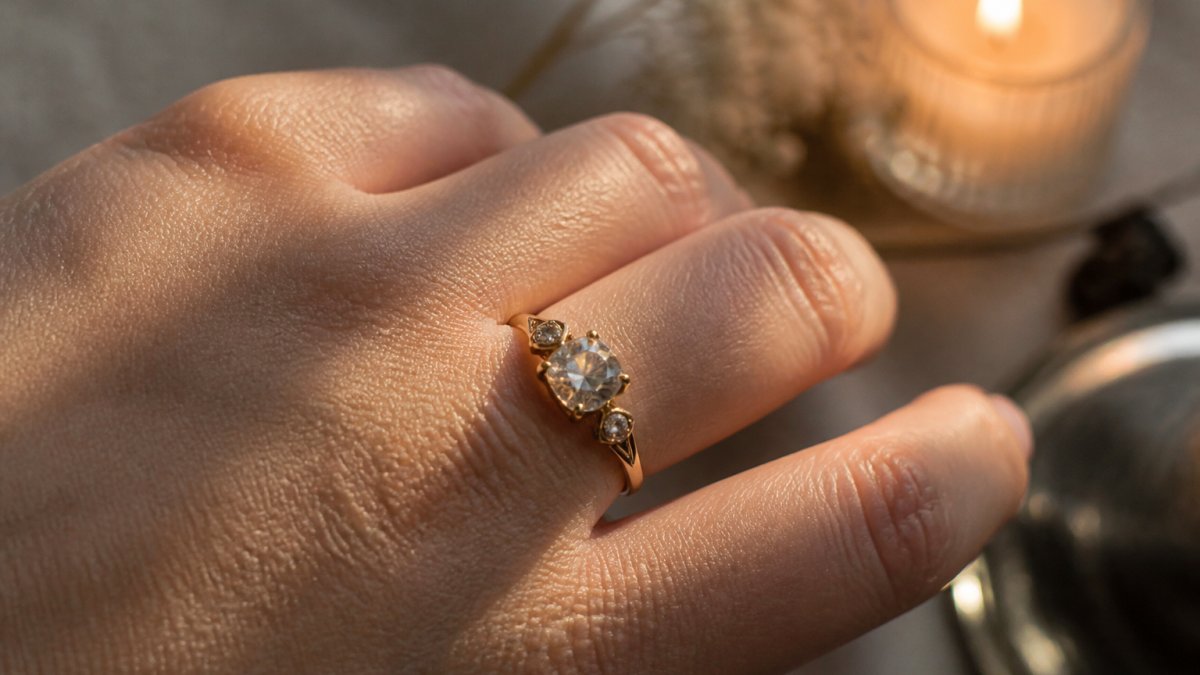
The difference lies in how these stones were cut. Old mine cut and old European cut diamonds were fashioned by hand, without modern machinery, creating deeper pavilions, taller crowns, and broader facets than today's brilliant cuts.
Beyond aesthetics, antique diamond rings appeal to those seeking something genuinely rare. No two old mine cuts are identical, so your ring will never be replicated by someone else's purchase. At Gold2u, we offer a curated selection of these authentic pieces, carefully selected for their provenance and beauty.

Antique engagement rings also align with values many modern couples hold: choosing a pre-owned stone means no new mining is required. For investors and collectors, antique diamond rings represent tangible assets that hold and often appreciate in value over time.
Quick Comparison: Our Top 5 Antique Diamond Rings
Before diving into each ring, here's how our picks stack up. We've selected these three pieces because they represent the range of what antique diamond rings can offer: from Victorian-era three-stone designs to commanding Edwardian solitaires to bold vintage clusters.
| Ring | Era | Carat Weight | Metal | Price | Best For |
|---|---|---|---|---|---|
| Victorian Three Stone | Mid-century vintage (1940s-60s) | 1.75 carats | Yellow gold | £3,500 | Those seeking a classic trilogy design with authentic old cut fire |
| Edwardian Old Mine Cut | Edwardian (circa 1900) | 3.0 carats | Platinum & yellow gold | £25,000 | Statement pieces and collectors wanting a commanding, rare stone |
| Vintage Gold Cluster | Late 1990s | 1.8 carats | 18ct yellow gold | £2,500 | Budget-conscious buyers wanting high visual impact and bold design |
1. Victorian-Era Old Cut Diamond Three Stone Ring - 1.75 Carats
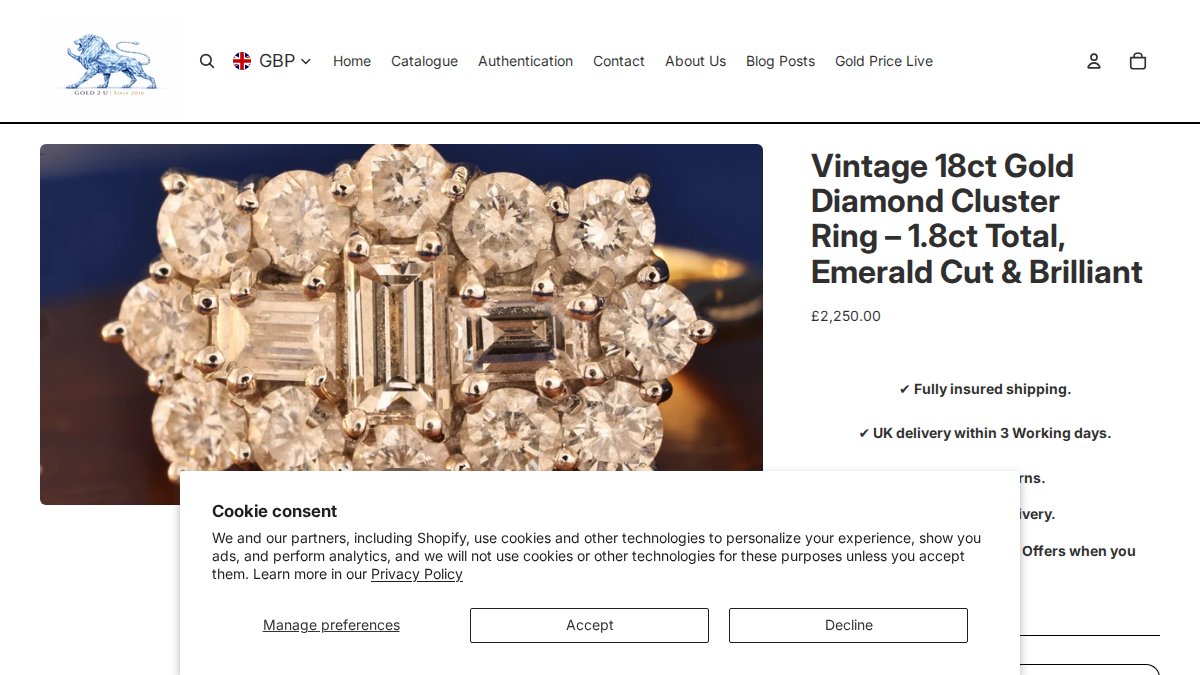
This is the entry point into authentic antique engagement rings for those wanting proven craftsmanship without the five-figure price tag. The three-stone design, often called a trilogy or "past, present, future" ring, carries romantic symbolism across generations.

The centre stone is an old European or old mine cut diamond approaching 1 carat, flanked by two matched old-cut diamonds totalling approximately 1.75 carats. Colour is estimated H-I (near colourless) and clarity VS-SI (eye-clean). Each facet throws large, dramatic flashes of light, the signature of genuine antique cuts.
The setting is classic yellow gold with white illusion heads, a low-profile design built for everyday wear. Dating from circa 1940-60s, it is fully cleaned and ready to wear. At just over 3 grams, it feels significant on the hand without being heavy.
Why this ring works: the three-stone design offers visual drama and symbolism without a massive single stone. At £3,500, collectors new to antique diamond rings can own a genuine, authenticated piece without the investment larger stones require.
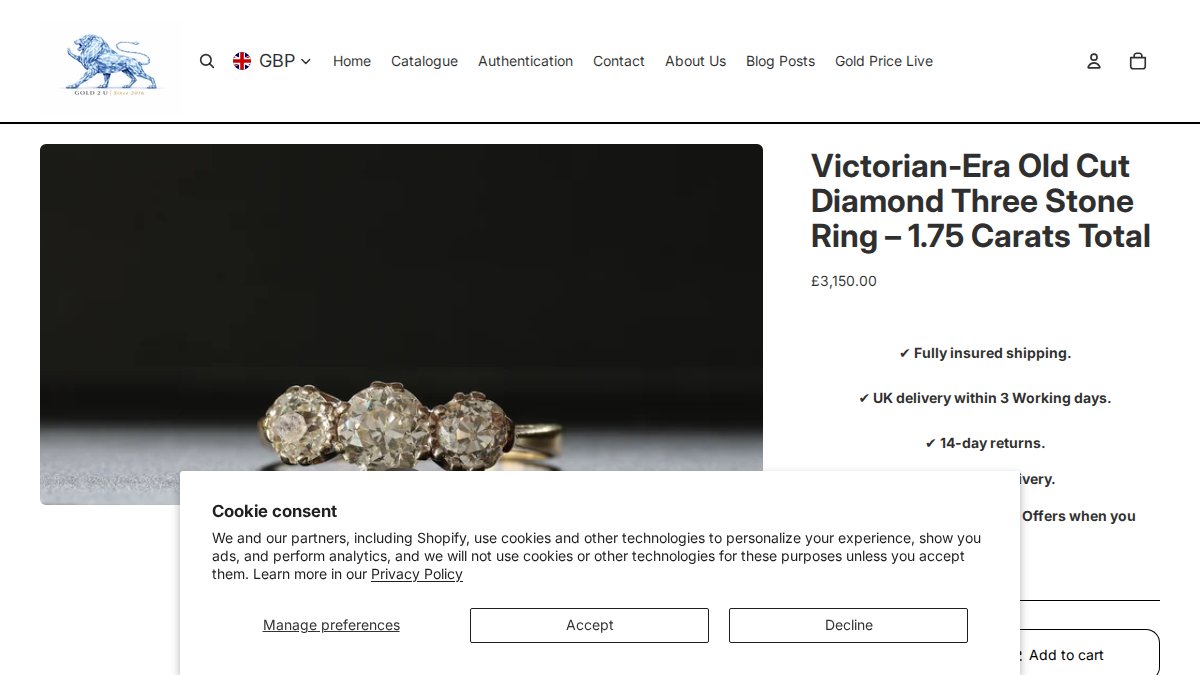
2. 3 Carat Old Cut Diamond Ring - Edwardian Platinum & Gold
This is the statement piece: a genuine Edwardian-era engagement ring from circa 1900, centred on a magnificent 3.00 carat old mine cut diamond, the kind collectors spend years searching for.
At 3 carats, the stone has commanding presence, but its cut makes it extraordinary: high crown, small table, deep pavilion, and broad chunky facets, exactly what experts look for in authentic old mine cuts. Under candlelight it glows with the romantic brilliance these stones were designed for. It has been tested on a professional GIA diamond tester and comes with AnchorCert documentation.
The setting reflects Edwardian craftsmanship: a platinum crown paired with a warm yellow gold band, hand-set shoulder diamonds, and delicate milgrain detailing. The ring is in excellent antique condition.
Why this ring commands its price (£25,000): genuine 3 carat old mine cut diamonds of this quality are increasingly rare, and the Edwardian setting adds craftsmanship that cannot be replicated today. For serious collectors seeking a true heirloom investment, it represents both rarity and enduring value.
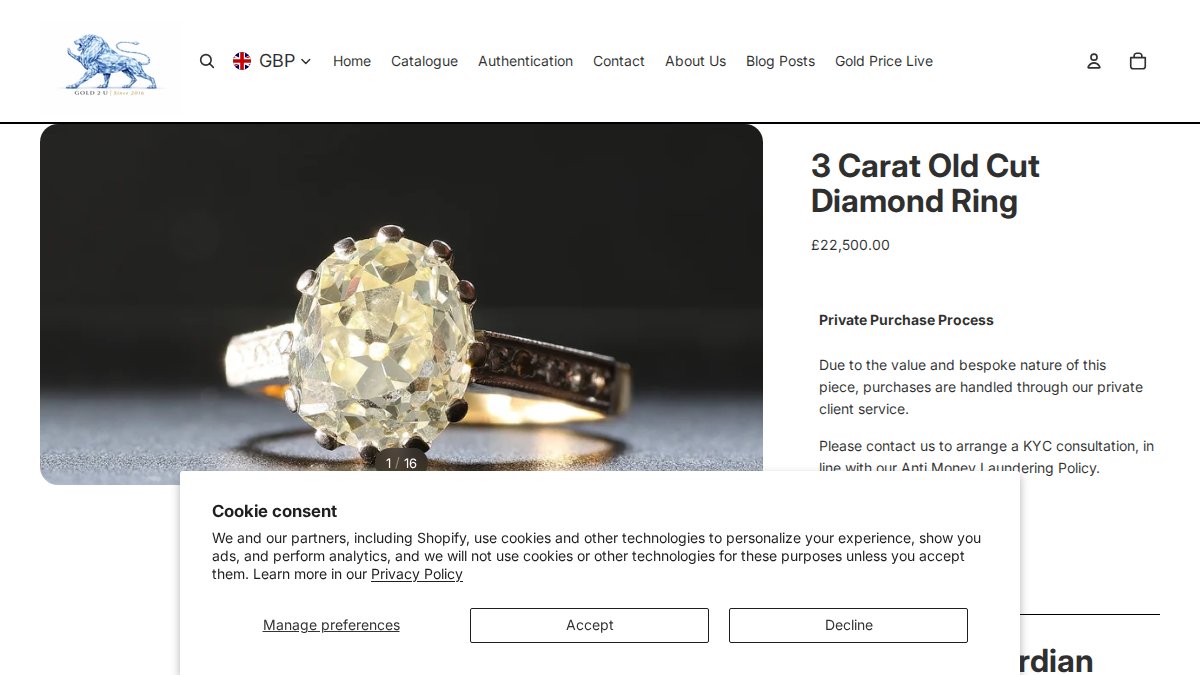
3. Vintage 18ct Gold Diamond Cluster Ring - 1.8 Carats
For visual impact without a five-figure commitment, this late-1990s cluster ring delivers. It's crafted in solid 18ct yellow gold (hallmarked Birmingham), with three emerald-cut diamonds at the centre surrounded by a halo of brilliant-cut diamonds.
The emerald cuts provide depth and a step-cut aesthetic, while the surrounding brilliants add sparkle and presence, creating a high-end look far beyond the price. Total diamond weight is approximately 1.8 carats based on jeweller's mark and visual assessment. The ring is a UK size O½ (US 7.5) and weighs 5.151 grams.
Condition is very good, with only light signs of wear consistent with age. The setting remains secure, and the diamonds display strong brilliance in natural light. This is a bold, unmistakably striking statement piece.
Why this ring matters: it proves you don't need a 3 carat old mine cut to own a visually commanding antique diamond ring. At £2,500, it's accessible to buyers who want proven vintage craftsmanship and high visual impact.
How to Buy an Antique Engagement Ring: What to Check
Buying an antique diamond ring requires different thinking than purchasing a modern stone: you're assessing history, authenticity, condition, and long-term wearability, not just the 4 Cs.
Start with documentation. Legitimate antique diamond rings come with some form of certification or provenance. Look for AnchorCert, GIA testing results, or detailed jeweller's assessments.
Inspect the setting for wear and structural integrity. Antique settings are often delicate. Check that prongs hold the stone securely with no movement under gentle pressure.
Understand old cut grading. Modern standards don't perfectly apply to antique diamonds. An old mine cut graded SI might still be completely eye-clean, and H or I colour was considered excellent in its era.
Victorian-Era Old Cut Diamond Three Stone Ring – 1.75 Carats Total →
Request photographs in natural light. Antique diamonds show their true character in daylight, not under jeweller's lights. Reputable sellers provide images in sunlight or near-window conditions. This reveals the stone's actual colour and fire.
Ask about sizing and repairs. Confirm the jeweller has experience with antique settings, since incorrect resizing can damage delicate metalwork.
Verify the metal content. UK hallmarking is your assurance. Look for the maker's mark, the fineness mark (750 for 18ct gold, 950 for platinum), the assay office mark, and the date letter.
Old Mine Cut Diamond Value and Why These Stones Matter
Old mine cut diamonds have become increasingly valuable over the past decade. Understanding why helps explain both their appeal and their price.
An old mine cut is a cushion-shaped diamond with a high crown, small table, and deep pavilion, the standard before the modern brilliant cut was developed in the 1930s.
The rarity is real. Most old mine cuts were mined in the 19th century, and supply has been exhausted for decades. You cannot order a new old mine cut, only find surviving examples. This scarcity, combined with growing collector interest, has driven values upward.
Modern grading systems struggle with old cuts because they were created under different standards. A stone graded SI (slightly included) by today's standards might have been considered flawless in 1880. Colour grades of H or I were premium in the Victorian era.
The investment case is straightforward: antique diamond rings hold value because they're finite, authenticated, and increasingly sought by collectors. Unlike modern diamonds, antique stones have already survived their depreciation phase and proven their durability over 100+ years.
Antique Versus Vintage Engagement Rings: Key Differences
The terms "antique" and "vintage" are often used interchangeably, but they carry specific meanings that affect value, rarity, and appeal.
Antique rings are typically 100 years or older, dating from the Victorian era (1837-1901), Edwardian period (1901-1910), or Art Deco movement (1920s-1930s). They represent genuine historical craftsmanship, with hand-engraving, milgrain detailing, and meticulous stone-setting difficult to replicate today.
Vintage rings are generally 20-100 years old, from the 1950s, 1970s, or 1990s. They offer the charm of pre-owned jewellery and often superior craftsmanship to modern mass production, but lack the historical depth of true antiques.
The practical difference: an antique ring is a historical artifact that happens to be wearable jewellery; a vintage ring is older, well-made jewellery that hasn't reached the century mark.
When shopping for antique diamond rings, verify the era. Reputable sellers provide documentation or expert assessment confirming the dating. At Gold2u, our antique pieces come with detailed information about their era, setting style, and provenance.
Choosing an antique diamond ring for engagement means committing to something genuinely rare and historically significant.
At Gold2u, we specialise in curating authentic antique and vintage diamond jewellery, each piece carefully selected for its craftsmanship, condition, and provenance.
Frequently Asked Questions
What is the difference between an antique and a vintage engagement ring?
Antique rings are typically over 100 years old and were handcrafted during specific historical periods such as Victorian, Edwardian, or Art Deco eras. Vintage rings are generally 20-100 years old and may include mid-century pieces. Antique diamond rings often feature old mine cuts or old European cuts with distinctive hand-cut faceting, while vintage rings may use either antique or more modern diamond cuts. The older the ring, the rarer and more historically significant it tends to be.
Are old mine cut diamonds valuable?
Yes, old mine cut diamonds are highly valued by collectors and engagement ring seekers. Their value stems from their rarity, hand-cut craftsmanship, and distinctive warm fire that cannot be replicated in modern brilliant cuts. Old mine cuts feature chunky facets, high crowns, and deep pavilions that produce soft flashes of light rather than uniform sparkle. Because these diamonds were cut slowly by hand over a century ago and fewer originals survive intact, they command premium prices and strong collector demand.
How can you tell whether a diamond ring is genuinely antique?
Check for hallmarks on the metal band confirming the era and gold or platinum purity. Request documentation of provenance and authenticity from the seller. Examine the diamond's faceting pattern: old mine cuts have distinctive chunky facets and a high crown, quite different from modern brilliant cuts. Professional gemmologists can assess the stone's age through its cutting style and surface characteristics. Ask for certificates from reputable labs or specialist antique jewellery authenticators. Genuine antique rings often show subtle wear consistent with age.
What should you check before buying an antique diamond engagement ring?
Verify the metal's hallmark and purity to confirm authenticity and era. Request a professional gemmological assessment of the diamond's cut, clarity, colour, and carat weight. Check the setting's structural integrity and ensure all stones are secure. Ask for authentication certificates and provenance documentation. Inspect for signs of repair or restoration that may affect value. Confirm the ring's sizing and whether resizing is possible without damaging the setting. Understand the seller's return or guarantee policy in case the ring does not meet your expectations.
How much should an engagement ring cost in terms of antique diamond rings?
Antique diamond ring prices vary widely based on era, diamond quality, carat weight, and rarity. A mid-century vintage trilogy ring with 1.75 carats of old cut diamonds may cost around £3,500, while a rare 3-carat Edwardian old mine cut solitaire can reach £25,000 or more. A vintage 1990s cluster ring with 1.8 carats typically costs £2,500. Factors affecting price include the diamond's cut, clarity, colour, metal type (yellow gold, platinum), condition, and historical significance. Antique rings often offer better value than modern equivalents because they combine rarity with enduring value.


0 comments