

Table of Contents
- Understanding Antique Diamond Valuation
- How Auction House Diamond Valuation Works
- What Makes Old Mine Cut Diamond Value Unique
- Professional Antique Diamond Appraisal vs Auction Estimates
- Selling Antique Diamond Jewellery: Direct Sale vs Auction
- Factors That Influence Antique Diamond Prices
- How to Avoid Overpricing and Undervaluation
- Frequently Asked Questions
Last Updated: October 6, 2026
Understanding Antique Diamond Valuation
Antique diamond valuation differs fundamentally from modern diamond pricing. Evaluating an old mine cut diamond or period jewellery means valuing rarity, historical craftsmanship, and collector demand, not just carat weight and clarity. Most people stumble by comparing antique stones against contemporary grading standards that don't apply.
Antique diamonds were cut by hand to different proportions than modern brilliants. An old mine cut with a high crown, small table, and deep pavilion will never score as "brilliant" today, instead it displays what collectors prize: soft flashes of fire, candlelight glow, and distinctive kozibe reflections that signal authenticity.
Scrap Value vs Market Value vs Insurance Value
Three different numbers apply to any antique diamond jewellery piece. Understanding the gap between them is critical before you sell, insure, or invest.
Scrap value is metal weight times current precious metal prices, plus the diamond's melt value, the floor you'd get selling for raw materials alone.
Market value (resale value) is what a collector or dealer would pay for the piece intact, with provenance and character preserved, where antique diamond jewellery commands premiums. A Victorian-era old cut diamond three stone ring with 1.75 carats total weight, like Gold2u's example at £3,500, reflects market value: the buyer pays for the period, hand-cut faceting, and rarity of matched old European cuts in original settings.

Insurance value is typically the highest number, the cost to replace the piece with something comparable today.
The gap between these values creates confusion and regret: sellers who know only scrap value leave money on the table, buyers who confuse insurance with market value overpay, and investors who don't distinguish them misjudge liquidity and returns.
How Auction House Diamond Valuation Works
Auction houses value diamonds systematically, but to serve their business model, not necessarily yours. Understanding their process reveals why their estimates often differ from independent appraisals.
Hammer Price, Reserve Price, and Buyer's Premium
When you consign a diamond piece to an auction house, three prices matter: the reserve price, the hammer price, and what you actually take home.
The reserve price is the minimum bid the auction house will accept, set deliberately conservatively from their estimate.
The hammer price is what the winning bidder pays for the item itself, but they then pay a buyer's premium on top, typically 15% to 25% depending on house and lot value.
As seller you receive the hammer price minus commission, typically 10% to 20% depending on sale value. On a £10,000 hammer with 15% seller's commission, you'd receive £8,500; the buyer pays £12,500; the auction house keeps £4,000.
The Hidden Cost of Commission Structure
Auction house valuations can be deceptive: an estimate of £10,000 quotes the expected hammer price, not what you'll actually receive.
Many sellers don't calculate their net-to-seller figure until after consignment. A modest antique diamond ring estimated at £2,000 might face 20% seller's commission, leaving £1,600: a 20% haircut before it's even sold.

Auction houses also charge for insurance, photography, cataloguing, and condition reports, adding 2% to 5%. Some charge a "buyer's premium" on the seller's side too, though this is less common.
The real net-to-seller calculation is estimated hammer price minus seller's commission minus additional fees.
What Makes Old Mine Cut Diamond Value Unique
Old mine cut diamonds command premiums that modern stones don't. They were cut in an era when cutters optimised for candlelight, not fluorescent showroom lighting.
Rarity, Cut Characteristics, and Collector Demand
An old mine cut displays characteristics modern cutting cannot replicate. The high crown, small table, and deep pavilion create "soft fire", large, slow flashes of rainbow light rather than the sharp, uniform sparkle of modern brilliants.
This uniqueness drives collector demand: investors seek old mine cuts for their era of craftsmanship and growing scarcity.
Rarity translates directly to value. A 3-carat old mine cut diamond in an Edwardian platinum setting, like Gold2u's offering at £25,000, commands that price because three things align: the stone is authentic and unaltered, the setting is period-correct, and the combination is irreplaceable.

Provenance strengthens value further. If the piece has documented history, a jeweller's mark, an estate provenance, or authentication from a gemological institute, it becomes investment-grade. Collectors pay premiums for pieces they can trace and verify.
Professional Antique Diamond Appraisal vs Auction Estimates
An independent professional appraisal and an auction house estimate serve different purposes and often reach different conclusions about value.
Why Independent Appraisals Matter
An independent appraiser has no financial incentive to over- or undervalue your piece, they're paid a flat fee. An auction house, by contrast, is incentivised to estimate high (to encourage consignment) then set a conservative reserve (to ensure a sale).
Auction house estimates are often formulaic: percentage markups on scrap value, a rarity premium, rounded to a credible-sounding number. They rarely dig into collector demand for your piece's era or cut style.
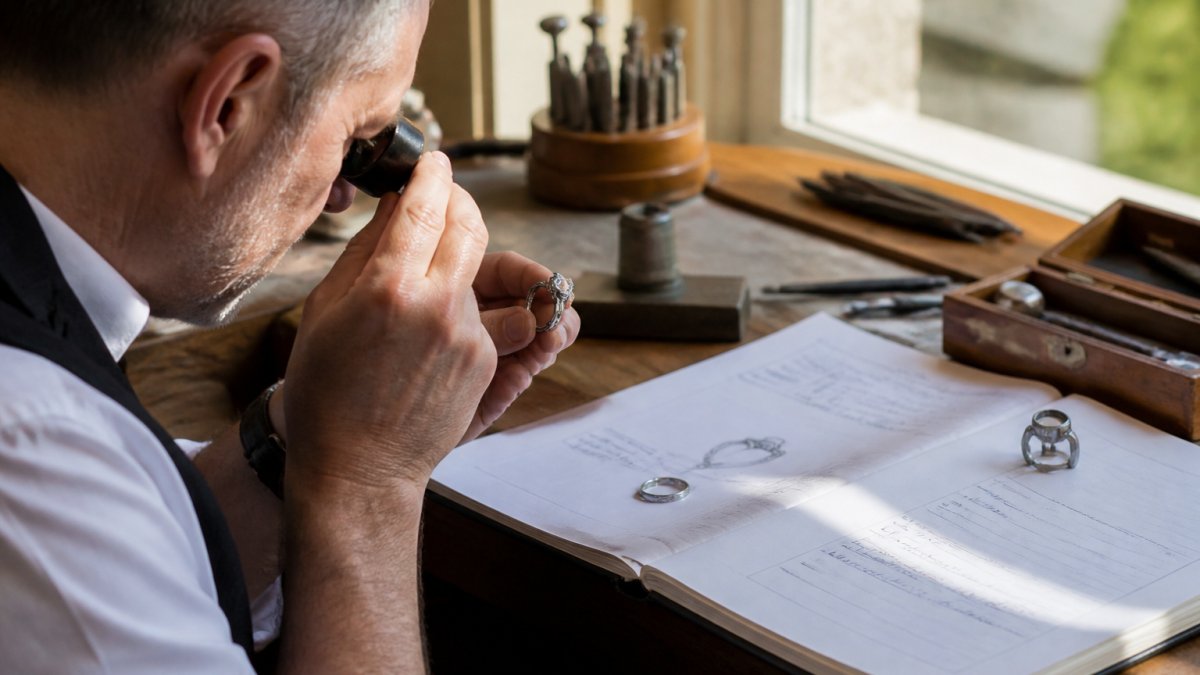
Gemological Certification and Authentication
A gemological certificate from a reputable institute such as Anchor Cert adds measurable value, documenting carat weight, colour grade, clarity grade, and cut observations, and confirming the antique stone is genuine and unaltered.
Auction houses favour certified stones because certification reduces buyer risk and supports the hammer price. But certification is not valuation: a certificate tells you what the stone is; an appraisal tells you what it's worth today.
Gold2u's antique pieces, such as the 6.5-carat Edwardian platinum graduated old cut diamond bracelet at £14,999, come with authentication and testing on professional GIA diamond testers. This documentation supports the valuation because buyers can verify the piece's authenticity themselves.
Selling Antique Diamond Jewellery: Direct Sale vs Auction
You have two main routes when selling antique diamond jewellery: direct sale through a specialist dealer or consignment to an auction house. Each has genuine advantages and real drawbacks.
3 Carat Old Cut Diamond Ring →
Pros and Cons of Each Route
Auction houses offer:
- Potential for competitive bidding to drive price above estimate
- Access to a wide audience of collectors and investors
- Professional cataloguing and marketing
- Perceived legitimacy and third-party validation
But auction houses also:
- Charge substantial commissions (10-20% from seller, 15-25% from buyer)
- Require you to accept the hammer price, even if it's below estimate
- Take 6-12 weeks from consignment to payment
- Provide no guarantee of sale if the reserve isn't met
- Often estimate conservatively to ensure the lot sells
Direct sales through specialists like Gold2u offer:
- No buyer's premium, the buyer pays only the agreed price
- Faster settlement (days rather than months)
- Opportunity to negotiate based on current market conditions
- Access to dealers and investors with deep knowledge of period jewellery
- Transparent pricing with no hidden fees
But direct sales also:
- Require you to find the right buyer
- Offer less marketing reach than a major auction house
- Depend on the dealer's current inventory needs
- May result in lower prices if the dealer has limited buyer interest
The choice depends on priorities. For quick cash and certainty, direct sale makes sense. If you believe your piece will attract competitive bidding and can wait for the auction cycle, auction might yield a higher gross price, though not necessarily a higher net after commissions.
Net-to-Seller Calculation and Real Returns
This is the calculation most sellers avoid until it's too late. A real example:
Suppose you own a Victorian-era old cut diamond three stone ring estimated at £3,500 (comparable to Gold2u's offering). You consign it to a major auction house.
- Estimated hammer price: £3,500
- Seller's commission at 15%: £525
- Insurance and fees at 2%: £70
- Net to seller: £2,905
- Effective cost: 17% reduction from estimate
If the piece sells at auction and competitive bidding pushes it to £4,500, your net improves:
- Hammer price: £4,500
- Seller's commission at 15%: £675
- Insurance and fees: £90
- Net to seller: £3,735
- Effective cost: 17% reduction from final hammer price
Now consider a direct sale at £3,500:
- Agreed price: £3,500
- No commission or fees
- Net to seller: £3,500
- Effective cost: 0%
The direct sale nets £595 more than the auction scenario (assuming the auction achieves estimate), a 17% advantage. If the auction underperforms and hammers at £2,800, you'd net only £2,324, less than the direct sale.
Understanding your net-to-seller figure before committing is critical, many sellers regret auction consignment only after seeing the final settlement cheque.
Factors That Influence Antique Diamond Prices
Valuation isn't just about carat weight and clarity. Several specific factors drive the market price of antique diamond jewellery.
Provenance, Period, and Authenticity
Provenance is documented ownership history. A clear chain of custody, a known family, a jeweller's mark and date, commands a premium by reducing buyer risk and adding narrative value.
Period matters enormously. Edwardian pieces (1901-1910) command different prices than Victorian (1837-1901) or Art Deco (1920-1935) pieces, even with similar diamonds and metalwork. Collectors specialise: some seek Edwardian filigree, others Art Deco geometry.
Authenticity is non-negotiable. Heavily restored, recut, or altered pieces lose significant value; collectors pay premiums for original condition.
How to Avoid Overpricing and Undervaluation
The gap between what you think your piece is worth and what the market will actually pay is where most sellers stumble.
Get an independent appraisal before consigning to auction or approaching a dealer.
Compare that appraisal against auction house estimates; if they diverge significantly, ask why.
Research recent comparable sales, auction results are public.
Understand your liquidity timeline.
Consider the "tat" factor, the market's subjective preference for certain styles, colours, and eras.
Finally, don't confuse insurance value with market value.
Valuing antique diamonds and choosing between private sale and auction comes down to understanding true costs and market realities.
Frequently Asked Questions
Are 100-year-old diamonds worth anything?
Yes. Antique diamonds, particularly old mine cuts from the 1900s-1920s, often command premium prices among collectors because they cannot be replicated. Value depends on carat weight, clarity, colour, and provenance. A certified old mine cut diamond in good condition typically appreciates as a collector's item, especially if it retains original setting details and has documented history. However, scrap value (melt-down price) is usually far lower than collector value, so selling to the right buyer matters significantly.
How much is a 0.25-carat diamond worth in the current market?
A 0.25-carat antique diamond's value varies widely based on cut, clarity, and colour. A modern 0.25-carat diamond might fetch £400-£800 at retail, but antique old mine cuts in this size range often sell for more if they have strong provenance and collector appeal. Auction estimates depend on condition and demand; private sales to collectors may yield higher returns than auction hammer prices after commissions. Always obtain an independent appraisal before accepting an auction house estimate.
What should I do before selling an antique diamond to an auction house?
Get an independent gemological appraisal from a certified appraiser before engaging with an auction house. This establishes fair market value and protects you from underestimation. Request the auction house's estimate in writing and compare it to your appraisal. Understand their full commission structure, including buyer's premium and seller's fees. Consider whether a private sale to a specialist dealer or collector might yield better net returns after all costs. Ensure your diamond has proper certification (GIA, AnchorCert, or equivalent) to support valuation.
Why do old mine cut diamonds cost more than modern brilliant cuts of the same carat weight?
Old mine cuts are hand-cut by artisans and cannot be mass-produced, making each stone unique. They produce a distinctive warm, romantic glow with larger flashes of fire, qualities collectors actively seek. Supply is finite because no new old mine cuts are being created. Provenance, historical significance, and rarity of original settings also add premium value. Modern brilliant cuts prioritise uniform sparkle over character, which is why antique cuts command higher collector prices despite potentially lower technical clarity grades.
What is the difference between insurance value, auction estimate, and scrap value for an antique diamond?
Insurance value reflects what it would cost to replace the item today (typically the highest figure). Auction estimate is what the house predicts it will sell for, often conservative to avoid disappointing sellers. Scrap value is the metal and diamond weight at current commodity prices, usually the lowest figure. For an antique old mine cut diamond, scrap value might be 20-40% of collector value. Always request appraisals for insurance and independent valuation; never rely solely on an auction estimate, which serves the auction house's interests, not yours.


0 comments