

Table of Contents
- Why Proper Storage Matters for Gold Coins
- Home Safe for Gold Coins: Installation and Selection
- Gold Coin Storage Capsules and Protective Holders
- Insuring Gold Coin Collections
- Environmental Conditions and Humidity Control
- Bank Vaults and Professional Storage
- Storage Practices for Different Gold Coin Types
- Frequently Asked Questions
Last Updated: October 9, 2026
Why Proper Storage Matters for Gold Coins
The right way to store gold coins protects your investment from damage, theft, and environmental harm. A single scratch or tarnish mark can reduce a coin's value significantly, and numismatic coins with premium value depend entirely on condition.
A collectible gold coin worth £1,200 can drop in value if damaged during storage. Physical gold is only as valuable as its condition allows, which is why storage method matters more than most people realise.

At Gold2u, we work with collectors and investors who understand that proper storage is the first step in protecting their holdings. Whether you own a modern bullion coin like the 2017 Queen Elizabeth II Full Gold Sovereign or a rare historical piece, the principles are the same: protect from moisture, prevent physical contact, secure against theft, and maintain stable conditions.

Below, we'll walk through the best ways to store gold coins, from home safes to professional vaults.
Home Safe for Gold Coins: Installation and Selection
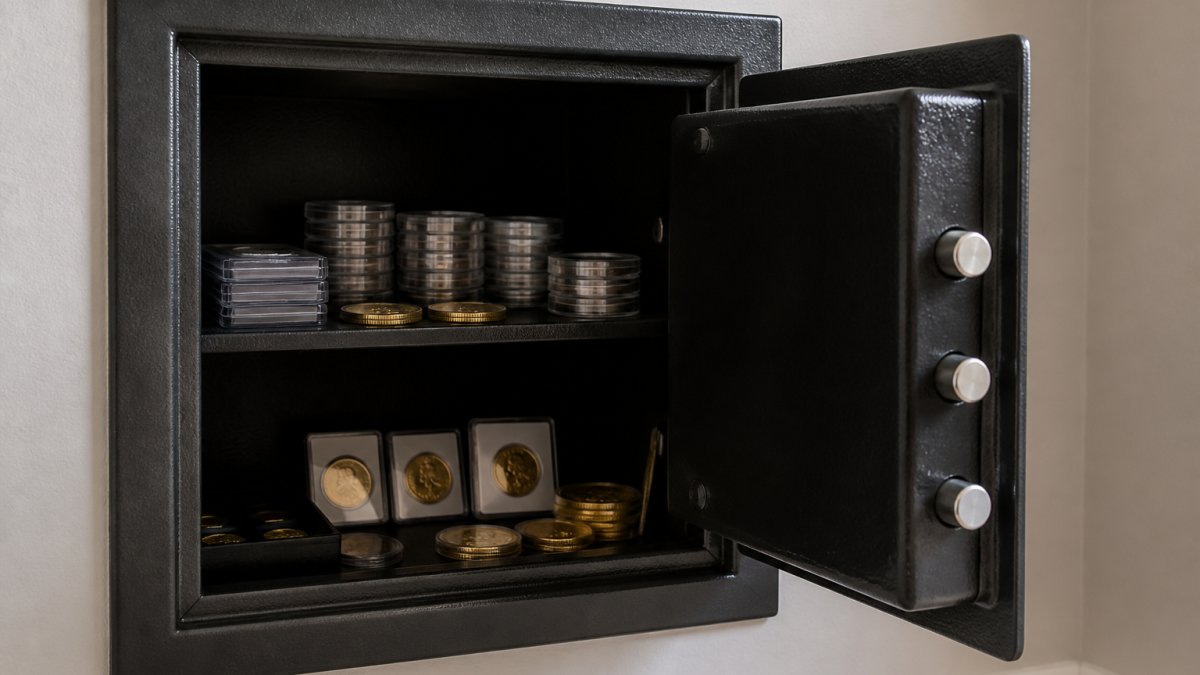
A home safe offers convenience and immediate access to your collection. The key is choosing the right safe and installing it properly so it actually protects your coins.
Choosing the Right Safe
Size your safe to your collection: a small safe suits five to ten coins, while larger collections need more capacity.
Weight matters more than you'd expect: a light safe can be carried away, while a quality home safe typically weighs between 50 and 200 kilograms.
Consider the locking mechanism. Electronic locks offer convenience, but mechanical combination locks work without batteries and never fail due to power loss, many collectors prefer them for long-term security without maintenance.
Placement and Anchoring
Location matters. Never place a safe in an obvious spot like a bedroom closet, thieves check common hiding places first. Consider a less obvious room, behind a false wall, or a basement corner.
Anchor your safe with bolts through its base into concrete or solid flooring. A bolted safe cannot be lifted and carried; an unbolted one, no matter how heavy, remains vulnerable.
Keep the safe's location confidential, the fewer people who know, the lower your risk.
Gold Coin Storage Capsules and Protective Holders
Direct contact with hands, air, or other coins causes damage. Capsules and holders isolate each coin and prevent tarnishing.
Materials to Avoid
Never store coins in PVC holders. PVC breaks down over time and releases acids that damage gold and eat through coin surfaces. Avoid cardboard holders without protective lining. Paper absorbs moisture and transfers it to coins.
Rubber bands can stain coins, and tissue paper and newspaper are acidic. Even some "archival" products contain harmful chemicals, so always check holders are certified safe for precious metals.
Choosing the Right Capsule Type
Airtight capsules keep moisture away from coins. Look for inert plastics like polypropylene or acrylic, which don't react with gold and resist degradation.
Coin slabs offer the highest protection: a sealed holder with the coin locked inside, preventing all contact with air and moisture.
For bullion coins, simple capsules work well, a snug fit holds the coin steady, since coins that rattle can develop edge damage.
Store valuable coins individually: one damaged holder then won't affect your entire collection. Bulk storage saves space but increases risk if the container fails.
Insuring Gold Coin Collections
Standard home contents policies typically cap cover for valuables and may exclude coins altogether, or apply a single-item limit far below the value of a decent collection. Read the valuables section and single-article limit before relying on your policy; if your coins exceed either, you need a policy extension or a specialist precious-metals policy.
What a Specialist Policy Actually Covers
Specialist collectibles and precious-metals insurers generally offer two structures:
- Blanket cover, a single sum insured for the whole collection. Cheaper and simpler, but the insurer may apply an average clause, meaning under-insurance reduces every claim proportionally.
- Scheduled (itemised) cover, each coin listed with its own value. More expensive, but pays the stated amount for that item without dispute, and is the usual route for rare numismatic pieces.
Most specialist policies cover theft, fire, flood, accidental damage and transit. Check three exclusions carefully: gradual wear and tear, damage caused by your own cleaning or handling, and loss while the coin is with a third party such as a dealer or auction house.
Getting a Valuation That Insurers Accept
Insurers want a valuation that reflects replacement cost, not what you paid. For bullion coins, that is the current spot price plus the dealer premium you would pay to buy the same coin back.
A defensible valuation document normally includes:
- A description of each coin (denomination, year, mint, grade where applicable)
- A photograph of both faces
- The replacement value in pounds
- The valuer's name, qualifications and date
For higher-value numismatic pieces, use a valuer who is a member of a recognised professional body and who grades to a published standard. For bullion, a written dealer quote is usually sufficient. Revalue every 12-24 months, and always after a significant move in the gold price.
Documentation That Survives a Claim
Keep a digital and a physical record, stored separately from the coins:
- Photographs of each coin, plus a photograph of the coin next to a ruler for scale
- Purchase receipts, auction invoices and any certificates of authenticity
- The valuation document
- A simple inventory spreadsheet with purchase date, cost and current insured value
If you inherit coins, get them valued before adding them to a policy, inherited collections are a common source of under-insurance.
2017 Queen Elizabeth II Full Gold Sovereign →
Practical Cost Expectations
Specialist premiums are usually quoted as a rate per £1,000 of insured value, with minimum premiums applying to small collections. Expect scheduled cover to cost more than blanket cover for the same total sum. If your collection is small, it may be cheaper to raise your home policy's valuables limit than to take out a standalone policy, but confirm in writing that coins are covered, because many standard policies exclude them.
Environmental Conditions and Humidity Control
Gold doesn't rust, but moisture still damages coins. Humidity causes toning, spotting, and surface corrosion over decades.
Keep humidity below 50 percent. A hygrometer measures moisture in the air.
Silica gel packets absorb moisture and should be replaced every six months or when saturated.
Avoid temperature swings, since rapid changes cause condensation.
Never store coins in a damp environment. Cellars, garages, and unheated sheds invite moisture damage.
Light exposure matters less for gold than for some collectibles, but UV light can fade any paper documentation stored with coins.
Bank Vaults and Professional Storage
Off-site storage removes the biggest risk of home storage: a burglary or fire you cannot control. The trade-off is access, cost and who carries the insurance.
Safety Deposit Boxes
A safety deposit box is a locked compartment inside a bank or vault facility, rented for an annual fee priced by size, commonly tens to low hundreds of pounds depending on the facility and dimensions.
Key points to weigh:
- Access is usually restricted to the facility's opening hours, and some providers require notice or an appointment.
- Insurance is normally not included. You must insure the contents yourself, and you must tell your insurer the coins are stored off-site.
- Confidentiality varies. Some facilities require identification and log every visit; others are more discreet.
- Continuity risk, if the facility closes or relocates, you must retrieve your coins within a deadline.
Specialist Bullion Vaults
Specialist vaults store precious metals as their core business, typically offering:
- Allocated storage, where specific coins are recorded as yours rather than pooled
- Insurance arranged by the vault, often included in the fee
- Online records of your holdings
- Higher-security premises with professional custody procedures
Costs are usually higher than a bank box, quoted as a percentage of the stored value or a flat annual fee per unit of space. Because the vault insures the contents, you may not need a separate policy, but confirm the cover level and whether it pays replacement cost or market value.
What to Ask Before You Sign
- Is storage allocated or unallocated? Allocated means your specific coins are identified and segregated.
- Who insures the contents, for how much, and on what basis?
- What is the procedure for withdrawing part or all of the collection, and how much notice is required?
- What happens if the facility fails, is sold, or is subject to a legal dispute?
- Are there restrictions on the types of coins accepted (for example, numismatic pieces versus bullion)?
The Hybrid Approach Most Collectors Use
A common pattern is to split the collection by value and access needs:
- Frequently viewed or handled coins, home safe, individually encapsulated.
- High-value numismatic pieces, off-site vault or safety deposit box, visited rarely.
- Bullion bought for metal content, off-site storage, since condition matters less and the coins are not handled.
This keeps the coins you enjoy close at hand while moving the pieces you would least want to lose out of the house.
Storage Practices for Different Gold Coin Types
Bullion coins and numismatic coins have different storage needs.
Bullion coins like the 2017 Queen Elizabeth II Full Gold Sovereign contain a known amount of pure gold.
Numismatic coins like the 1917 King George V Full Gold Sovereign - Perth Mint have collector value beyond their metal content.

Commemorative coins like the 2020 Winston Churchill Commemorative Gold Coin fall between bullion and numismatic.
For any valuable coin, minimise handling. Wear cotton gloves when you must touch a coin. Never clean a coin.
Store coins in the same orientation. Coins stacked face-to-face can rub.
| Coin Type | Best Storage Method | Access Frequency | Insurance Priority |
|---|---|---|---|
| Bullion coins | Home safe with capsules | Monthly or less | Medium |
| Numismatic coins | Bank vault or specialist vault | Rarely | High |
| Commemorative coins | Home safe with individual capsules | Quarterly | Medium-High |
| Mixed collection | Home safe for bullion, vault for rare pieces | Varies | High |
Protecting your gold coin collection starts with the right storage setup.
Gold2u provides historical gold coins and commemorative pieces that deserve proper care.
Frequently Asked Questions
What is the most secure way to store gold coins at home?
A bolted home safe rated for precious metals offers strong protection. Position it in a concealed location away from obvious places like bedrooms. Combine this with proper insurance, humidity control, and protective capsules. For high-value collections like the 1917 King George V Full Gold Sovereign (worth £1,200), consider a multi-layer approach: a quality safe, environmental controls, and professional insurance coverage to protect against theft and damage.
Do I need insurance for my gold coin collection?
Yes, insuring your gold coin collection is essential. Standard home insurance often excludes or limits precious metals coverage. Specialist insurance policies protect against theft, damage, and loss. Document each coin with photographs, certificates, and valuations. For collectible pieces like commemorative sovereigns, professional appraisals strengthen your claim. It is a worthwhile investment for valuable holdings.
What materials should I avoid when storing gold coins?
Avoid PVC holders, newspaper, cardboard, and rubber bands, which can cause chemical reactions and tarnish. Don't use plastic bags that trap moisture. Never store coins loose in drawers where they can scratch. Acidic materials damage surfaces over time. Use only inert materials like certified capsules, archival-grade holders, or acid-free boxes. For coins like the Icons of the World Panda Gold Coin (£145), proper capsules prevent deterioration and maintain numismatic value.
Should gold coins be stored in capsules or protective flips?
Storage capsules are superior to flips for long-term protection. Capsules provide airtight sealing, humidity control, and physical protection from handling. Flips offer minimal protection and can degrade over time. For collectible coins with numismatic value, capsules preserve condition and resale value. For bullion coins like the 2017 Queen Elizabeth II Full Gold Sovereign (£1,050), capsules prevent oxidation and keep coins in investment-grade condition.


0 comments