

Table of Contents
- Why Buy Antique Jewellery With Certificate
- Understanding Gemstone Certification and Authenticity
- How to Spot Authentic Vintage Jewellery
- Antique Jewellery Valuation Certificate: What It Means
- Certified Antique Pieces Worth Buying Now
- Insurance for Antique Jewellery: Protecting Your Investment
- Frequently Asked Questions
Last Updated: October 2, 2026
Why Buy Antique Jewellery With Certificate
Buying antique jewellery with certificate offers documented authenticity and historical provenance that modern pieces cannot match. You acquire not just a beautiful object, but a verifiable piece of history backed by professional assessment.
A certificate protects against counterfeit or misrepresented pieces by documenting the gemstone's characteristics, metal composition, and estimated age or era, essential whether you're collecting for investment, seeking a heirloom, or verifying authenticity.
The certificate transforms an antique purchase into an informed decision, answering critical questions: Is this stone real? How old is it? What's its quality? Has it been treated? Without documentation, you rely entirely on the seller's word.
Understanding Gemstone Certification and Authenticity
Gemstone certification is a formal assessment by a qualified gemmologist or laboratory documenting a stone's characteristics, origin, and treatments. For antique jewellery, it's your primary defence against misrepresentation.
The certificate should detail four key characteristics: carat weight, colour grade, clarity, and cut. For antique pieces, old mine and old European cuts have their own grading conventions reflecting hand-cutting methods from over a century ago.
What Certified Diamond Reports Include
A comprehensive diamond report includes dimensions, carat weight, GIA colour grade (D to Z), clarity grade (FL to I3), and a plot showing inclusions. It notes whether the diamond has been laser inscribed with a unique identification number linking the stone to the report.
For antique pieces, the report specifies the cut type, old mine, old European, or other historical variations, with their distinctive proportions and facet patterns.
Many certificates include grading photographs and some provide videos showing the stone's brilliance and fire, helping you verify you're receiving the exact stone described.
Hallmark Identification Guide for Precious Metals
Hallmarks are stamps indicating metal purity and the assay office that verified it. Understanding hallmarks is essential when buying antique jewellery, as they confirm genuine precious metal rather than plated or filled.
In the UK, hallmarks are regulated by the British Hallmarking Council and must appear on precious metal items above certain weight thresholds. A typical hallmark includes the maker's mark, assay office mark, and fineness mark.
Gold marks include 375 (9-carat), 585 (14-carat), 750 (18-carat), or 916 (22-carat). Platinum carries 950 or 900. Silver carries 925 (sterling) or 800 (continental).
Edwardian and Victorian jewellery often carries the London assay office mark (lion passant). Other pieces show marks from Birmingham, Edinburgh, or other UK assay offices, guarantees the piece has been tested and verified as genuine precious metal.
How to Spot Authentic Vintage Jewellery
Spotting authentic vintage and antique jewellery requires examining both the physical characteristics of the piece and the documentation provided. Several visual and tactile clues reveal whether a piece is genuinely antique or a modern reproduction.
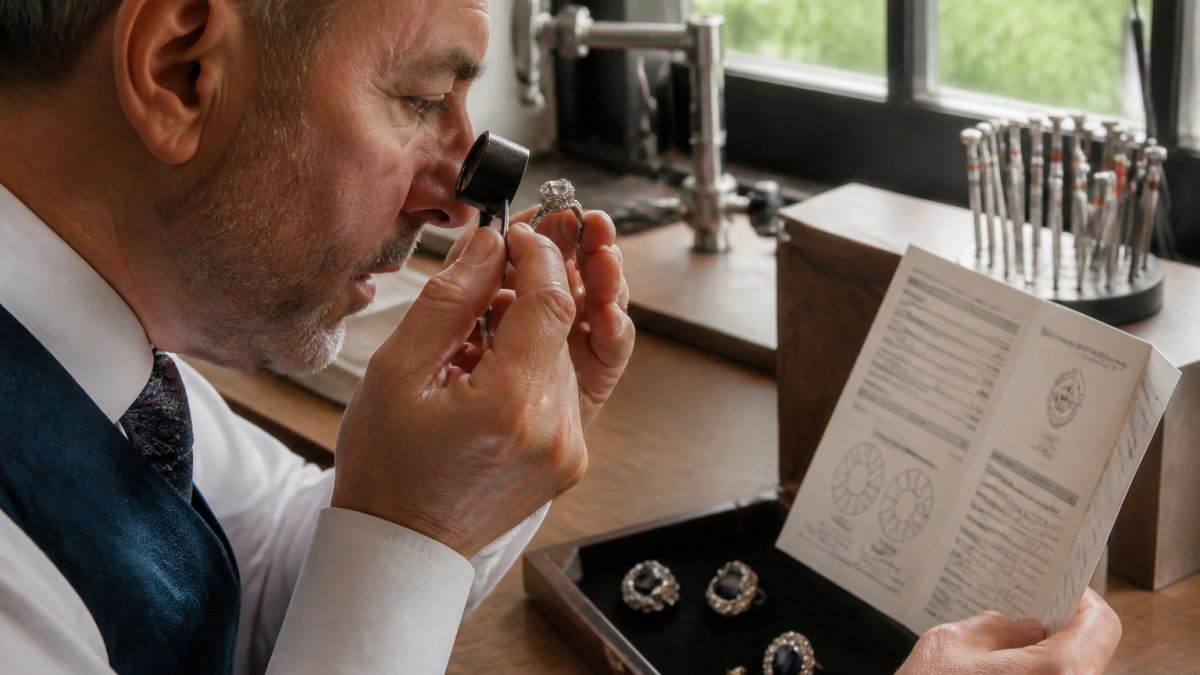
Authentic old mine cut diamonds display larger, fewer facets creating dramatic coloured light flashes rather than uniform sparkle. Tilted in natural light, they show soft, warm fire with occasional dark areas, "kozibe" reflections, hallmarks of genuine hand-cut antique diamonds.
The setting tells a story. Edwardian and Victorian settings show hand-engraving, milgrain detailing, and intricate filigree work that cannot be economically reproduced. The metal shows age: subtle wear patterns, patina, and minor dents proving decades of wear.
Authentic antique platinum and gold jewellery feels substantially heavier than modern pieces of similar size because older jewellers used more metal. A genuine Edwardian platinum bracelet might weigh 17 grams or more.

Antique pieces were typically hand-fabricated with individually riveted links and hand-set stones, while modern reproductions are usually cast. Minor irregularities in genuine antique pieces prove human craftsmanship and add value.
Antique Jewellery Valuation Certificate: What It Means
A valuation certificate differs from a gemstone report. While a gemstone report documents physical characteristics, a valuation certificate estimates the current market value of the entire piece, including metal, stones, and craftsmanship.
3.06 Carat Emerald Cut Diamond Ring by David M Robinson →
This certificate is essential for insurance. Homeowner's or renter's insurance won't cover valuable antique pieces at full value without professional valuation. The certificate provides documentation your insurer requires.
Valuations are conducted by independent gemmologists or jewellers with no financial interest in the piece. A reputable valuer examines it in person, verifies materials, assesses condition, and researches comparable sales, more thorough than quick estimates from shops hoping to buy.
Reading Your Valuation Report
A professional valuation report begins with detailed physical description: type, metals, gemstones, and dimensions. It notes any damage, repairs, or restoration work.
The report documents each stone's characteristics: carat weight, colour, clarity, and cut. For antique pieces, it notes the historical era or style, as this affects value. Authentic Edwardian old mine cut diamonds command premiums due to rarity and historical significance.
The valuation is expressed as current replacement value, the amount to purchase an equivalent piece today. This figure is used for insurance and represents what you could reasonably expect if you sold the piece.
Reputable valuers will also note any treatments or enhancements the stone may have undergone. For antique pieces, this is particularly important because many older diamonds have never been treated, which adds to their value. The report should explicitly state whether the diamond is natural and untreated.
Certified Antique Pieces Worth Buying Now
When evaluating certified antique jewellery for purchase, focus on pieces that combine historical significance, genuine craftsmanship, and documented authenticity. The best pieces offer investment potential alongside aesthetic appeal.
Edwardian and Victorian Era Rings
Edwardian rings (1901-1910) represent the pinnacle of delicate, hand-crafted jewellery design. These pieces feature intricate filigree, milgrain detailing, and often showcase old mine or old European cut diamonds. The platinum settings used during this era are remarkably durable, and many Edwardian rings have survived in excellent condition.
The 3 Carat Old Cut Diamond Ring exemplifies what makes antique Edwardian pieces valuable. At £25,000, this ring features a genuine 3-carat old mine cut diamond in a platinum and gold setting with hand-set shoulder diamonds. The piece comes with an AnchorCert certificate documenting its authenticity and era. What distinguishes this ring is its provenance, it's a true antique with over a century of history, not a reproduction made to look old.

Victorian era rings (1837-1901) offer a different aesthetic. These pieces often feature more ornate designs with multiple gemstones and elaborate metalwork. The Victorian-Era Old Cut Diamond Three Stone Ring at £3,500 demonstrates excellent value for collectors. With approximately 1.75 carats total diamond weight across three hand-cut stones, this trilogy ring captures the romantic aesthetic Victorian jewellers perfected. The certificate documents the stones' characteristics and the ring's mid-century vintage status.
Modern Certified Diamond Rings
For those preferring contemporary design with the assurance of modern certification, contemporary certified diamond rings from Gold2u offer transparency and quality documentation that antique pieces, by definition, cannot provide.
The 3.06 Carat Emerald Cut Diamond Ring by David M Robinson at £59,999 features a principal diamond laser inscribed with an IGI certificate number, corresponding to a formal report dated 3 June 2014.

| Piece | Era | Carat Weight | Price | Best For |
|---|---|---|---|---|
| 3 Carat Old Cut Diamond Ring | Edwardian (c. 1900) | 3.0 | £25,000 | Investment collectors seeking antique provenance |
| Victorian Three Stone Ring | Victorian (c. 1940-60s) | 1.75 | £3,500 | Budget-conscious antique collectors |
| 3.06 Carat Emerald Cut (Modern) | 2022 | 3.06 | £59,999 | Contemporary design with modern certification |
| 5.77 Carat Round Brilliant (Modern) | 2022 | 5.77 | £67,000 | Maximum carat weight with halo setting |
| Five-Stone Heirloom Ring | Vintage-inspired | 0.5 (approx.) | £1,390 | Entry-level old cut diamond buyers |
| Edwardian Platinum Bracelet | Edwardian (c. 1905-1915) | 6.5 | £14,999 | Collectors seeking substantial antique pieces |
Insurance for Antique Jewellery: Protecting Your Investment
Once you've purchased certified antique jewellery, proper insurance is essential. Standard homeowner's or renter's insurance typically covers jewellery only up to £1,500-£2,500 total.
Frequently Asked Questions
What information should be included on an antique jewellery certificate?
A proper antique jewellery certificate should list the gemstone specifications (carat weight, colour grade, clarity, cut), metal type and hallmarks, dimensions, estimated age or era, condition notes, and the jeweller's or gemologist's assessment. For diamonds, it will include laser inscription numbers if present. The certificate should be dated and signed by the issuer. Always verify the certificate matches the piece you're purchasing, check the laser inscription number on the stone itself against the report.
How do you authenticate antique jewellery?
Authentication combines several checks: examine hallmarks on precious metals using a hallmark identification guide, look for period-appropriate construction techniques (hand-set stones, milgrain detailing, soldered joints), assess the gemstone under magnification for natural ageing patterns, and verify any certification documents. Professional gemologists use specialised equipment like diamond testers and loupe magnification. Request a gemological report from a reputable lab. Authentic antique pieces often show age-appropriate patina and wear patterns that cannot be artificially replicated.
Why is an independent valuation certificate important for antique diamonds?
An independent valuation certificate provides unbiased assessment of a diamond's quality, grade, and fair market value. It protects you from overpaying and serves as proof of authenticity and condition for insurance purposes. Independent certificates from recognised labs (such as those using standardised grading systems) are more credible than seller-provided valuations. They document the stone's characteristics in detail, making resale easier and establishing a baseline value for insurance claims if the piece is ever damaged or lost.
How do I know if vintage jewellery is investment grade?
Investment-grade antique jewellery typically meets these criteria: authenticated provenance with supporting documentation, hallmarked precious metals (platinum, 18k gold), high-quality gemstones with certification, period-appropriate craftsmanship (hand-fabricated details, milgrain work), rarity within its era, and excellent condition. Edwardian and Victorian pieces with old mine cut diamonds, for example, command higher values because they're no longer produced. Always obtain a professional valuation and appraisal report before purchasing as an investment. Pieces with documented history and certificates hold their value better than undocumented items.


0 comments