

Last Updated: October 23, 2026
Quick Summary
To date antique diamond cuts, examine the stone's crown height, table facet size, facet patterns, and light performance under candlelight. Antique diamonds cut before 1920 show hand-cutting irregularities, tall crowns, small tables, and warm, glowing reflections rather than bright sparkles, distinguishing them from modern machine-cut stones.
- Antique diamonds were cut before 1920; vintage diamonds date from 1920s through 1970s.
- Old mine cuts have high crowns, small tables, and deep pavilions; old European cuts are rounder with larger tables.
- Hand-cut antique diamonds show asymmetrical facets and visible culets, while modern brilliant cuts are highly symmetrical.
- Antique stones glow with warm, coloured flashes under candlelight but appear darker under electric light.
- Check the setting for hallmarks and construction methods; platinum settings indicate Edwardian era, while hand-fabricated work suggests earlier production.
Table of Contents
- What Qualifies as an Antique or Vintage Diamond
- The Evolution of Diamond Cutting Through History
- Key Antique Diamond Cuts: Point, Rose, Old Mine, and Old European
- Old European Cut Diamond vs Old Mine Cut: Key Differences
- How to Tell if a Diamond is Antique: Observable Features
- Antique Diamond Cut Identification: Diagnostic Measurements
- Dating Uncertainty: Overlapping Production Periods and Recuts
- Antique Diamond Settings and Hallmarks: Dating the Metal
- Frequently Asked Questions
What Qualifies as an Antique or Vintage Diamond
An antique diamond is a stone cut and polished before approximately 1920, when modern cutting techniques became standard. A vintage diamond typically refers to stones from the 1920s through 1970s. How to date antique diamond cuts relies on understanding these production periods and the evolution of cutting methods.
The term "antique" describes the diamond itself, not the setting. You can have an antique diamond in a modern platinum setting, or a modern diamond in an antique gold ring.
Most antique diamonds were cut by hand using basic tools, each cutter working by eye, which is why no two old mine cuts look identical. Modern diamonds are cut by machines to precise specifications. At Gold2u, we specialise in authentic antique old mine cut diamond jewellery, and understanding these differences helps distinguish genuine period pieces from modern reproductions.

The Evolution of Diamond Cutting Through History
Diamond cutting evolved dramatically over four centuries. Early cutters prioritised protecting the stone's weight; later cutters prioritised light performance. This shift created distinct cutting styles that help you date antique diamond cuts.
The earliest diamonds were simply polished to show their natural crystal shape.
The 19th century brought the old mine cut, a chunky, hand-cut style with a high crown and small table.
Each style reflects the technology and aesthetics of its era. Learning how to date antique diamond cuts is essentially reading a timeline written in facet patterns.
Key Antique Diamond Cuts: Point, Rose, Old Mine, and Old European
Point-Cut and Table-Cut Diamonds
The point cut is the simplest antique cut: a single facet on top and a pointed bottom, resembling a four-sided pyramid.
The table cut evolved shortly after. It replaced the top point with a flat, square facet, the "table." The bottom remained pointed. Table cuts appeared from the 1600s through 1700s and are extremely rare today.
Both cuts prioritised weight retention over light return, since cutters removed as little material as possible to avoid damaging the rough stone.
Rose-Cut Diamonds
The rose cut dominated the 1700s and early 1800s, with a flat base and a domed crown covered in triangular facets arranged in rows, typically 12, 18, or 24 total. The result resembles an unfolded rose, hence the name.
Rose cuts perform beautifully under candlelight, scattering light into warm, glowing reflections rather than sharp sparkles. They're smaller than old mine cuts but distinctly romantic, and never became as popular, making them genuinely rare in antique jewellery.
Old Mine Cut Diamonds
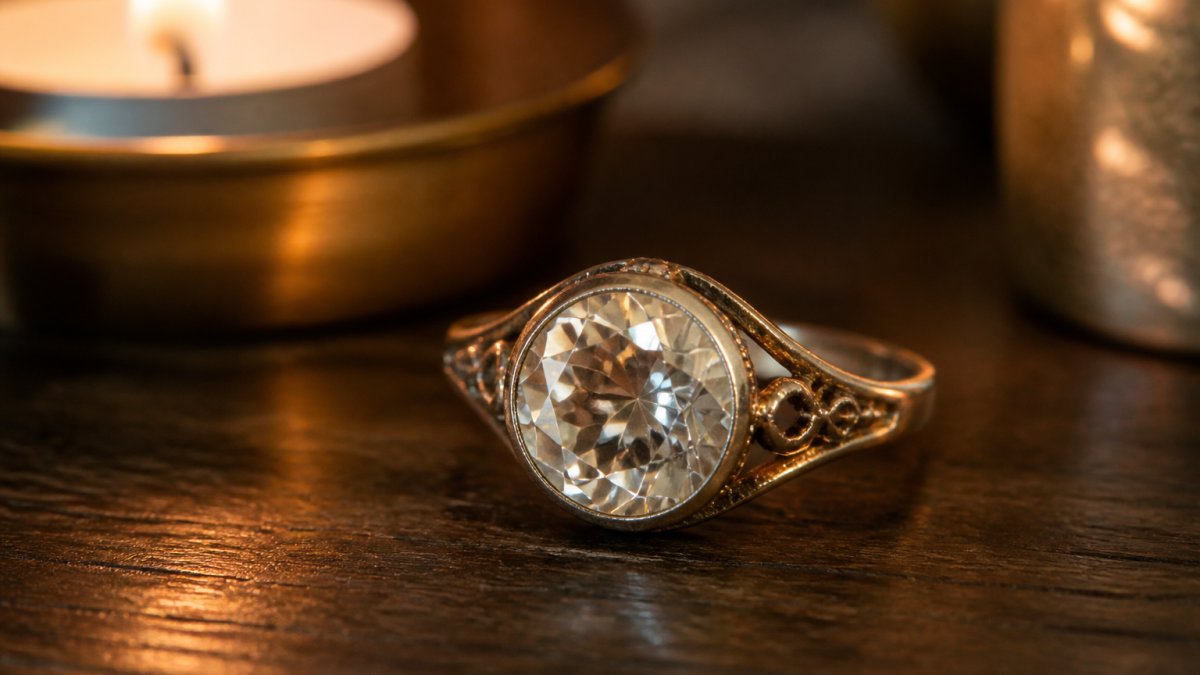
The old mine cut emerged in the 1700s and remained the standard until 1920. It's the most common antique cut you'll encounter. Old mine cuts have a high crown, a small table, a deep pavilion (the bottom part of the stone), and broad, chunky facets.
What makes old mine cuts special is their light performance. Cut by hand for candlelight, they glow with warm, colourful flashes under it, but can appear darker and less sparkly than modern brilliant cuts under showroom lighting.
The 3 Carat Old Cut Diamond Ring at Gold2u exemplifies this style. The stone displays the high crown, small table, and deep pavilion that define genuine old mine cuts. Hand-set in platinum with yellow gold, it captures the craftsmanship of the Edwardian era. You can find this ring for £25,000.00 at https://gold2u.co.uk/products/3-carat-old-cut-diamond-ring.

Old European Cut Diamonds
The old European cut emerged around 1890 and dominated until 1950, transitional between old mine cuts and modern brilliant cuts. Old European cuts are rounder, with a larger table and shallower pavilion, retaining hand-cut characteristics but showing more precision and symmetry.
Old European cuts perform well under both candlelight and electric light, offering more sparkle than old mine cuts while retaining the warm, colourful fire that makes antique stones desirable. Many collectors consider them the "sweet spot" of antique cutting.
Old European Cut Diamond vs Old Mine Cut: Key Differences
Understanding the differences between old European cuts and old mine cuts is essential when learning how to date antique diamond cuts.
Old mine cuts have a higher crown, a smaller table facet, and a deeper pavilion, appearing square or cushion-shaped from above.
Old European cuts have a lower crown, a larger table, and a shallower pavilion, appearing rounder from above.
Light performance differs too.
The transition between styles happened gradually. Some stones from the 1890s-1910s period blend characteristics of both.
How to Tell if a Diamond is Antique: Observable Features
Learning how to tell if a diamond is antique requires examining specific physical characteristics. You don't need expensive equipment, careful observation under good lighting reveals a lot.
Crown Height and Table Facet Size
Crown height is the distance from the girdle (the widest part of the stone) to the top facet. Antique diamonds have noticeably taller crowns than modern brilliant cuts.
The table facet is the flat facet on the very top of the stone. Antique diamonds have small tables, often just 40-50% of the stone's width.
To assess these features, look at the stone from the side. A side view reveals crown height immediately. From the top, compare the table size to the overall width.
Facet Patterns and Hand-Cutting Evidence
Hand-cut diamonds show subtle irregularities machine-cut stones don't: asymmetrical facet edges, slight variations in facet size, and uneven facet alignment.
Under a jeweller's loupe at 10x power, examine the facet edges.
3 Carat Old Cut Diamond Ring →
Count the facets on the crown (the top half). Antique old mine cuts typically have 8 crown facets arranged in a specific pattern. Old European cuts have similar patterns but with slightly different proportions.
Light Performance: Candlelight vs Showroom Sparkle
This is the most telling characteristic.
Under modern electric or LED light, antique stones can appear darker or less sparkly than expected. This isn't a defect. It's proof the stone was cut for a different light source.
Modern brilliant cuts were engineered for electric light. They produce rapid, white sparkles. They look dull under candlelight.
To test this yourself, view the stone under a candle or warm-toned lamp. If it glows with large, colourful flashes, it's likely antique. If it sparkles uniformly white, it's likely modern.
Antique Diamond Cut Identification: Diagnostic Measurements
Professional gemologists use specific measurements to date antique diamond cuts. You don't need to memorise all of them, but the key ones help you evaluate stones confidently.
Culet Size and Girdle Thickness
The culet is the tiny facet at the very bottom of the stone (or sometimes a point, if there's no facet).
A visible culet is strong evidence of age. It indicates hand-cutting, because cutters often left a small flat bottom to protect the stone during the cutting process.
The girdle is the widest edge of the stone, the boundary between crown and pavilion. Antique girdles are often thicker and more uneven than modern girdles. A thick, slightly wavy girdle suggests hand-cutting.
Pavilion Depth and Symmetry Clues
The pavilion is the bottom half of the stone. Antique pavilions are typically deeper than modern ones. A deep pavilion contributes to the warm, glowing light performance of old cuts.
Measure pavilion depth by comparing it to the crown height. In old mine cuts, the pavilion is often noticeably deeper.
Symmetry also reveals age. Modern brilliant cuts are highly symmetrical, facets are nearly identical on opposite sides. Antique hand-cut diamonds show subtle asymmetries. One side might have slightly larger facets than the other.
Dating Uncertainty: Overlapping Production Periods and Recuts
Dating antique diamond cuts isn't always straightforward. Production periods overlap, and some stones were recut or polished multiple times.
The transition from old mine cuts to old European cuts happened gradually between 1890 and 1920. Stones from this period may show mixed characteristics.
Some antique diamonds were recut in later decades.
Distinguishing a diamond's age from its setting's age is crucial. A stone cut in 1850 might sit in a setting made in 1950.
When you can't determine age with certainty, qualified language is appropriate.
Antique Diamond Settings and Hallmarks: Dating the Metal
The setting often provides clues about age, though it doesn't always match the diamond's age.
Platinum Hallmarks and Edwardian Era Indicators
Platinum became fashionable around 1900 and dominated until 1930. Platinum settings are a strong indicator of Edwardian or early Art Deco era jewellery.
Look for hallmarks inside the band. UK platinum jewellery should bear a "950" mark (indicating 95% pure platinum) and a maker's mark. Hallmarks confirm authenticity and approximate age.
Edwardian platinum settings typically feature delicate filigree, milgrain borders (tiny beaded edges), and intricate pierced galleries. The 6.5 Carat Edwardian Platinum Graduated Old Cut Diamond Bracelet at Gold2u exemplifies this craftsmanship.
Gold Purity Marks and Construction Methods
Gold settings require hallmarks too. UK gold jewellery bears marks indicating purity: 375 (9 carat), 585 (14 carat), or 750 (18 carat).
Construction method also reveals age. Hand-fabricated settings show subtle irregularities. Solder seams may be slightly visible.
Examine the back of the setting under magnification. Hand-fabricated pieces show tool marks and slight asymmetries.
The Victorian-Era Old Cut Diamond Three Stone Ring at Gold2u displays characteristics of hand-fabricated construction.

Dating antique diamond cuts requires patience and observation. Start by examining crown height, table size, and facet patterns.
Frequently Asked Questions
What is the difference between an old mine cut and an old European cut diamond?
Old mine cuts predate old European cuts and feature a larger culet (the small facet at the diamond's base), a higher crown, and a smaller table facet. They were hand-cut before standardised proportions existed, creating asymmetrical facet patterns. Old European cuts emerged in the late 19th century with more regular faceting, a smaller culet, and slightly lower crowns. Both produce the warm, candlelit glow prized by collectors, but old mine cuts appear slightly more irregular due to their hand-cut origins. The old European cut represents the transition toward modern brilliant cutting.
How can you tell if a diamond is antique by examining its facet pattern?
Antique diamonds, whether old mine or old European cuts, display visible asymmetry in their facet arrangement, a hallmark of hand-cutting. Use a jeweller's loupe to inspect the crown facets; antique stones show uneven spacing and slightly different angles across facets. Modern brilliant cuts, by contrast, feature precise, symmetrical faceting. Additionally, antique diamonds often have a visible culet (the tiny flat point at the base), while modern stones are typically pointed. The facet edges of antique stones may appear slightly worn or bevelled from age and handling, whereas modern cuts have sharp, clean facet junctions.
Can you date a diamond by its cut alone, or do you need the setting?
The diamond's cut provides strong clues to its era, point cuts suggest pre-1700s, rose cuts indicate 17th-19th centuries, old mine cuts point to 1750-1920, and old European cuts suggest 1880-1950. However, dating by cut alone carries uncertainty because production periods overlap significantly and diamonds have been recut throughout history. Examining the setting is crucial: platinum indicates Edwardian or Art Deco (1900-1935), while specific hallmarks and construction methods narrow the date further. For reliable dating, combine cut analysis with setting examination and, ideally, professional gemological documentation.
What should I look for in antique diamond settings and hallmarks to confirm the age?
Platinum settings with hand-applied milgrain beading and pierced filigree galleries typically indicate Edwardian (1901-1910) or Art Deco (1920-1935) manufacture. Check for platinum hallmarks (usually stamped inside the band or on gallery work). Gold settings should display period-appropriate purity marks: 18 carat or 15 carat for British jewellery of the Victorian and Edwardian eras. Hand-fabricated links, individually set stones, and hand-pierced metalwork indicate genuine period craftsmanship, whereas cast construction suggests later production. The weight of platinum (notably heavier than modern cast pieces) also confirms authentic early fabrication.


0 comments