

Table of Contents
- Step 1: Understand What Makes a Ring Antique
- Step 2: Learn How to Identify an Antique Diamond Ring
- Step 3: Judge the Old Mine Cut Diamond Ring on Its Own Terms
- Step 4: Apply the Four Cs to a Hand-Cut Stone
- Step 5: Inspect Condition, Setting and Everyday Wear
- Step 6: Work Out Antique Diamond Ring Value Before You Agree a Price
- Step 7: Arrange an Antique Diamond Ring Appraisal and Protect Your Purchase
- Frequently Asked Questions
Last Updated: October 21, 2026
Step 1: Understand What Makes a Ring Antique
An antique diamond ring is a piece made before the 1930s, and that age is what drives both its character and its value. At Gold2u, we see buyers fall in love with the look first and ask about age second. That order causes mistakes.

Age changes everything: the cut, the setting, the price, and how you should care for the piece.
Antique Versus Vintage: The Age Ranges That Matter
The trade draws a firm line between the two terms.
- Antique: made before roughly 1930
- Vintage: made from the 1930s to around the 1990s
- Modern: made recently, usually with computer-cut stones
A Victorian-era old cut diamond three stone ring sits firmly in the antique camp. A late 1990s cluster ring is vintage. Sellers often blur this line, so ask for a date and a reason for that date.
The Four Eras You Will Meet Most Often
Most antique pieces fall into four periods:
- Victorian (roughly 1837 to 1901): yellow gold, rose cuts, cluster settings, sentimental motifs
- Edwardian (roughly 1901 to 1915): platinum, delicate milgrain, lacy openwork, light and airy designs
- Art Deco (roughly 1920 to 1935): bold geometry, contrast, step cuts and strong symmetry
- Mid-Century (roughly 1940 to 1960): three-stone trilogy designs, warm gold, low-profile settings built for daily wear
Knowing the era tells you what the original setting should look like. That helps you spot a stone that has been re-mounted later.
Step 2: Learn How to Identify an Antique Diamond Ring
Learning how to identify an antique diamond ring comes down to three checks: the cut, the setting, and the paperwork.
Start with the stone. Old cuts were shaped by hand and by eye, so they are rarely perfectly symmetrical. Look for a small table, a high crown, and a deep pavilion.
Then look at the setting. Hand-cut milgrain, fine shoulder detail, and a slightly uneven finish all point to period work.
Finally, read the hallmarks. A UK hallmark tells you the metal purity and often the assay office (Hallmarking: practical guidance - summary). For context on UK hallmarking rules, see the Assay Office hallmarking guidance.
Build an Evidence Trail, Not a Guess
Most buyers stop at "it looks old". A safer approach is to assemble a small evidence trail and ask the seller to stand behind it in writing. Work through these in order:
- Metal and hallmark: confirm the purity mark and, where present, the maker's mark and assay office. A date letter, where used, narrows the year but is not conclusive on its own.
- Cut style: match the facet pattern to a known period cut rather than to a modern round brilliant. A stone that performs like a computer-cut brilliant is unlikely to be period.
- Setting construction: look at how the claws were formed, whether the gallery is hand-pierced, and whether the shoulders show tool marks consistent with hand work.
- Wear pattern: genuine age usually shows uneven wear on high points, slight thinning at the back of the band, and patina in recesses. Uniform, mirror-perfect wear is more typical of a modern reproduction.
- Repairs and restoration: ask directly what has been replaced, re-tipped, re-shanked or re-set, and get the answer in writing.
What Documentation to Request Before You Buy
A verbal age claim is worth very little. Ask for, and keep, the following where they exist:
- A written description stating the stated era and the reasoning behind that date.
- Any previous appraisal or gemmological report, with the laboratory or gemmologist named.
- A statement of restoration, listing replaced claws, shanks, stones or settings.
- The seller's written policy on authenticity, returns and remedies if the stated era proves wrong.
Step 3: Judge the Old Mine Cut Diamond Ring on Its Own Terms
An old mine cut diamond ring should be judged for fire and character, not for the sharp sparkle of a modern stone. This is where most buyers go wrong.
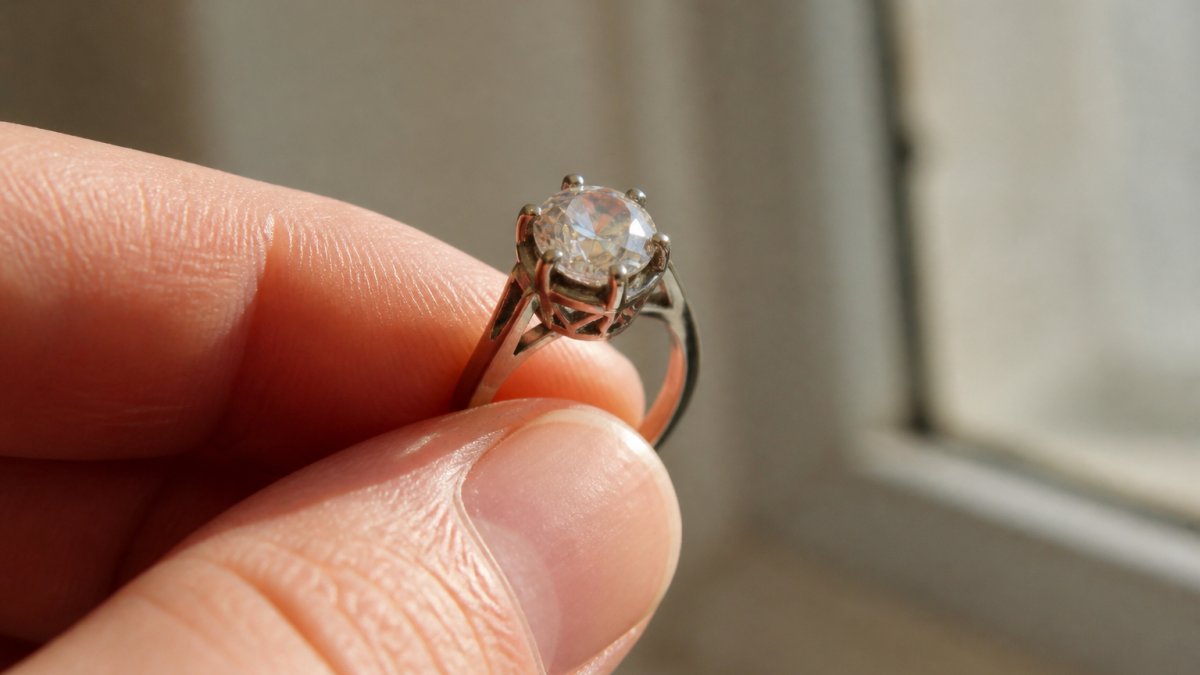
Old mine cuts have broad, chunky facets. They throw soft flashes of colour rather than tight white brilliance.
So do not compare an old cut to a round brilliant under bright shop lights. View it in daylight, near a window, and let your eyes adjust.

Step 4: Apply the Four Cs to a Hand-Cut Stone
The Four Cs still apply to an antique diamond ring, but you weight them differently.
Cut is not graded the way modern stones are.
Colour is often warmer in old stones. Grades around H to I are common and entirely acceptable.
Clarity should be judged by eye. Old cuts hide small inclusions well because of their facet pattern.
Carat is the easiest to measure and the least useful on its own.
3 Carat Old Cut Diamond Ring →
| The Four Cs | What to Look For | Why It Matters |
|---|---|---|
| Cut | High crown, small table, lively fire in daylight | Drives beauty and value more than any other factor |
| Colour | Warm white, roughly H to I | Suits antique gold settings and period character |
| Clarity | Eye-clean, inclusions hidden by facets | Keeps the stone looking bright without a premium |
| Carat | Weight matched to the hand and setting | Size alone does not equal value |
Step 5: Inspect Condition, Setting and Everyday Wear
Condition decides whether an antique diamond ring is a joy to wear or a repair bill waiting to happen. Check the claws first.
Look for thin, worn, or bent claws. A claw that has worn through can lose the stone. Ask whether the setting has been re-tipped, and get that in writing.
Next, check the band. Look for thinning at the back, cracks near the shoulders, and any sign of a previous resize.
- All claws present, thick, and holding the stone firmly
- No cracks or thinning in the band
- Setting sits level with no wobble
- Stones secure when gently pressed
- Hallmark clear and legible
- No active corrosion or heavy surface wear
- Ring size confirmed before purchase
For everyday cleaning, warm soapy water and a soft brush are the safe choice. Dry it fully and store it separately from harder pieces.
Step 6: Work Out Antique Diamond Ring Value Before You Agree a Price
Antique diamond ring value comes from four things: the stone, the setting, the era, and the condition.
Old cuts are no longer made, so supply is fixed. That supports prices over time. But condition problems pull value down fast.
Here is how we would think about it:
- A genuine Edwardian piece with a fine old mine cut stone commands more than a similar-sized modern stone in a plain mount
- A ring with a replaced stone or a rebuilt setting loses period value
- Original detail, such as milgrain and hand-set shoulders, adds appeal
- Papers and a recent appraisal make a piece easier to value and easier to sell later
Expect the asking price to reflect the whole package, not just carat weight. Compare like with like, and ask what has been replaced.
Step 7: Arrange an Antique Diamond Ring Appraisal and Protect Your Purchase
An antique diamond ring appraisal is your protection, and it should be independent. Ask for a written report from a qualified gemmologist or a recognised laboratory. The report should cover the stone's weight, colour, clarity and cut style, plus the metal, the era and the condition. It should also state whether the stone is natural and whether it has been treated.
Appraisal Timing and Valuation Basis
Get the appraisal before you commit where possible, or make the sale conditional on it. Ask the appraiser to state the valuation basis clearly: replacement value for insurance is usually higher than the second-hand resale value you might achieve if you sold. Insurers generally want a replacement valuation, so confirm which figure the report gives and keep it current, most policies expect a revaluation every few years, and sooner if prices move sharply.
Insurance, Returns and Written Seller Policies
Sort insurance before the ring leaves the seller. A specialist antique jewellery policy should cover the full replacement value, not the price you paid. Keep the appraisal, the receipt and any certificates together, and check whether the policy requires the ring to be kept in a safe or worn only under certain conditions.
Before you pay, confirm these in writing:
- The return window, whether it applies to sized or altered rings, and who pays return postage.
- What documentation comes with the ring and whether copies are retained by the seller.
- Whether the seller will stand behind the stated era, and what remedy applies if an independent appraisal contradicts it.
- Any warranty on setting security, claw re-tipping or stone loss, and its duration.
Total Cost of Ownership
Budget beyond the purchase price. Antique rings commonly need resizing, which can be harder on delicate or decorated shanks; claw re-tipping; occasional re-setting; and insurance premiums. Ask a jeweller to quote for any known work before you buy, and factor that into what the ring is really worth to you.
At Gold2u, our antique old mine cut diamond jewellery comes with documentation, and we are happy to talk through the detail of any piece before you commit.

Frequently Asked Questions
How can you tell if a diamond ring is genuinely antique?
Start with the cut. Old mine and old European cuts have high crowns, small tables, deep pavilions and chunky facets that modern machinery does not produce. Then check the mount for hand-worked milgrain, a closed-back setting or a cut-down collet, and look for a hallmark inside the band. Wear should be even and consistent with decades of use, not freshly polished. Ask for provenance paperwork and an AnchorCert or gemmologist's report before you commit, and have the ring independently checked if anything about the age claim feels loose.
Are old mine cut diamonds valuable?
They can be, but value works differently from modern stones. An old mine cut diamond ring is priced on rarity and character as much as on the Four Cs, because these stones were cut by hand and no two are identical. A 3 carat Edwardian example with strong fire, kozibe reflections and original setting commands a serious figure, while smaller old cuts in good condition sit at more accessible levels. Colour and clarity are usually estimated in the mounting, so a gemmologist's assessment matters more than a lab grade on a loose stone.
Should an antique diamond ring be professionally appraised?
Yes, and before you buy rather than after. An antique diamond ring appraisal confirms the stone's weight and quality, verifies the metal and hallmark, and puts a replacement figure on paper that insurers will accept. Use an independent gemmologist rather than the seller's own report where you can. Keep the appraisal with your receipt and photographs, and have it refreshed every few years as metal and diamond prices move. It also gives you a documented baseline if you ever need to make a claim or resell.
What should you check when buying an antique diamond ring?
Inspect the setting first: prongs should be tight, the gallery sound and no claws worn thin. Look at the stone under daylight, not shop lighting, for chips at the girdle and for the soft fire that marks a genuine old cut. Confirm the hallmark, ask for provenance and authentication documents, and check the return window in writing. Factor in resizing, insurance and any restoration, since total cost of ownership on an antique piece runs beyond the ticket price.
Choosing an antique diamond ring takes patience, but the reward is a piece nobody else owns. The work is in the checks: the cut, the setting, the condition, and the paperwork.
If you want a starting point, browse our antique old mine cut diamond rings. Each piece is one of a kind, and we will walk you through the stone, the setting, and the history before you decide. Get started with Gold2u and buy with confidence.


0 comments