

Table of Contents
- Why Cleaning Antique Diamond Jewellery Requires Care
- Method 1: Mild Detergent and Lukewarm Water
- Method 2: Soft-Bristled Brush Technique for Prong Settings
- Method 3: Soak and Gentle Circular Motion Cleaning
- Method 4: Carbonated Water for Tarnish Removal
- Method 5: Professional Jewellery Cleaning Services
- Dangers of Ultrasonic Cleaners for Antique Jewellery
- How to Store Antique Diamond Jewellery Between Cleanings
- Common Mistakes to Avoid
- Quick Reference: Cleaning Methods Comparison
- Frequently Asked Questions
Last Updated: September 25, 2026
Why Cleaning Antique Diamond Jewellery Requires Care
Clean antique diamond jewellery demands a different approach than modern pieces. The settings are often delicate, the metals may be brittle, and the gemstones themselves, particularly in older cuts, can be vulnerable to harsh chemicals and aggressive cleaning methods. Understanding how to clean antique diamond jewellery safely is essential for preserving both the stones and their historical integrity.
At Gold2u, we work with collectors and investors who understand that proper maintenance protects their investment. Antique pieces, especially those featuring old mine cut diamonds, require gentler handling than contemporary jewellery. The prongs holding stones in place may have weakened over decades. Porous gemstones like opals or pearls, sometimes set alongside diamonds in vintage pieces, can be permanently damaged by ultrasonic cleaners or steam cleaning equipment.
The five methods covered below have been chosen specifically for their safety profile with antique settings. Each preserves the jewellery's condition whilst restoring its brilliance.
Method 1: Mild Detergent and Lukewarm Water
This is the gold standard for antique diamond jewellery cleaning, and for good reason. Mild detergent and lukewarm water work together to dissolve dead skin buildup, oils, and everyday grime without damaging delicate settings or stone surfaces.
The process is straightforward. Mix a few drops of mild dish soap with lukewarm water in a small bowl. Submerge your jewellery for 15-20 minutes, allowing the soapy solution to loosen debris. Use a soft-bristled toothbrush to gently scrub around the prongs and settings, paying special attention to areas where dirt accumulates. Rinse thoroughly under running lukewarm water until all soap residue is gone, then pat dry with a lint-free cloth.
What makes this method effective for antique pieces is its gentleness. The mild detergent breaks down oils without the chemical aggressiveness of commercial jewellery cleaners. Lukewarm water, never hot, prevents thermal shock that could crack older gemstones. This approach is particularly safe for pieces with multiple stone types, where different gems require different care levels.
Many collectors find this method sufficient for regular maintenance. Perform it every 4-6 weeks for pieces worn frequently. For stored pieces, annual cleaning keeps them ready for display or wearing without requiring deep restoration.
Method 2: Soft-Bristled Brush Technique for Prong Settings
Prong settings, where individual metal claws hold each diamond, are common in antique jewellery and require targeted care. A soft-bristled brush allows you to clean around these vulnerable points without applying pressure that could loosen stones.
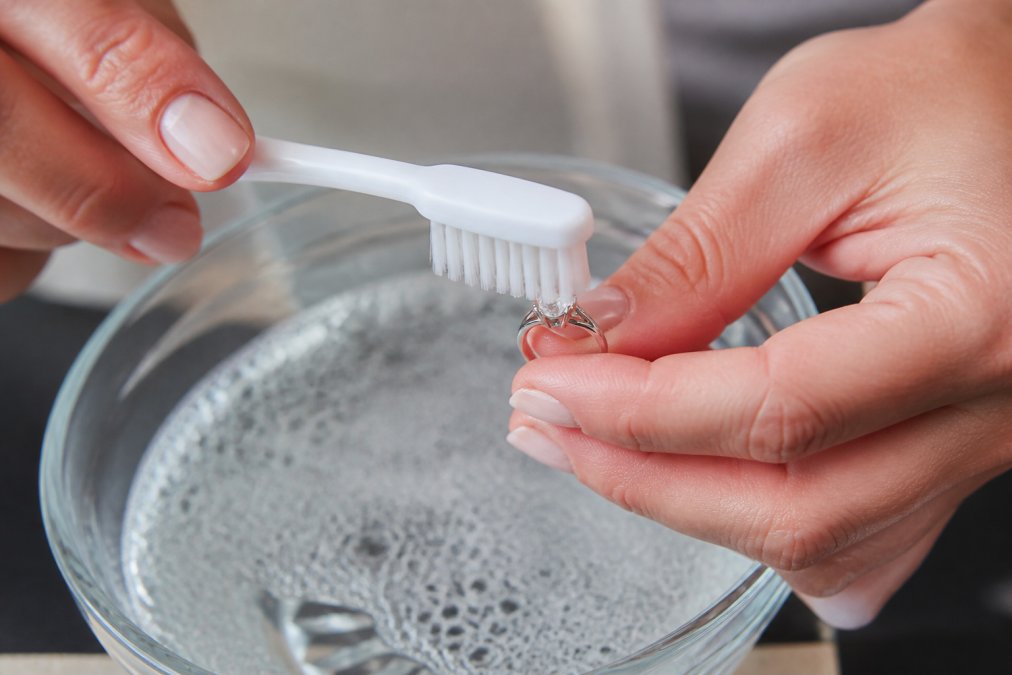
Begin with the mild detergent and lukewarm water solution described above. Once the jewellery has soaked for 15-20 minutes, use a soft-bristled toothbrush, one reserved specifically for jewellery, never one used for teeth, to gently scrub around each prong. Use a circular motion rather than back-and-forth scrubbing, which applies uneven pressure. Work slowly around the setting, giving special attention to the base of each prong where debris collects.
The key word is gentle. You're not trying to scour the metal. The soaking has already loosened most debris. The brush simply helps remove what remains without forcing bristles into gaps where they could catch and pull on prongs.
For vintage jewellery with graduated settings, where stones decrease in size across a bracelet or ring, this method prevents the common mistake of applying equal pressure to all stones. Smaller diamonds in secondary positions sit in lighter prongs and need correspondingly lighter brushing.
After brushing, rinse thoroughly under lukewarm running water. Use the brush gently under the water stream to dislodge any remaining particles, then pat dry with a lint-free cloth.
Method 3: Soak and Gentle Circular Motion Cleaning
Extended soaking is particularly effective for antique pieces that haven't been cleaned in years. Dead skin buildup and oxidation require time to soften before they release from the metal and gemstones.
Create your soapy solution as described, mild detergent and lukewarm water. Submerge the jewellery and allow it to soak for 20-30 minutes. During this time, the solution penetrates areas that brushing alone cannot reach: beneath settings, inside band crevices, and around filigree galleries common in Edwardian and Victorian pieces.
6.5 Carat Edwardian Platinum Graduated →
After soaking, use a soft cloth to gently rub the jewellery in circular motions. This technique is less aggressive than brushing and works well on smooth metal surfaces and larger faceted stones. The circular motion follows the natural contours of the piece rather than working against them.
For particularly delicate antique settings, skip the brush entirely and rely on the soak plus gentle cloth motion. Many collectors find this sufficient for pieces that don't have heavy buildup. The extended soak time does much of the work; the gentle motion simply finishes it.
Rinse thoroughly under lukewarm water.
Method 4: Carbonated Water for Tarnish Removal
Rinse thoroughly under lukewarm water and pat dry with a lint-free cloth. If tarnish remains after one treatment, repeat rather than escalating to harsher methods.
Method 5: Professional Jewellery Cleaning Services
Some antique pieces warrant professional care. Pieces with complex settings, multiple gemstone types, or significant historical value benefit from specialist attention. Professional jewellery cleaning services use equipment and expertise beyond what home methods can provide.
Dangers of Ultrasonic Cleaners for Antique Jewellery
Stick with gentle methods for home care. Reserve aggressive equipment for modern jewellery designed to withstand it.
How to Store Antique Diamond Jewellery Between Cleanings
Proper storage prevents the need for frequent deep cleaning. Antique diamond jewellery kept in appropriate conditions stays cleaner longer and experiences less oxidation.
| Storage Method | Best For | Humidity Protection | Cost |
|---|---|---|---|
| Jewellery box with compartments | Daily-wear pieces | Moderate | £20-50 |
| Acid-free tissue wrapping | Valuable heirlooms | Good | £5-15 |
| Jewellery safe | High-value collections | Excellent | £100-300 |
| Sealed zip-lock bags | Long-term storage | Good | £2-5 |
Common Mistakes to Avoid
The most frequent mistake is using abrasive cleaners designed for modern jewellery. Commercial jewellery dips and polishes contain chemicals that can damage antique metals and gemstones. What works safely on contemporary pieces can harm pieces with aged, delicate settings.
Quick Reference: Cleaning Methods Comparison
| Method | Time Required | Frequency | Best For | Avoid If |
|---|---|---|---|---|
| Mild detergent & lukewarm water | 30 minutes | Every 4-6 weeks | Daily-wear pieces, all settings | Pieces with porous gemstones only |
| Soft-bristled brush technique | 20 minutes | Monthly | Prong settings, intricate designs | Extremely delicate filigree |
| Soak & circular motion | 30-45 minutes | Every 8-12 weeks | Pieces with buildup, smooth metals | None, very safe |
| Carbonated water | 15 minutes | As needed for tarnish | Silver/white gold tarnish | Porous gemstones |
| Professional service | Varies | Every 2-3 years | Valuable pieces, complex settings | Budget-conscious routine care |
The foundation of antique diamond jewellery care is understanding that these pieces have survived decades or centuries through careful handling. Your cleaning approach should reflect that respect. Gentle methods, consistent maintenance, and professional inspection when needed will preserve these treasures for future generations.
Frequently Asked Questions
Is it safe to use an ultrasonic cleaner on antique diamond jewellery?
No. Ultrasonic cleaners pose significant risks to antique diamond jewellery. The high-frequency vibrations can loosen delicate prong settings, crack fragile gemstones like opals and pearls, and damage the intricate metalwork characteristic of vintage pieces. Antique settings were hand-fabricated and are far more vulnerable than modern cast jewellery. Stick to gentle hand-cleaning methods or consult a professional specialising in antique restoration.
Can I use baking soda to clean antique diamond rings?
Baking soda is too abrasive for antique diamond jewellery and should be avoided. It can scratch delicate metal finishes, damage hand-engraved details, and dull the patina of vintage gold or platinum settings. Instead, use a mild detergent with lukewarm water and a soft-bristled toothbrush. For tarnish removal on silver or gold settings, carbonated water is gentler and equally effective.
How often should antique diamond jewellery be professionally inspected?
Antique diamond jewellery should be professionally inspected annually, or every 6 months if worn regularly. Professional jewellers can detect loose prongs, micro-fractures in delicate gemstones, and oxidation before they become serious problems. This is especially important for porous gemstones like opals, pearls, and turquoise, which deteriorate rapidly if neglected. Early intervention prevents costly damage and preserves heirloom value.
What should I use to remove tarnish from antique jewellery settings?
Carbonated water is the safest method for removing tarnish from antique gold, silver, or platinum settings. Soak the piece for 10-15 minutes, then gently brush with a soft-bristled toothbrush and pat dry with a lint-free cloth. Avoid ammonia and commercial silver polishes, which contain harsh chemicals that can damage delicate hand-fabricated details and oxidise vintage metalwork. For stubborn tarnish, consult a professional rather than risk chemical damage.
How do I clean old mine cut diamonds without damaging the metal setting?
Use a mild detergent solution (a few drops in lukewarm water) and a soft-bristled toothbrush. Gently brush around the diamond facets and prong settings using a circular motion, taking care not to apply pressure to the prongs themselves. Rinse thoroughly under running lukewarm water and pat dry immediately with a lint-free microfibre cloth. This method safely removes dead skin buildup and residue without risking chemical damage or loosening fragile antique settings.


0 comments