

Table of Contents
- What Makes a Trusted Antique Diamond Jewellery Retailer
- Why Old Mine Cut Diamonds Are Valuable
- How to Identify Antique Diamond Cuts
- Hallmarking Requirements for Antique Jewellery
- Our Curated Antique Diamond Collection
- How to Evaluate Antique Diamond Jewellery Retailers
- Frequently Asked Questions
Last Updated: October 8, 2026
What Makes a Trusted Antique Diamond Jewellery Retailer
A trustworthy antique diamond jewellery retailer combines expertise, transparency, and authentication standards that separate genuine collectors' dealers from casual resellers.
The best retailers in this space share several defining characteristics. They provide documented gemological reports for significant stones. They're transparent about a piece's era, condition, and any restoration work. They offer clear return policies and authentication guarantees.
When evaluating any antique diamond jewellery retailer, look for specialists who've invested time in understanding old cuts. Old mine cuts, old European cuts, and rose cuts each have distinct characteristics that require trained eyes to assess properly.
Hallmarking is another critical filter. Authentic antique pieces carry maker's marks and metal purity stamps from their era. A reputable retailer will explain these marks and what they reveal about a piece's authenticity and construction quality.
Why Old Mine Cut Diamonds Are Valuable
Old mine cut diamonds command collector premiums for reasons that go beyond rarity. These stones were hand-cut by craftsmen working without modern machinery, creating facet patterns that vary from piece to piece. That individuality, impossible to replicate in factory settings, is precisely what collectors seek.
The value proposition differs fundamentally from modern brilliant cuts. Old mine cuts prioritise fire and character over uniform sparkle. They feature high crowns, deep pavilions, and broad facets that create warm, romantic flashes of light rather than the sharp brilliance engineered into contemporary diamonds. Under candlelight, an old mine cut produces a glow that modern cuts simply cannot match. This isn't a flaw; it's the intended design of 18th and 19th-century cutters working by candlelight themselves.
Carat weight alone doesn't determine value for these stones.
How to Identify Antique Diamond Cuts
Distinguishing genuine old cuts from modern reproductions requires understanding the technical differences in facet patterns and proportions. Old mine cuts feature a distinctly square or cushion-shaped outline with rounded corners.
When examining a stone in person, tilt it under natural light and observe the light patterns. Old cuts throw large, distinct flashes of colour, reds, yellows, and blues, rather than the white sparkle of modern cuts. This fire is the signature characteristic.
The girdle (the widest edge of the stone) also tells a story. Antique stones often show wear patterns, slight irregularities, or evidence of hand-polishing. Modern cuts display uniform, machine-polished girdles. This isn't a flaw in antique stones; it's authentication.
Old European cuts, slightly later than old mine cuts, show similar characteristics but with somewhat smaller tables and different facet arrangements.
Hallmarking Requirements for Antique Jewellery
Hallmarking serves as the official authentication system for precious metals and provides crucial provenance information. In the UK, all gold, silver, and platinum jewellery above certain weight thresholds must carry hallmarks indicating metal purity, maker's mark, and assay office mark (Hallmarking: practical guidance - summary).
For antique pieces, hallmarks reveal both authenticity and era. A Birmingham assay mark with a specific date letter indicates when the piece was tested and registered. London, Sheffield, and Edinburgh assay offices maintained their own distinctive marks.
Gold is marked by fineness: 22 carat (916), 18 carat (750), 14 carat (585), or 9 carat (375). Platinum carries the "950" mark indicating 95% purity. Silver shows 925 (sterling) or 800 (continental).
A maker's mark, often initials in a shaped punch, identifies the craftsperson or workshop. Tracing these marks through assay office records can sometimes establish the maker's identity, adding historical value.
When evaluating antique pieces, request documentation of hallmarks. Reputable retailers provide clear photographs or rubbings showing all marks. Missing hallmarks on pieces that should carry them, particularly Victorian or later work, warrants caution and professional appraisal before purchase.
Our Curated Antique Diamond Collection
We've selected five distinctive pieces that exemplify the craftsmanship and character defining authentic antique diamond jewellery. Each represents a different era, cut style, and aesthetic, offering collectors genuine options across price points and preferences.
Edwardian Platinum Graduated Bracelet - 6.5 Carats
This 6.5 Carat Edwardian Platinum Graduated Old Cut Diamond Bracelet represents the pinnacle of Belle Époque craftsmanship, circa 1905-1915.

What distinguishes this bracelet is its entirely hand-fabricated construction. Unlike later cast pieces, every link was riveted individually. The delicate milgrain beading and pierced scrollwork galleries reflect techniques rarely seen in modern reproductions. The substantial platinum weight, approximately 17 grams of net metal, confirms genuine early fabrication.
The diamonds total 6.5 carats with estimated colour H-J and clarity VS-SI. The chunky facets and strong antique fire ("kozibe" reflections) are unmistakable signatures of authentic old cuts. At £14,999.00, this represents a significant investment piece for serious collectors seeking museum-quality Edwardian jewellery.
3 Carat Old Mine Cut Solitaire Ring
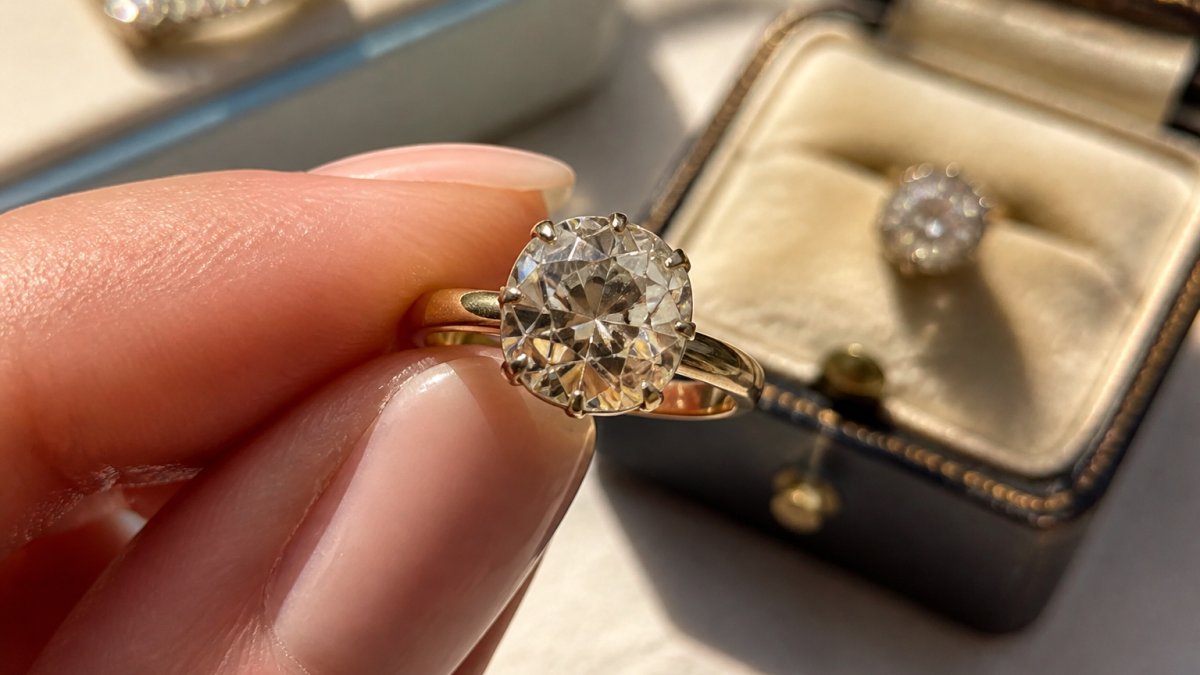
The 3 Carat Old Cut Diamond Ring exemplifies the romantic elegance of Edwardian engagement rings. Handcrafted around 1900, this piece centres a magnificent 3.00-carat old mine cut diamond in a platinum crown setting paired with a warm yellow gold band.

The centre stone displays everything collectors prize in authentic old mine cuts: high crown, small table, deep pavilion, and broad chunky facets. The soft flashes of fire rather than sharp sparkle are characteristic of candlelight-era cutting. No two old mine cuts are identical, making this ring completely one-of-a-kind.
6.5 Carat Edwardian Platinum Graduated Old Cut Diamond Bracelet →
Fine hand-set shoulder diamonds and delicate milgrain detailing reflect meticulous Edwardian artistry. The piece carries an AnchorCert certificate and has been tested on a professional GIA diamond tester. At £25,000.00, this represents a significant statement piece for collectors seeking authentic vintage engagement rings with documented provenance.
Victorian Three Stone Ring - 1.75 Carats
The Victorian-Era Old Cut Diamond Three Stone Ring captures the romance of hand-cut diamonds from another era. This trilogy ring features approximately 1.75 carats total weight: a commanding centre stone approaching 1 carat flanked by two beautifully matched old-cut stones.

Dating to mid-century vintage (circa 1940-60s), this yellow gold piece with white illusion heads represents the classic "Past, Present, Future" design. The old European and old mine cut diamonds display strong fire with large, dramatic flashes of light, the unmistakable signature of genuine antique cuts. Colour is estimated H-I (near colourless) with clarity VS-SI.
The elegant low-profile setting suits everyday wear whilst preserving the romantic character of period craftsmanship. At £3,500.00, this piece offers substantial carat weight and authentic period styling at an accessible entry point for collectors new to old cuts.
Five-Stone Heirloom Ring - Old Cut Diamonds
The Five-Stone Old Cut Diamond Heirloom Ring combines vintage-inspired design with genuine natural diamonds in a lightweight, everyday-wearable format. The 5mm centre stone anchors the design, framed by smaller diamonds flowing gracefully across the finger, a classic silhouette symbolising Past, Present, Future, Love, and Forever.
This piece weighs just 1.8 grams, making it comfortable for continuous wear. The vintage-inspired five-stone arrangement appeals to collectors seeking meaningful symbolism without statement-piece presence. The low profile allows stacking with other rings, offering versatility many collectors value.
At £1,390.00, this represents the most accessible entry point in our collection for buyers seeking genuine old cut diamonds in a timeless design. It's particularly suited to anniversary gifts, meaningful milestones, or self-gifted moments celebrating personal milestones.
Vintage 18ct Gold Cluster Ring - 1.8 Carats
The Vintage 18ct Gold Diamond Cluster Ring offers a striking alternative to solitaire designs. Crafted in solid 18-carat yellow gold and dating to the late 1990s, this piece features three emerald-cut diamonds at the centre, framed by a halo of brilliant-cut diamonds delivering exceptional sparkle.
The combination of step-cut emerald diamonds and surrounding brilliant stones creates beautiful contrast of depth and fire. The ring carries full UK hallmarking (Birmingham) confirming 18-carat gold purity (750), with an additional jeweller's mark indicating approximately 1.8 carats total diamond weight. Condition is very good with only light wear consistent with age.
At £2,500.00, this piece offers high-impact presence and substantial carat weight at a fraction of modern retail prices. It suits collectors seeking bold statement jewellery with vintage authenticity and strong brilliance from the brilliant-cut halo.
How to Evaluate Antique Diamond Jewellery Retailers
Evaluating a retailer's credibility requires examining several concrete criteria. Request gemological reports for any significant stones. This documentation protects both buyer and seller.
Ask about provenance. Where did the piece originate? Has it been in a collection, estate, or dealer inventory? Detailed provenance strengthens value and authenticity claims.
Examine their return policy and authentication guarantee. Trustworthy dealers stand behind their work. A 30-day return window for any reason signals confidence in their authentication and representation.
| Evaluation Criterion | What to Look For | Red Flag |
|---|---|---|
| Gemological Reports | Third-party laboratory certification (GIA, AnchorCert) | Retailer-only assessments without independent verification |
| Provenance Documentation | Clear history of ownership and era dating | Vague descriptions or "origin unknown" |
| Authentication Guarantee | Written guarantee of authenticity and condition | No guarantee or verbal assurances only |
| Pricing Transparency | Clear breakdown of carat weight, colour, clarity | Prices that seem significantly lower than comparable pieces |
| Metal Hallmarking | Full explanation of maker's marks and assay office stamps | Missing or unexplained hallmarks on pieces that should carry them |
| Return Policy | 30+ day returns for any reason | No returns or extremely limited windows |
| Knowledge Depth | Can explain period-specific craftsmanship and cut characteristics | Generic descriptions that could apply to any antique jewellery |
Visit in person when possible. Seeing a piece under natural light reveals details photographs cannot capture.
Ask detailed questions about restoration. Has the piece been cleaned, resized, or had stones reset? Honest disclosure about conservation work demonstrates transparency.
Buying antique diamond jewellery requires patience and informed decision-making. The best retailers combine transparent authentication, detailed provenance documentation, and genuine expertise in period craftsmanship.
Frequently Asked Questions
How can you tell if antique diamond jewellery is authentic?
Authentic antique diamond jewellery displays specific hallmarks of period craftsmanship. Look for hand-applied milgrain beading, hand-pierced filigree galleries, and individually riveted links rather than cast construction. Old mine and old European cut diamonds show distinctive chunky facets and kozibe reflections under natural light. Reputable antique diamond jewellery retailers provide gemological reports from recognised testing bodies, hallmark documentation confirming metal purity and era, and detailed provenance information.
What is the difference between old mine cut and modern brilliant cut diamonds?
Old mine cut diamonds were hand-cut by eye, creating higher crowns, deeper pavilions, and broader facets that produce soft flashes of candlelit fire rather than uniform sparkle. Modern brilliant cuts are engineered for maximum light return and consistent brilliance under electric light. Old mine cuts appear warmer and more romantic, with larger rainbow bursts and slower flashes of colour. Collectors actively seek old mine cut diamonds for their unique character and the impossibility of replicating hand-cut proportions. The distinction matters significantly when evaluating antique diamond jewellery, as it affects both aesthetic appeal and investment value.
Why are old mine cut diamonds considered more valuable?
Old mine cut diamonds command premium prices because they are no longer produced and represent authentic 18th and 19th century craftsmanship. Each stone is unique due to hand-cutting, making them increasingly scarce as surviving pieces are broken up or reset. Collectors value the historical significance, the romantic candlelit glow, and the proof of sustainability (no new mining required). Antique diamond jewellery with certified old mine cut stones demonstrates provenance and period authenticity that cannot be manufactured today.
What should I look for when buying vintage diamond jewellery?
Prioritise certified authenticity through gemological reports and hallmark documentation confirming metal purity and era. Examine the setting construction for hand-applied details like filigree, milgrain, and articulated links. Request provenance documentation. Assess the diamond cut style and clarity grade to understand fair pricing relative to current market conditions. Check that all stones are secure and the metal shows age-appropriate wear rather than damage. Reputable antique diamond jewellery retailers provide detailed condition reports, restoration history if applicable, and clear return or authentication guarantees before purchase.
Do antique jewellery retailers offer certification for diamonds?
Established antique diamond jewellery retailers provide gemological reports documenting cut, carat weight, colour grade, and clarity assessment. Hallmark documentation confirms metal purity (platinum, 18ct gold, etc.) and manufacturing era. Reputable retailers disclose whether diamonds have been treated or enhanced, and provide written guarantees matching the description and certification provided. Always request full documentation before committing to purchase.


0 comments