

Table of Contents
- Where to Buy Antique Diamonds: Your Options
- Why Old Mine Cut Diamonds Are Valuable
- Antique Diamond Grading Standards and What They Mean
- How to Value Antique Diamond Jewellery
- Authentication, Certification and Provenance
- Price Transparency: What You Should Expect to Pay
- Insurance and Appraisal for Antique Pieces
- Key Mistakes to Avoid When Buying Antique Diamonds
- Frequently Asked Questions
Last Updated: October 2, 2026
Where to Buy Antique Diamonds: Your Options
Choosing the right retailer when you buy antique diamonds matters as much as selecting the stone itself. The marketplace has fragmented into distinct channels, each with different advantages, risks, and price points, and understanding what to expect from each separates informed buyers from those who overpay or end up with misrepresented stones.
Specialist Antique Jewellery Retailers
Specialist retailers like Gold2u focus exclusively on authenticated antique and vintage pieces, employing in-house gemmologists, maintaining provenance records, and standing behind inventory with certificates and guarantees.
The advantage is expertise: the retailer has vetted stones for authenticity, assessed clarity and colour by hand, and documented era and craftsmanship. Gold2u curates pieces like the Victorian-Era Old Cut Diamond Three Stone Ring at £3,500 and the 3 Carat Old Cut Diamond Ring at £25,000, each tested and certified.


Specialists also offer ongoing support: appraisals, insurance documentation, and resale assistance, plus transparent pricing tied to documented market comparables.
The trade-off is price: specialist retailers mark up 15-30% more than auction houses or estate sales. You're paying for curation, authentication, and liability protection, eliminating the risk of treated stones, misgrading, or undisclosed damage.
Auction Houses and Estate Sales
Auction houses like Sotheby's and Christie's offer transparency: published estimates, lot descriptions, and public hammer prices that create a price discovery mechanism.
However, auction houses do not guarantee stones beyond catalogue descriptions. If you discover treatment, chips, or misgrading after purchase, recourse is limited.
Estate sales can yield bargains but escalate risk: stones rarely have modern certificates, descriptions lack carat weight or clarity grades, and you bid on photographs alone.
Buyer's premiums (15-25%) and travel costs inflate true expenses.
Online Platforms and Marketplaces
Online marketplaces democratise access: browse thousands of pieces, compare prices, and often return items within a specified window.
The problem is consistency: platforms host both reputable dealers and opportunistic sellers.
Return policies vary: reputable retailers like Gold2u allow returns; smaller sellers often do not. Shipping adds cost and risk of loss or damage.
Online platforms excel for price transparency and convenience if you know exact specs and can assess photographs. For novices, misrepresentation risk is higher than with specialists or auction houses.
Why Old Mine Cut Diamonds Are Valuable
An old mine cut diamond is a hand-cut diamond from the 18th and 19th centuries, characterised by a high crown, small table, deep pavilion, and broad facets that create soft flashes of fire rather than modern brilliant cuts' sharp sparkle.
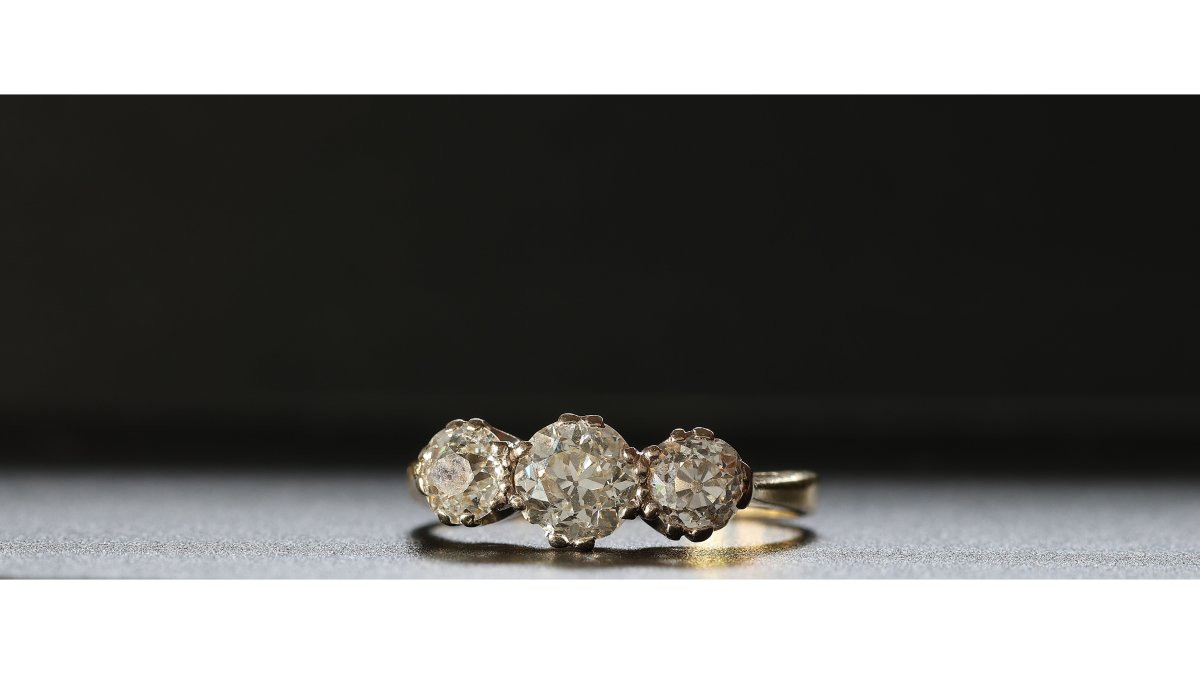
Old mine cut diamonds were cut by eye and hand without computer optimisation, making each stone unique. This uniqueness is prized by collectors seeking one-of-a-kind pieces.
Old mine cuts perform better under candlelight and indoor settings, producing warm, romantic glows with large flashes of fire. Modern cuts prioritise daylight sparkle.
Old mine cuts carry historical provenance: a stone cut in 1880 has survived two centuries, appealing to investors and heirloom seekers. The 6.5 Carat Edwardian Platinum Graduated Old Cut Diamond Bracelet at £14,999 exemplifies this as a Belle Époque artefact with documented craftsmanship.

Supply is finite: old mine cuts cannot be manufactured, and scarcity drives value.
Antique Diamond Grading Standards and What They Mean
Antique diamonds were graded using different standards than modern stones.
Modern GIA certificates assess carat weight, colour (D-Z), clarity (Flawless to Included), and cut. For antique stones, grades are assigned retroactively.
Many old mine cuts carry slight yellow or brown tints ("champagne" or "cognac" hues), graded K-M in modern systems.
When evaluating grading reports, check the issuing lab. GIA and AGS are most recognised; in-house or regional lab certificates carry less resale weight.
How to Value Antique Diamond Jewellery
Valuing antique diamond jewellery requires assessing the diamond, the setting, and historical significance.
The Diamond: Use GIA certificates as baseline, or request independent appraisal (£150-£300). Compare specs to recent sales of similar stones via online databases and auction results.
The Setting: Value depends on metal type and weight. 18ct gold exceeds 9ct; platinum (common in Edwardian pieces) is heavier and more durable.
Historical Significance: Documented provenance or known makers command premiums. Undocumented pieces are valued on specs and condition alone. Art Deco (1920s-1930s) and Edwardian (1900-1920) pieces currently command higher demand than Victorian.
Victorian-Era Old Cut Diamond Three Stone Ring – 1.75 Carats Total →
Obtain professional appraisal, then check recent comparable sales. A 1.5-carat old European cut in platinum that sold for £8,000 six months ago sets a baseline for identical specs, adjusted for condition and trends.
Authentication, Certification and Provenance
Authentication verifies a stone is genuinely what it's claimed to be, not a modern imitation or treated stone.
Certification is a formal document from recognised labs (GIA, AGS) confirming specs and natural, untreated status.
Provenance is documented ownership history. Pieces with provenance (e.g., "purchased from Cartier in 1925") are worth more than identical pieces with no history.
Request documentation: detailed stone description, treatment statement, GIA certificate or professional appraisal, setting details, and provenance. Reputable retailers like Gold2u provide these as standard.
Price Transparency: What You Should Expect to Pay
Antique diamond pricing is less standardised than modern diamonds. Antique stones are priced individually based on rarity, condition, and demand, not published lists.
A 1-carat old mine cut in VS clarity and H colour ranges £4,000-£10,000 depending on cut quality and special characteristics.
Setting metal and craftsmanship add cost. A platinum Edwardian setting with hand-engraving costs more than a simple gold band. Gold2u's Victorian-Era Old Cut Diamond Three Stone Ring at £3,500 reflects 1.75 carats total and era-appropriate craftsmanship.
Auction results provide benchmarks. If a comparable stone sold for £12,000 last month, similar pieces should be priced nearby.
Ask: What's included (certificate, appraisal, returns)? How is it graded (GIA, AGS, in-house)? What's the return policy? Are there hidden fees? Transparent retailers disclose upfront; vague sellers are a red flag.
Insurance and Appraisal for Antique Pieces
Antique diamonds require specialised insurance. Standard homeowner's policies often cap jewellery coverage at £2,000-£5,000. A single antique diamond ring worth £15,000 would be underinsured.
You need a scheduled jewellery rider on your home insurance policy. This requires a professional appraisal documenting the piece's value.
An appraisal typically costs £150-£300 and includes:
- Detailed description of the stone and setting
- Carat weight, colour, clarity, and cut assessment
- Estimated replacement value (the cost to replace the piece with one of similar quality)
- Photographs and any relevant certificates
Insurance premiums for scheduled jewellery are usually 1-3% of the appraised value per year. A £10,000 piece might cost £100-£300 annually to insure.
When buying an antique diamond, ask the retailer if they provide an appraisal or insurance valuation.
For pieces you plan to wear regularly, insurance is essential.
Key Mistakes to Avoid When Buying Antique Diamonds
Overpaying at auction. Auction fever is real. Competitive bidding can drive prices well above market comparables.
Assuming "old" means "valuable." Age alone does not determine value.
Neglecting the setting. The setting protects the stone and contributes to the piece's value and wearability.
Ignoring liquidity. Antique diamonds are less liquid than modern diamonds or gold bullion.
Buying antique diamonds is a rewarding pursuit for collectors and investors willing to invest time in education and due diligence.
Frequently Asked Questions
What is considered an antique diamond versus a vintage one?
Antique diamonds are typically stones cut and set before 1920, whilst vintage pieces date from 1920 to 1980. Antique diamonds were hand-cut using older techniques, resulting in distinctive cuts like Old Mine and Old European. These older stones show characteristic facet patterns, deeper pavilions, and smaller tables than modern brilliant cuts. Vintage pieces may include both older stones and more recent reproductions of historical styles. When buying antique diamonds, true antiques offer greater rarity and historical significance.
How do I verify the authenticity of an antique diamond?
Request certification from reputable gemological laboratories such as the Gemmological Association of Great Britain. Examine hallmarks on the setting metal and look for period-appropriate construction techniques like hand-fabrication and milgrain detailing. Authentic old mine cut diamonds display specific optical characteristics: kozibe reflections, chunky facets, and soft candlelit fire rather than sharp sparkle. Professional appraisers can assess facet geometry and proportions to confirm age. Always ask for documentation of provenance and previous ownership history when buying antique diamonds.
Are antique diamonds a good investment for collectors?
Antique diamonds can be solid investment pieces when purchased from reputable dealers with proper certification. Their rarity increases as fewer original pieces survive intact. Unlike new diamonds, which depreciate, authenticated antique stones often hold or appreciate in value, particularly those with strong provenance and exceptional craftsmanship. However, investment returns depend on quality, certification, and market demand. Collectors should focus on pieces with documented history, eye-clean clarity, and distinctive character rather than pursuing purely financial returns. Insurance and professional appraisal are essential for protecting your investment.
What should I look for when buying old mine cut diamonds?
Prioritise certification from recognised gemological bodies. Examine the facet structure: genuine old mine cuts show chunky, visible facets and a cushion outline. Assess colour and clarity grades appropriate to the era, older stones often have slight colour but strong character. Verify the setting materials and construction method match the claimed period. Consider carat weight relative to visible size; old cuts appear larger than modern cuts of the same weight. Request detailed provenance documentation and photographic evidence of the stone in natural light. Specialist retailers like Gold2u offer pieces with transparent grading and full authentication.
How much does an antique diamond typically cost?
Antique diamond pricing varies significantly based on carat weight, cut quality, certification, and historical significance. Entry-level pieces start around £1,390 for smaller heirloom-style rings with multiple old cut stones. Mid-range Victorian and Edwardian pieces typically range from £2,500 to £5,000. Exceptional examples with superior craftsmanship and rare provenance can exceed £14,000 to £25,000 or more. Pricing reflects the rarity of authentic hand-cut diamonds and period metalwork. Always compare pricing across certified dealers and request detailed appraisals to ensure fair value for your investment in antique diamonds.


0 comments