

Last Updated: October 25, 2026
Quick Summary
Emerald cut diamonds investment opportunities appeal to collectors and investors because of their distinctive step-cut facet structure, lower entry price than round brilliants, and stable long-term demand. These factors combine with timeless design to create conditions for value retention and appreciation across decades.
- Emerald cuts appear larger face-up than round brilliants of the same carat weight due to their rectangular shape maximizing visible surface area.
- Emerald cuts command 15-25% lower prices per carat compared to round brilliants historically.
- VS1 clarity minimum and G colour or better are recommended for investment-grade emerald cuts to ensure strong resale appeal.
- Certification from GIA or IGI with laser inscription on the stone is non-negotiable for investment-grade emerald cut diamonds.
- A 1.40 length-to-width ratio is considered ideal for balanced proportions and broadest resale appeal.
Table of Contents
- What makes emerald cut diamonds a timeless investment choice
- Emerald cut diamond pros and cons for buyers
- Emerald cut diamond clarity: why transparency matters more than sparkle
- Emerald cut vs round diamond: investment value and long-term performance
- Emerald cut diamond price: understanding value and resale potential
- Certification, authentication and buying criteria for step-cut diamonds
- Selecting your emerald cut diamond for lasting value
- Frequently Asked Questions
What makes emerald cut diamonds a timeless investment choice
Emerald cut diamonds investment opportunities stand apart from other diamond shapes because of their distinctive step-cut facet structure, which creates a hall-of-mirrors effect rather than the sparkle associated with brilliant cuts. This geometric precision has made them a choice for collectors and investors for centuries. The emerald cut's appeal lies not in maximum light refraction but in its understated elegance and visual transparency, which reveals the true quality of the stone.
The step-cut facets of an emerald cut diamond run parallel to the edges, creating concentric rectangles that reflect light in a controlled, architectural manner. This design prioritises clarity and colour over fire and brilliance. For investors, this matters significantly: the emerald cut demands a higher colour and clarity grade than a round brilliant, because any imperfections or colour tints become immediately visible under the facet pattern.
Emerald cut diamonds attract a specific buyer profile: those who value sophistication over showiness, and who recognise that timeless design often outperforms trend-driven choices in the long term. The classic style of an emerald cut engagement ring appeals to buyers seeking a centre stone that will remain relevant across decades, not just seasons.
Emerald cut diamond pros and cons for buyers
Pros of emerald cut diamonds:
The primary advantage is visual impact without excess carat weight.
Emerald cuts also command lower prices per carat compared to round brilliants, historically.
The timeless aesthetic is genuine. Unlike trendy shapes that cycle in and out of favour, the emerald cut has remained consistently desirable for over a century.
Clarity becomes a strength rather than a liability. The step-cut facet pattern showcases a clean stone beautifully, rewarding investment in higher clarity grades.
Cons of emerald cut diamonds:
The most significant drawback is reduced sparkle compared to brilliant cuts. If your preference is maximum fire and light return, an emerald cut will disappoint.
Emerald cuts require higher colour and clarity grades to look their best. A VS2 clarity emerald cut may show visible inclusions, whereas the same grade in a round brilliant might appear clean.
The shape is polarising. Some buyers find the architectural lines elegant; others find them cold. Unlike the universally flattering round brilliant, emerald cuts suit specific aesthetic preferences.
Corner vulnerability is real. The pointed corners of an emerald cut are more susceptible to chipping than the rounded profile of a brilliant cut.
Emerald cuts offer distinct advantages and drawbacks compared to other diamond shapes.
| Aspect | Pros | Cons |
|---|---|---|
| Sparkle and appearance | Appears larger face-up than round brilliant of same carat weight | Reduced sparkle compared to brilliant cuts |
| Price | Lower prices per carat than round brilliants | Requires higher clarity and colour grades |
| Design appeal | Timeless aesthetic, consistently desirable for over a century | Polarising shape, slower resale if buyer prefers different style |
| Durability | Visual honesty rewards investment in clarity | Pointed corners susceptible to chipping during daily wear |
Emerald cut diamond clarity: why transparency matters more than sparkle
Clarity in an emerald cut diamond is not optional, it's foundational. The step-cut facet structure means every inclusion, cloud, or feather becomes visible under the facet pattern. A VS1 or VS2 clarity grade may be acceptable in a round brilliant but problematic in an emerald cut.
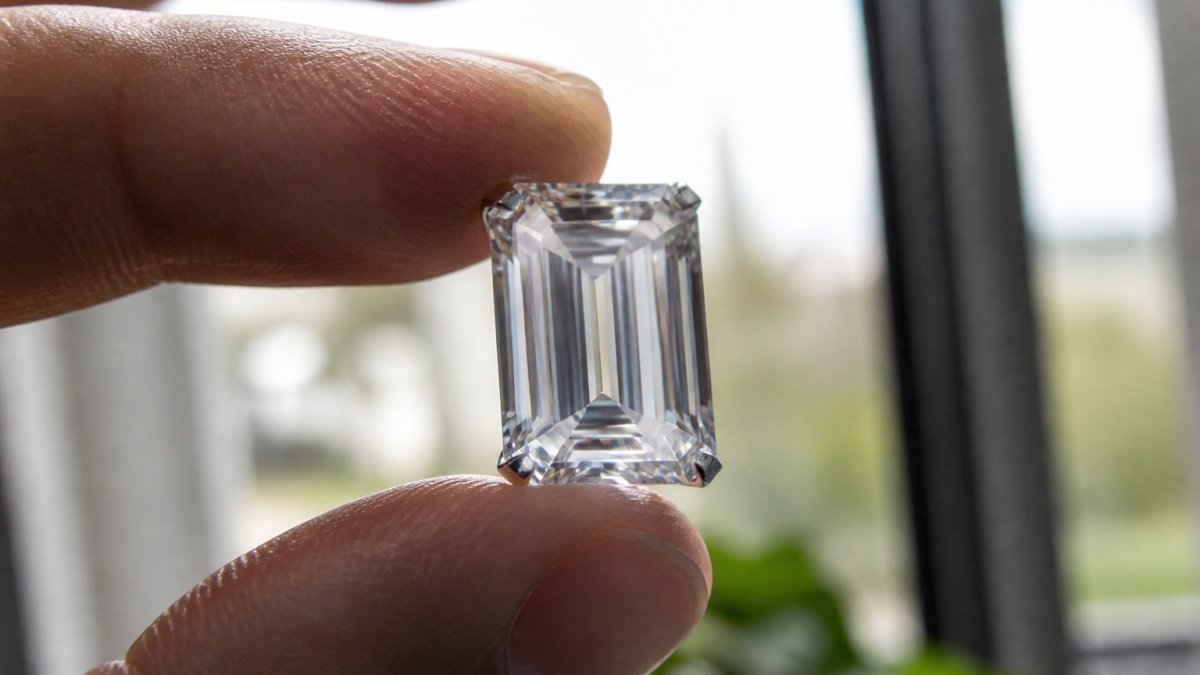
The reason is straightforward: the parallel facets act like a window into the stone. There's nowhere for imperfections to hide. Light travels through the concentric rectangles, and any interruption to that path becomes obvious. By contrast, the multidirectional facets of a brilliant cut scatter light in ways that can mask minor inclusions.
For investment purposes, this transparency is actually advantageous. You're buying what you see. There's no ambiguity about the stone's true condition. Certification becomes more meaningful because the certified grade directly matches visual reality.
When selecting an emerald cut, aim for VS1 clarity as a minimum, and SI1 only if the inclusion is positioned away from the table and crown facets. This is where How to Choose an Antique Diamond Ring: A Buyer's Guide becomes valuable, it walks you through the assessment process and what to prioritise when clarity becomes the deciding factor.
Colour visibility follows the same logic. An emerald cut in H colour will look noticeably warmer than a G colour stone. The step facets don't hide tint the way brilliant cuts sometimes do. For investment-grade emerald cuts, G colour or better is recommended if you want neutral appearance and strong resale appeal.
Emerald cut vs round diamond: investment value and long-term performance
The comparison between emerald cut and round brilliant diamonds reveals important differences in how value accrues over time. Round brilliants dominate the market by volume, roughly 60% of engagement ring sales feature round stones. This ubiquity affects pricing, availability, and resale dynamics.
Round diamonds command a price premium per carat, typically 15-25% higher than emerald cuts of comparable quality. The premium reflects demand, cutting efficiency loss (a round cut wastes more rough material), and established market preference. For buyers seeking maximum value, this gap matters.
However, emerald cuts have historically appreciated at comparable or faster rates than rounds when held long-term. The reason: emerald cuts appeal to collectors and investors specifically, not casual buyers.
The investment case for emerald cuts strengthens when you factor in the lower entry price. That price advantage compounds over time if both appreciate at similar percentage rates.
3.06 Carat Emerald Cut Diamond Ring by David M Robinson →
Long-term performance also depends on certification. An independently certified emerald cut from a reputable lab (IGI, GIA) holds value better than an uncertified stone, because future buyers can verify the specifications without relying on seller claims.
Emerald cut diamond price: understanding value and resale potential
Emerald cut diamond pricing follows a formula based on carat weight, colour, clarity, and cut quality, but the market prices each variable differently than it does for round brilliants. Understanding this structure is essential for investment decisions.
Carat weight drives the largest component of price.
Colour has outsized impact on emerald cut pricing because the step facets expose any tint immediately. The difference between G and D colour in an emerald cut is more noticeable than in a round brilliant, so buyers pay a premium for colourless stones.
Clarity pricing follows similar logic. The jump from SI1 to VS2 is more pronounced in emerald cuts than in other shapes.
Resale value depends on certification, condition, and market demand at the time of sale. Learn more about where to buy antique diamonds and understand resale markets to make informed investment decisions.
The investment thesis for emerald cut diamonds investment rests on three factors: lower entry price than round brilliants, stable long-term demand from collectors, and strong resale markets among jewellers and investors. These factors combine to make emerald cuts more predictable investments than fashion-driven shapes that cycle in and out of favour.
Certification, authentication and buying criteria for step-cut diamonds
Certification is non-negotiable for investment-grade emerald cut diamonds. An independent lab report from GIA or IGI provides objective verification of carat weight, colour, clarity, and cut quality. This documentation protects both buyer and seller by creating a verifiable record.
When evaluating certification, check for laser inscription on the diamond itself. The stone should have a unique identification number inscribed on its girdle (the widest part of the diamond). This number matches the lab report and prevents substitution or mixing of stones.
Authentication requires visual inspection under magnification. The Platinum Emerald Cut Diamond Ring Guide provides detailed criteria for evaluating step-cut diamonds and verifying authenticity.
Detailed criteria for assessing cut quality in step-cut diamonds include: Look for:
- Symmetry in the facet pattern (parallel lines should be evenly spaced)
- Polish quality (smooth facets without scratches or abrasions)
- Proportions that maximise face-up size without sacrificing durability
- Corner angles that provide adequate protection against chipping
For antique emerald cuts, additional considerations apply. Old mine cuts and early twentieth-century emerald cuts often have slightly different proportions than modern stones, which affects how light travels through them. This variation is part of their appeal to collectors, but it also means resale markets are more selective.
Authentication of provenance matters for investment pieces. Documentation showing the stone's history, previous ownership, exhibition records, or publication in jewellery catalogues, adds significant value. Verifying provenance and requesting documentation from sellers is important.
Selecting your emerald cut diamond for lasting value
The decision to invest in an emerald cut diamond requires alignment between aesthetic preference and financial criteria.
Start with clarity and colour as your baseline. Commit to VS1 clarity minimum and G colour or better if you want neutral appearance and strong resale appeal.
Consider the length-to-width ratio carefully. Most emerald cuts range from 1.30 to 1.50, meaning the stone is roughly 30-50% longer than it is wide. A 1.40 ratio is considered ideal for balanced proportions.
Face-up size matters for visual impact. A 1.5-carat emerald cut appears significantly larger than a 1.5-carat round brilliant because of the rectangular shape.
Examine the setting carefully. The 3.06 Carat Emerald Cut Diamond Ring by David M Robinson exemplifies this approach, combining a substantial centre stone with a protective halo and platinum durability.

For buyers seeking value without sacrificing quality, the 0.78 Carat Emerald Cut Diamond in a Platinum Halo Setting demonstrates how a well-proportioned emerald cut in an elegant setting can deliver luxury and investment potential at a more accessible price point.

Certification should always accompany your purchase. Request a full lab report from GIA or IGI, and verify the laser inscription on the stone itself.
Emerald cut diamonds offer a genuine investment case that extends beyond aesthetics. Their lower entry price, stable collector demand, and timeless design create conditions for value retention and appreciation.
Frequently Asked Questions
Do emerald cut diamonds hold their value better than other cuts?
Emerald cut diamonds retain value well due to their timeless design and strong collector appeal. Their step-cut facet structure creates a distinctive aesthetic that has remained desirable for decades. However, resale value depends on certification, colour, clarity and carat weight. Certified stones from reputable sources tend to hold value more reliably. Unlike trendy cuts that may fall from favour, the emerald cut's understated elegance supports long-term demand among investors and collectors seeking classic engagement rings and heirloom pieces.
Why is clarity more important for emerald cut diamonds than sparkle?
Emerald cut diamonds feature step-cut facets arranged in concentric rows, creating a hall-of-mirrors effect rather than the sparkle of a round brilliant. This design makes inclusions and colour far more visible to the naked eye. Even minor internal flaws can be obvious in the transparent facet pattern, which is why clarity grading (VS1 or higher) is critical for emerald cuts. Buyers prioritise clarity because it directly affects the stone's transparency and visual appeal, two defining characteristics of this cut. Lower clarity stones may appear cloudy or have visible imperfections, reducing investment appeal.
How do emerald cut diamonds compare in price to round brilliant diamonds?
Emerald cut diamonds typically cost less per carat than round brilliant diamonds because the step-cut facet pattern produces less sparkle, which many buyers associate with lower value. However, emerald cuts often appear larger face-up than round stones of the same carat weight, offering visual impact at a lower price point. The price difference varies by quality: a 0.78 carat emerald cut in platinum with a halo setting costs around £1,990. For investors, this price-per-carat advantage makes emerald cuts attractive for building collections or engagement rings with higher total carat weight within a set budget.
What certification should I look for when buying an emerald cut diamond?
Independent gemological certification from bodies like IGI (International Gemological Institute) or GIA (Gemological Institute of America) is essential for investment-grade emerald cut diamonds. Certification documents the stone's carat weight, colour, clarity, polish and symmetry, all critical for resale and insurance. Laser inscription on the diamond girdle links the stone to its report, preventing fraud. For example, the 3.06 carat emerald cut diamond ring by David M Robinson includes an IGI certificate confirming its specifications. Always request a certificate before purchase and verify it independently. Uncertified stones are harder to resell and carry higher risk of misrepresentation.


0 comments