

Last Updated: October 25, 2026
Quick Summary
To clean antique gold rings at home safely, soak the ring in warm water with mild dish soap for 5-10 minutes, gently brush with a soft toothbrush, rinse thoroughly, and dry completely with a soft cloth. Always check for loose stones and damaged prongs before cleaning, as these require professional repair.
- Soak rings for only 5-10 minutes in warm soapy water; longer soaks weaken old solder joints.
- Use a soft toothbrush and gentle circular motions; aggressive scrubbing scratches soft antique gold.
- Never use harsh chemicals, abrasive materials, ultrasonic cleaners, steam cleaners, or toothpaste on antique gold rings.
- Emeralds need cool water only with no soap, opals and pearls require barely damp cloths with no soaking, and diamonds tolerate warm soapy water if prongs are secure.
- Stop cleaning immediately if you find loose stones or bent prongs and consult a professional jeweller.
Table of Contents
- Assessing Your Antique Gold Ring Before You Clean
- How to Clean Gold Jewellery at Home with Warm Water and Mild Soap
- How to Clean Gold Rings with Gemstones Safely
- What Not to Use to Clean Gold Jewellery
- How to Clean a Ring Setting Safely Without Damaging Stones
- Understanding Gold Purity, Patina and When Professional Cleaning Is Needed
- Getting Your Antique Ring Professionally Restored
- Frequently Asked Questions
Assessing Your Antique Gold Ring Before You Clean
Before you clean antique gold rings at home, understand what you're working with. Metal composition, stone settings, and age all affect how a piece responds to cleaning.
Examine the band for hallmarks, which reveal gold purity and often the era. Common marks include 375 (9ct), 585 (14ct), or 750 (18ct). No hallmarks may mean the ring predates hallmarking standards.
Check the setting next. Loose stones are a red flag. Gently wiggle each gemstone with your finger. If anything moves, stop. Do not clean a ring with loose stones at home.
Antique gold rings often show patina, a darkened or matte finish from age that's part of the ring's character.
Examine prongs and settings for damage. Prongs should hold stones firmly. If prongs look bent, cracked, or worn thin, professional restoration is safer than home cleaning. Damaged settings can fail during cleaning, and a lost stone is irreplaceable.
If your ring is genuinely antique and valuable, consider professional assessment first. How to Get Vintage Jewellery Appraised: A Step-by-Step Guide helps you understand your ring's value and authenticity before any cleaning happens.
How to Clean Gold Jewellery at Home with Warm Water and Mild Soap
The safest method for cleaning antique gold rings uses only warm water, mild dish soap, and a soft brush. The soap breaks down oils and debris while the warm water dissolves the mixture, lifting buildup without harsh chemicals or risk to delicate settings and patina.
Setting Up Your Cleaning Station Safely
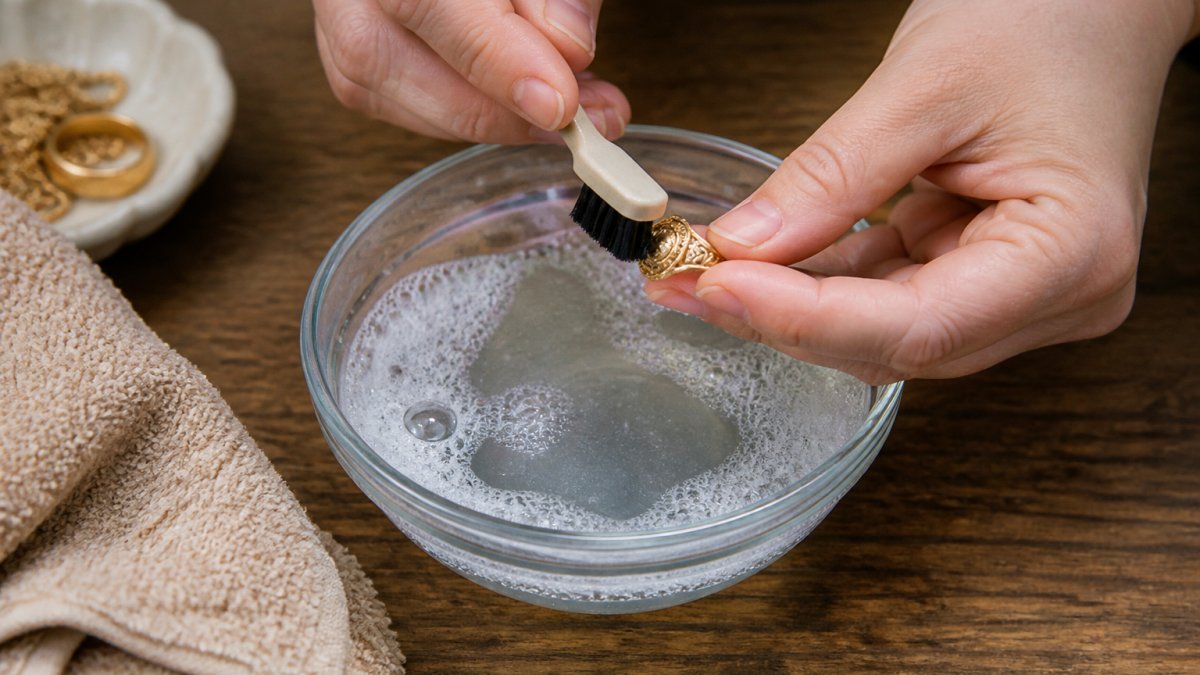
Prepare a small, contained workspace for one ring at a time. Fill a bowl with warm, not hot, water, hot water can damage some gemstones and weaken old solder joints. Add a few drops of mild dish soap and stir gently; you want light dishwater, not thick foam.
Gather your supplies before you start:
- Soft toothbrush (a baby toothbrush is ideal)
- Soft cloth (lint-free cotton or microfibre)
- Small bowl of warm soapy water
- Bowl of clean warm water for rinsing
- Towel for drying
Place a towel under your work area so a slipping ring lands on fabric, not down the sink drain.
The Step-by-Step Cleaning Process
Follow these steps to clean your antique gold ring safely:
Step 1: Soak the ring Place your ring in the soapy water for 5-10 minutes to loosen dirt and grime. Don't rush, the soak does the work for you.
Step 2: Gently brush the surface Remove the ring and gently scrub the band and setting with your soft brush in small circular motions, focusing on prongs, under the band, and decorative details. Antique gold is soft, so let the brush do the work, aggressive scrubbing can scratch it.
Step 3: Clean the underside Flip the ring over. Brush the inside of the band where skin oils accumulate. This area often holds more buildup than the top.
Step 4: Rinse thoroughly Hold the ring under clean, warm running water until it runs clear, leftover soap dulls the finish.
Step 5: Dry completely Pat the ring dry with a soft cloth rather than rubbing, which can cause tiny scratches. Dry completely before wearing; moisture trapped under a setting causes damage over time.
How to Clean Gold Rings with Gemstones Safely
Gemstones need extra care: some are porous, some are temperature-sensitive, and some have treatments home cleaning can undo.
Diamonds are tough, don't absorb water, and handle gentle brushing well with the warm soapy water method.
Emeralds are more delicate. Many emeralds are treated with oils to fill tiny surface cracks.
Opals are porous and absorb water easily. Water can damage opals, causing them to crack or lose their play of colour.
Pearls are organic and sensitive. Never soak pearls in water. Wipe pearl rings with a barely damp cloth and dry at once.
Treated stones, fracture-filled, dyed, coated, or heat-treated, may be damaged by water, soap, or heat.
Glued or composite stones are held in place with adhesive. Water and heat can weaken the glue, causing stones to fall out.
Heat-sensitive stones such as amber, coral, and turquoise can be damaged by warm water. Use cool water and minimise soaking time. Dry immediately.
If you're unsure which gemstone your ring contains, err on the side of caution: use cool water, skip the soap, and dry immediately.
Different gemstones require different care approaches when cleaning antique gold rings at home.
Victorian-Era Old Cut Diamond Three Stone Ring – 1.75 Carats Total →
| Gemstone | Safe Method | Key Consideration |
|---|---|---|
| Diamond | Warm water and mild soap | Check for worn prongs first |
| Ruby and sapphire | Warm water and mild soap | Avoid sudden temperature changes |
| Emerald | Cool water only, no soap | Oils protecting cracks may strip away |
| Opal | Damp cloth only, no soaking | Porous; absorbs water and cracks easily |
| Pearl | Barely damp cloth only | Organic; absorbs moisture and dulls |
| Treated stones | Consult jeweller first | Water, soap, or heat may cause damage |
| Amber, coral, turquoise | Cool water, minimal soaking | Heat-sensitive; dry immediately |
What Not to Use to Clean Gold Jewellery
Many common household items seem like good cleaners but permanently damage antique gold rings, settings, and stones. Avoid these methods entirely.
Do not use abrasive materials. Scouring pads, steel wool, and rough cloths scratch soft antique gold. Once scratched, the damage is permanent.
Do not use ultrasonic cleaners. Their high-frequency vibrations loosen stones and damage delicate prongs.
Do not use steam cleaners. Steam's heat and force damage gemstones, weaken solder joints, and harm delicate metalwork.
Do not soak overnight. Long soaks can weaken old solder joints and cause settings to loosen. Stick to 5-10 minute soaks maximum.
Do not use toothpaste. Toothpaste contains mild abrasives designed to clean teeth, not jewellery. It will scratch antique gold and dull the finish.
Do not polish excessively. Over-polishing strips the patina that gives antique pieces their character and removes a thin layer of metal each time.
Do not use boiling water. Boiling water can damage heat-sensitive stones and weaken old solder. Always use warm water that feels comfortable to the touch.
Do not use a toothpick or needle to clean crevices. These can scratch the metal and dislodge stones. Use a soft brush instead.
How to Clean a Ring Setting Safely Without Damaging Stones
Prongs, bezels, and gallery details require gentle handling, improper cleaning can bend prongs or dislodge stones. When brushing around the setting, use a very light touch and let the soft bristles work; think of tickling the setting, not scrubbing it.
For intricate settings with lots of detail, work slowly. Pay special attention to areas where dirt hides, between prongs, under the stone, and in decorative gaps. These spots need attention, but they're fragile.
If a prong looks bent or loose after cleaning, stop immediately. Do not attempt to straighten it yourself. Bent prongs need professional repair. A jeweller can safely restore the setting without risking the stone.
For rings with multiple stones, clean carefully between each one, where dirt accumulates. After cleaning, gently wiggle every stone to confirm it's secure; if anything moved, have a professional check it before wearing the ring again.
Understanding Gold Purity, Patina and When Professional Cleaning Is Needed
Gold purity affects how your ring responds to cleaning. 9ct gold (375) is durable but tarnishes more easily and cleans well with warm water and mild soap. 14ct gold (585), common in antique jewellery, balances durability with gold content and responds beautifully to gentle home cleaning. 18ct gold (750) is softer and more precious, so take extra care not to scratch it.
Patina is the darkened or matte finish that develops on antique gold over decades. Patina is not damage, it's a sign of age and authenticity. Many collectors treasure patina. If your ring has patina, decide whether to preserve it or polish it away before cleaning. Gentle cleaning with warm soapy water preserves patina. Vigorous polishing removes it.
Some antique gold rings need professional cleaning instead of home care. Professional restoration is necessary when:
- Stones are loose or damaged
- Prongs are bent or worn
- The setting shows cracks or breaks
- Heavy tarnish or buildup won't lift with gentle cleaning
- The ring has intricate filigree or delicate details
- You're uncertain about the ring's condition or composition
Professional jewellers have specialised tools and expertise. They can safely restore valuable antique pieces without causing damage. For rings with significant sentimental or financial value, professional care is worth the investment.
Getting Your Antique Ring Professionally Restored
When your antique ring needs more than home cleaning, professional restoration brings it back to its best condition. Specialists understand antique metalwork and can handle delicate pieces safely.
A professional jeweller will assess your ring first. They'll examine the metal, gemstones, and setting. They'll identify any damage and discuss restoration options with you. This assessment costs money but prevents costly mistakes.
Professional cleaning uses ultrasonic machines and specialised solutions. These tools are more powerful than home methods but require expertise. A skilled jeweller knows how to use them safely on antique pieces.
Restoration might include stone resetting, prong repair, or metal refinishing. Jewellers can strengthen weak prongs, secure loose stones, and repair damage without compromising the ring's authenticity.
When choosing a professional, look for jewellers experienced with antique pieces. They should offer documentation of their work. Ask about their experience with your ring's era and style.
For valuable antique rings, professional care is insurance. How to Insure Antique Diamond Jewellery explains how to protect your restored ring through proper insurance coverage. It protects your investment and preserves the piece for future generations.
Frequently Asked Questions
Can you clean an antique gold ring with washing-up liquid?
Yes, mild washing-up liquid is safe for antique gold rings. Use a few drops in warm water to create a gentle cleaning solution. Avoid harsh degreasers or antibacterial formulas. Soak the ring for 10-15 minutes, then gently scrub with a soft brush. This method removes everyday dirt and grime without damaging the gold or its patina.
How do you remove dirt from the setting of an old gold ring without damaging it?
Use a soft-bristled brush (baby toothbrush or jeweller's brush) dipped in warm soapy water. Gently brush around the setting in circular motions, paying attention to crevices where dirt collects. For stubborn buildup, soak the ring first to soften deposits. Never use a hard brush or pick, as these can loosen stones or scratch the metal. Pat dry immediately with a soft cloth.
When should an antique gold ring be cleaned by a professional?
Seek professional cleaning if the ring has loose stones, damaged prongs, or a fragile setting. If the band is thin, cracked, or shows signs of wear, a jeweller should assess it before you attempt home cleaning. Antique pieces with historical value or rare gemstones also benefit from professional restoration. Professional jewellers have ultrasonic cleaners and expertise to handle delicate or complex pieces safely.
What should you avoid when cleaning antique jewellery?
Avoid harsh chemicals, bleach, vinegar, alcohol, and abrasive scrubbers. Never use an ultrasonic cleaner on antique gold rings with loose stones or delicate settings. Do not expose the ring to extreme temperature changes, as this can crack gemstones. Avoid wearing the ring during vigorous cleaning or when using harsh chemicals elsewhere. Store it separately from other jewellery to prevent scratching.
Antique gold rings deserve care that matches their value and history. The warm water and mild soap method works beautifully for routine cleaning. It's gentle, safe, and effective for most antique pieces. When in doubt, choose the gentler approach. Your ring will reward you with generations of wear.


0 comments