

Table of Contents
- What gold coin grading is and why it matters
- How condition affects gold coin value
- Understanding the gold coin grading scale
- Circulated versus uncirculated gold coins
- Professional grading and third-party certification
- Graded coin or raw coin: which should you buy?
- Gold sovereign grading and market premiums
- Gold coin grading cost and when it's worthwhile
- Frequently Asked Questions
Last Updated: October 13, 2026
What gold coin grading is and why it matters
Gold coin grading is the process of evaluating a coin's condition and assigning it a numerical grade reflecting its state of preservation, how much wear, damage, or original lustre it retains.
When you buy or sell gold coins, the grade tells you what you're getting. It's the common language between buyers and sellers.
A certified grade from a reputable third-party service is proof of condition, making coins easier to buy with certainty and sell with credibility.
How condition affects gold coin value
Condition is everything in coin collecting. A gold coin graded MS-65 (Mint State 65) might sell for £2,000, while the identical coin graded MS-63 might sell for £1,200, a 40% price swing based purely on condition.
The reason is simple: rare coins in perfect condition are harder to find, so collectors compete more fiercely for them.
Surface quality tells the whole story. Here's what affects value:
- Luster, the original shine on the coin's surface
- Contact marks, small scratches from handling or storage
- Spotting, discoloration or toning on the coin's face
- Wear, smoothing of high points from circulation
- Cleaning, any attempt to artificially improve appearance (always reduces value)
A cleaned coin, even professionally, loses collector appeal, collectors prize original surfaces, and cleaning damage is permanent.
Understanding the gold coin grading scale
The standard grading scale runs from 1 to 70, with specific terminology at each level. Understanding these terms helps you evaluate whether a coin is worth the asking price.
Here's how the main grades break down:
- Poor (P-1), barely recognizable as a coin
- Fair (FR-2), heavily worn but identifiable
- About Good (AG-3), major design elements visible but heavily worn
- Good (G-4 to G-6), worn flat but major features clear
- Very Good (VG-8 to VG-10), moderate wear, design visible
- Fine (F-12 to F-15), light to moderate wear
- Very Fine (VF-20 to VF-35), light wear on high points
The higher the number, the better the condition and the higher the price. Most collectors focus on VF-20 and above, where coins still show strong eye appeal.
For gold coins specifically, Mint State grades (MS-60 and above) command premium prices.
Circulated versus uncirculated gold coins
Uncirculated coins grade MS-60 or higher, minted, stored, and never circulated. They're rarer because few survive in original condition, and collectors prize their eye appeal.
Circulated coins grade AU-50 and below, with visible wear on the highest points, possibly flattened lettering, and diminished or absent lustre.
Which should you buy? That depends on your goals:
- For investment, uncirculated coins typically appreciate faster because they're scarcer
- For collecting history, circulated coins cost less and still hold numismatic value
- For gold content, both types contain the same amount of pure gold, so price difference is about condition, not metal
A circulated gold coin still contains its full weight in gold; the uncirculated premium pays for rarity and collector appeal, not extra metal.
Professional grading and third-party certification
Professional grading services evaluate coins using standardised criteria.
When a grading service certifies a coin, it seals it in a tamper-evident holder, often called a "slab", with a label showing the grade and a unique certification number.
Third-party grading matters because it removes bias: a seller has an incentive to overgrade their own coins, while a neutral party depends on consistency and accuracy for its reputation.
How to read a certified holder
Before you rely on a grade, check the holder itself. A genuine certification label normally shows:
- The coin's date and mint mark
- The grade assigned (for example, MS-65)
- A unique certification number
- The grading service's name and, where relevant, a barcode or QR code
- Any variety, attribution, or pedigree notes
You can usually verify the certification number on the grading service's own website. If the number does not match the coin described on the label, or the holder shows signs of tampering, treat the coin as uncertified.
Authentication versus condition grading
It is worth separating two things a grading service does. Authentication confirms the coin is genuine, the right date, mint, metal, and design. Condition grading then assigns a number for how well preserved it is. A coin can be authentic but heavily worn, or look sharp but be a counterfeit. Certification addresses both, which is why a graded holder carries more weight than a seller's description.
The risks and limitations of grading
Grading is not a guarantee, and it is not investment advice. Keep in mind:
- Subjectivity. Graders are experts, but borderline coins can be judged differently by different people or on different days. A coin graded MS-64 by one service might be seen as MS-65 by another.
- Grade changes. Coins can be resubmitted and, occasionally, come back with a different grade. This is sometimes called "grade inflation" when the new grade is higher.
- Counterfeit holders. Fake slabs and copied labels exist. Always verify the certification number directly with the grading service rather than trusting the label alone.
- Overgrading concerns. Some buyers believe certain services grade more generously than others. Reputation and market acceptance vary, so a grade from a less established service may not command the same premium.
- Certification is not a valuation. A grade tells you about condition and authenticity. It does not tell you what the coin is worth, which depends on rarity, demand, and the market on the day you sell.
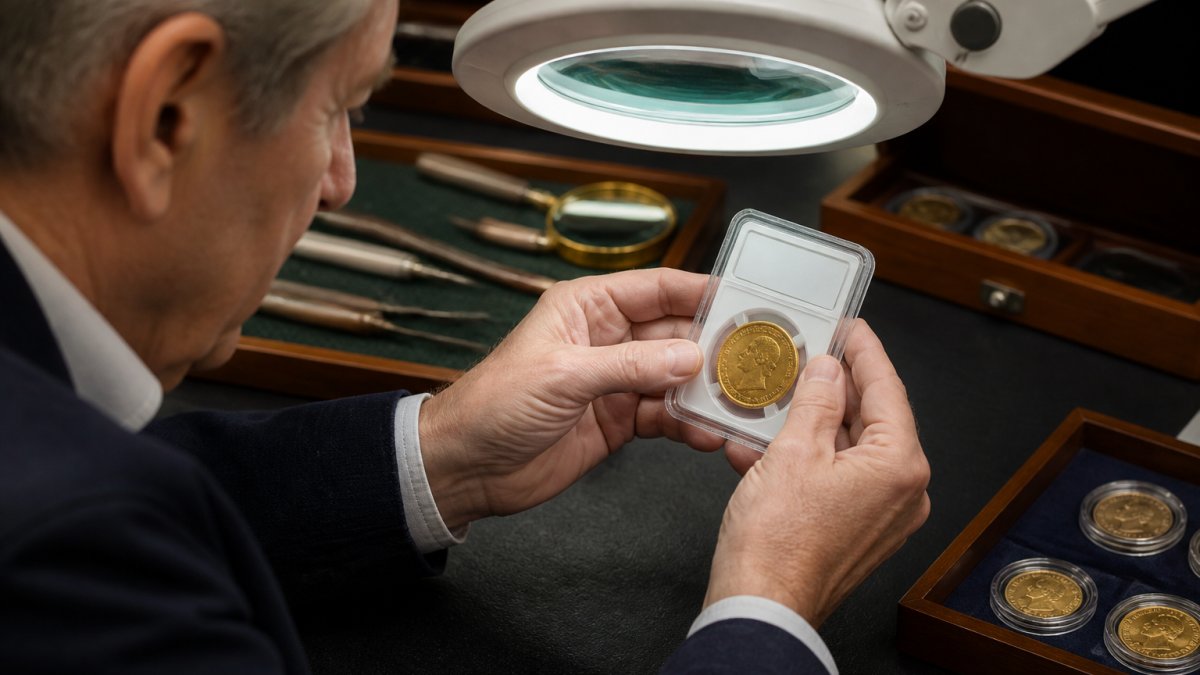
Not all coins need professional grading. Common coins in poor condition may not be worth the fee, but rare, high-grade, and valuable pieces benefit from certification, the cost is often recouped in added buyer confidence.
Graded coin or raw coin: which should you buy?
A graded coin comes certified by a professional service, sealed in a holder with a grade label.
1/4 Ounce Libertad Proof - PF69 UC →
Raw coins cost less upfront, no grading fee, but carry more risk: you're relying on the seller's honesty and your own expertise.
Here's the practical breakdown:
| Coin Type | Cost | Risk | Resale Value | Best For |
|---|---|---|---|---|
| Graded | Higher | Lower | Higher | Valuable coins, serious collectors |
| Raw | Lower | Higher | Variable | Budget buyers, common coins |
For serious collectors, graded coins are usually worth the investment; for casual buyers or common coins of modest value, raw coins can make sense.
If you're spending more than £500 on a single coin, professional grading becomes worthwhile.
Gold sovereign grading and market premiums
The gold sovereign is one of the world's most collected gold coins, minted since 1817 and still highly sought.
A Mint State sovereign commands a significant premium over a circulated one because, although millions were minted, few survived in perfect condition.
Here's what affects sovereign value:
- Date and mint mark, some years are scarcer than others
- Grade, the difference between MS-63 and MS-65 can be £300+
- Lustre, original shine is highly valued
- Eye appeal, how the coin looks to the naked eye
A Victorian sovereign in MS-64 might sell for £450. The same coin in MS-62 might sell for £280.
With sovereigns, condition determines whether it's a fair buy or an overpriced one, always check the grade before committing.
Gold coin grading cost and when it's worthwhile
Professional grading fees depend on the coin's declared value, the service tier, and the grading company. As a rough guide, standard modern-tier grading in the UK commonly falls around £20 to £100+ per coin. Turnaround varies: economy tiers take weeks to months, while express tiers cost more but return results in days.
What the fee actually covers
When you submit a coin, the total cost is rarely just the grading fee. Budget for:
- Grading fee, based on the service tier and the coin's declared value
- Shipping to the grading service, tracked and insured, which is not cheap for valuable coins
- Insurance, you should insure the coin for its full replacement value in transit
- Return shipping and handling, the grading service ships the slabbed coin back, usually insured
- Any add-on services, variety attribution, pedigree research, or reholdering
A coin worth £600 might attract a grading fee of £30-£50, but once you add insured shipping both ways, the all-in cost can easily reach £70-£100, which matters when deciding whether grading is worthwhile.
Submission logistics
If you decide to submit, the process is broadly the same across the major services:
- Choose a service tier based on the coin's value and how quickly you need it back.
- Complete the submission form, listing each coin, its declared value, and any variety or attribution you want noted.
- Package the coin securely, in a holder, inside a padded box, inside a sealed outer box. Loose coins in envelopes are a common cause of damage in transit.
- Insure the shipment for the full declared value and use a tracked, signed-for service.
- Wait for the grade, then check the certification number online once the coin is returned.
Declared value matters: under-declaring to save on fees may limit compensation if the coin is lost or damaged in transit. Declare honestly.
When grading is worthwhile, and when it is not
Grading makes sense if:
- The coin is worth more than roughly £500
- You plan to sell it later and want the widest pool of buyers
- You want to establish authenticity
- You are building a serious collection
- The coin is rare or historically significant
Skip grading if:
- The coin is common and worth under about £200
- You are buying purely for gold content
- You plan to hold it forever without selling
- The coin is already in poor condition
A worked example
Suppose you own a gold sovereign you believe is Mint State. Raw, it might sell for £300. Graded MS-64, comparable examples might sell for £450.
Now suppose the same sovereign is clearly circulated and worth £280 raw.
The lesson: do the sums before you submit.
At Gold2u, we offer coins like the 1/4 Ounce Libertad Proof - PF69 UC, professionally graded by NGC.

Frequently Asked Questions
How much does it cost to get a gold coin graded?
Grading fees vary by service and coin value. Most third-party graders charge between £25 and £150 per coin, depending on the value of the piece and turnaround time selected. Standard service typically takes 2-4 weeks, while expedited options cost more. For high-value coins like the 1/4 Ounce Libertad Proof PF69 UC, professional grading protects your investment and can justify the expense through increased buyer confidence and resale value.
How does gold coin grading affect its value?
Grading directly impacts market value by establishing authenticity, condition, and rarity. A coin graded PF 69 commands significantly higher prices than an ungraded equivalent, as buyers trust the certification. The grade designation affects price premiums: higher grades bring exponentially greater value increases. For collectors and investors, professional grading creates price transparency and makes resale easier, often recouping the grading cost through improved buyer confidence.
Should every gold coin be sent for grading?
Not necessarily. Coins with low intrinsic value or common dates may not justify grading fees. However, grading is worthwhile for rare dates, high-value pieces, investment-grade coins, or any coin you plan to sell. If authenticity is questioned, wear marks are significant, or the coin is historically important, professional grading provides essential documentation and protection. Consider the coin's rarity and your intended use before submitting.
What is the difference between a graded coin and a raw coin?
A graded coin has been professionally assessed and certified by a third-party service, with its condition formally documented in a protective holder. A raw coin is ungraded and uncertified. Graded coins command price premiums due to verified authenticity and condition, making them easier to sell and value accurately. Raw coins offer lower entry prices but carry authentication risk and wider price spreads when reselling, particularly for high-value or rare pieces.
Understanding gold coin grading transforms how you buy and sell. A grade tells you the coin's true condition and protects you from overpaying. Whether you're a collector seeking rare pieces or an investor diversifying with physical gold, grading removes doubt and builds confidence in your purchases. Gold2u helps collectors and investors access authenticated, graded coins that hold their value and tell a story worth preserving.


0 comments