

Table of Contents
- How to Build a Gold Coin Portfolio: Step-by-Step
- Best Gold Coins for Investment
- Gold Coin Portfolio Allocation: How Much Is Enough?
- Liquidity of Physical Gold Coin Investments
- How to Store Gold Coins Safely and Insure Them
- Costs, Tax and Exit Planning for Your Gold Coin Portfolio
- Frequently Asked Questions
Last Updated: October 4, 2026
How to Build a Gold Coin Portfolio: Step-by-Step
A gold coin portfolio is a collection of physical gold coins held as an investment, chosen for their purity, weight and resale value.
Gold has long been used as a safe-haven asset. When stock markets fall, many investors move money into tangible assets.
Below, we cover the exact steps to build one, plus how to store it, insure it and sell it later.
Step 1: Set Your Goal and Budget
Start with two questions: why are you buying, and how much can you commit?
Most investors hold gold for one of three reasons:
- Inflation hedge, gold often holds value when cash loses buying power
- Diversification, gold prices often move independently of stocks and bonds
- Long-term growth, a slow, steady store of value
A common approach is to cap gold at 5-10% of your total investment portfolio. That keeps your asset allocation balanced without overexposing you to one asset.
Budget for more than the coin price. Dealers charge a premium, and you may pay for storage and insurance too.
Step 2: Choose a Coin Type and Purity
Purity and weight decide both value and liquidity. Most investment-grade coins are 22 carat (0.916 fineness) or 24 carat (0.999 fineness).
For example, a full gold Sovereign is struck in 22 carat gold and contains 0.2354 troy ounce of fine gold.

The main types to compare:
- Bullion coins, priced close to the metal value, best for pure investment
- Proof coins, higher finish, higher premium, aimed at collectors
- Historical coins, older strikes with numismatic value on top of gold content
Liquidity matters here. Widely traded coins like Sovereigns are easy to sell. Rare pieces can take longer to move.
Step 3: Buy From a Reputable Dealer
Counterfeit coins exist, so dealer due diligence is not optional. Buy from a dealer who shows you the actual coin you will receive.
Ask these questions before you buy:
- Is the coin the exact one in the photo?
- What is the fineness and fine gold weight?
- Can I book a video viewing before I pay?
- What is the return or authentication policy?
At Gold2u, every coin listed is the actual coin you will receive, sent with free insured delivery. You can book a video viewing before you order, which removes the guesswork from buying physical gold online.
Best Gold Coins for Investment
The best gold coins for investment are widely traded bullion coins with high purity, low premiums and deep resale markets. Liquidity and recognisability matter more than rarity for most buyers, a rare coin may be worth more on paper, but it can take weeks to sell.
How to compare coins before you buy
Work through four filters in order. Each one changes the price you pay and the price you get back.
1. Type: bullion, proof or historical
| Type | Premium over metal | Liquidity | Best for |
|---|---|---|---|
| Bullion | Low (typically 3-8%) | High | Pure investment exposure |
| Proof | High (often 20-50%+) | Moderate | Collectors, gift pieces |
| Historical | Variable, numismatic | Low to moderate | Buyers who want collector upside |
If your goal is a gold coin portfolio rather than a collection, bullion coins are almost always the right starting point.
2. Purity and fine gold weight
Purity tells you the proportion of gold; fine gold weight tells you how much gold you actually own.
- 22 carat (0.916 fineness), harder wearing, traditional for Sovereigns
- 24 carat (0.999 fineness), softer, common for modern bullion coins
3. Weight and entry price
Smaller coins cost more per gram of gold because the dealer's fixed costs are spread over less metal. A quarter Sovereign is a cheaper entry point but carries a higher premium per ounce than a full Sovereign.

4. Liquidity
Widely recognised coins sell fastest.
Common coins to consider
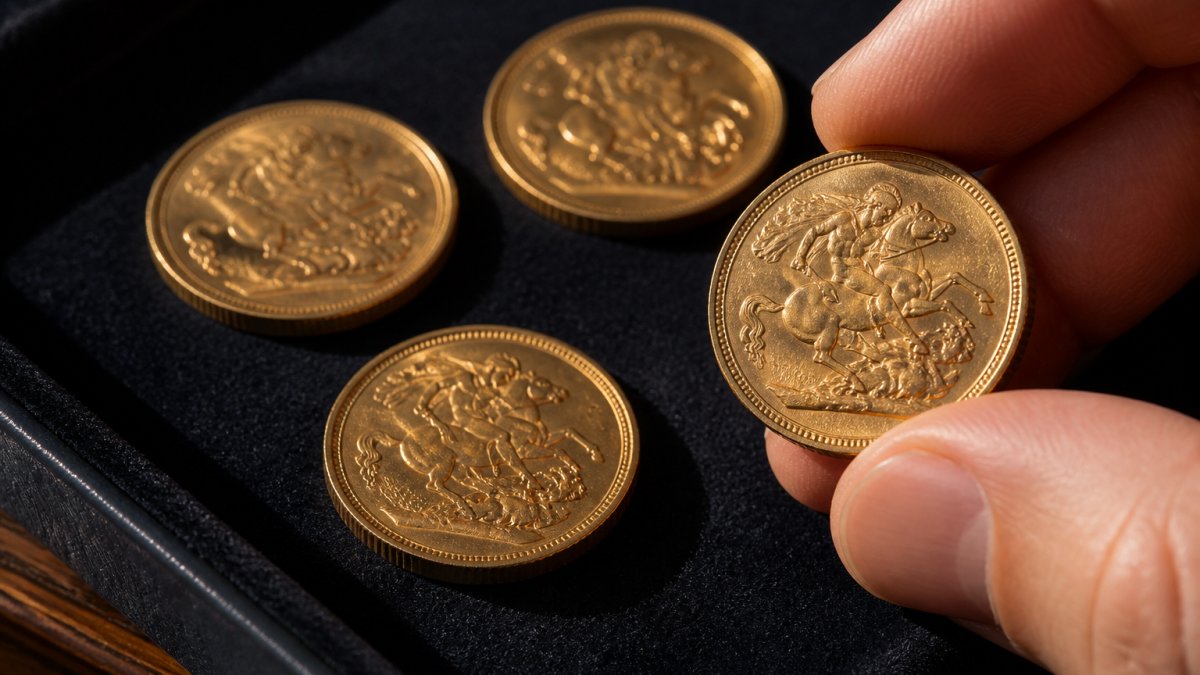
- Full Gold Sovereign, 22 carat, 0.2354 troy ounce of fine gold, British legal tender
- Quarter Sovereign, roughly 2 grams total weight, a lower-cost entry point with a higher premium per ounce
- Half Sovereign, mid-weight option between the quarter and full
- Historical Sovereigns, older strikes with added collector appeal and variable premiums
Sovereigns carry two tax advantages. They are VAT free and exempt from capital gains tax, which makes them a popular choice for long-term investing.
2017 Queen Elizabeth II Full Gold Sovereign →
For a detailed breakdown of coin types, Royal Mint coin specifications and guidance is a useful reference.
Gold Coin Portfolio Allocation: How Much Is Enough?
Gold coin portfolio allocation is the share of your total investments held in physical coins. Most guidance points to 5-10% for a balanced portfolio.
Why not more? Gold pays no income. It produces no dividends or interest. Its job is stability, not growth.
A simple split for a balanced portfolio:
- 60% stocks and funds for growth
- 30% bonds and gilts for income
- 10% gold and other tangible assets for resilience
Adjust to your own risk tolerance. If you are close to retirement, a slightly larger gold holding can reduce overall investment risk.
Liquidity of Physical Gold Coin Investments
The liquidity of physical gold coin investments depends on the coin, not just the metal.
A Sovereign can usually be sold to a dealer within days. A rare historical piece may sit for weeks while a buyer is found.
To keep your portfolio liquid:
- Favour widely recognised bullion coins over obscure issues
- Keep certificates and receipts for every purchase
- Sell in small batches rather than all at once
For context on how gold fits into a wider investment strategy, Financial Conduct Authority guidance for investors sets out the risks clearly.
How to Store Gold Coins Safely and Insure Them
How to store gold coins comes down to three options: home storage, a bank safe deposit box, or a specialist vault.
| Storage Option | Cost | Access | Best For |
|---|---|---|---|
| Home safe | Low | Instant | Small holdings |
| Bank safe deposit box | Moderate | Branch hours | Medium holdings |
| Specialist vault | Higher | By appointment | Large holdings |
Home storage is cheapest but carries theft risk. A vault costs more but removes that risk entirely.
Insurance is separate from storage. Check whether your home contents policy covers gold coins, and if not, take out a specialist policy.
Costs, Tax and Exit Planning for Your Gold Coin Portfolio
Premiums, spreads and tax decide your real return. A coin bought at a high premium can lose money even if the gold price rises, because you need the metal to appreciate enough to cover the round-trip cost before you break even.
The total ownership cost stack
Every coin purchase carries several layers of cost. Add them up before you buy.
- Dealer premium, the markup over the coin's fine gold value. Bullion coins typically carry a lower premium than proof or historical pieces.
- Buy-sell spread, the gap between the price you pay and the price a dealer will pay you. This is the cost you pay to get out.
- Shipping and insurance, often bundled into the premium, but not always. Check whether insured delivery is included.
- Storage, free at home, moderate for a bank safe deposit box, higher for a specialist vault.
- Insurance, a separate annual cost if your home contents policy does not cover coins.
Working out your break-even price
A simple way to think about it: if you buy at a 6% premium and sell at a 4% spread, the gold price needs to rise by roughly 10% before you are back to level. That is why low-premium bullion coins suit investment portfolios and high-premium proof coins usually do not.
Tax treatment of gold coins
Tax rules depend on the coin and your personal situation. Two broad points are commonly cited:
- VAT, investment gold, including many bullion coins, is generally exempt from VAT. Always confirm the status of the specific coin.
- Capital gains tax, British legal tender coins such as Sovereigns are exempt from capital gains tax. Other coins may be subject to it.
This is a general summary, not tax advice. Rules change and individual circumstances differ, so consult a qualified tax professional before relying on any treatment. For the official rules, HM Revenue & Customs capital gains tax guidance is the source to check.
Recordkeeping for a coin portfolio
Keep a written inventory for every coin you hold. Record the purchase date, dealer, coin type, fineness, fine gold weight, price paid and any certificate or receipt. This matters for three reasons: it supports any future tax calculation, it proves ownership for insurance claims, and it speeds up a sale because buyers can verify what you hold.
Planning your exit before you buy
Decide how you will sell before you commit capital. A workable exit plan answers four questions:
- Who will you sell to? The dealer you bought from, a different dealer, or a private buyer.
- In what order? Sell lower-premium bullion coins first if you need cash, and hold pieces with collector appeal for a specialist buyer.
- In what size batches? Selling in small batches can reduce the risk of moving the market on rarer coins, but adds transaction costs.
- What is your trigger? A target gold price, a rebalancing threshold, or a life event.
Frequently Asked Questions
How do you start a gold coin portfolio?
Start by setting a clear budget and deciding whether you want bullion coins for pure gold exposure or collectible coins for added numismatic value. Choose a reputable UK dealer, buy your first coin, and store it securely, either in a home safe or a bank vault. Add coins gradually over time rather than in one large purchase, and keep records of every transaction for insurance and tax purposes. A simple first step is a single full sovereign, which offers low premiums and easy resale.
What gold coins are best for investment?
For most investors, UK gold sovereigns are the best starting point. They are British legal tender, VAT-free, and exempt from Capital Gains Tax, which keeps ownership costs low. Sovereigns contain 0.2354 troy ounces of fine gold and trade at modest premiums over spot. If you want collectible appeal alongside gold content, limited-edition proof coins such as the 2023 King Charles III Quarter Sovereign can add a numismatic premium.
How much of a portfolio should be in gold coins?
Most financial advisers suggest keeping 5% to 10% of a diversified investment portfolio in gold, with some going up to 15% during periods of high inflation or market uncertainty. Gold coins sit alongside stocks, bonds and gilts as a safe-haven asset. Your exact percentage depends on your risk tolerance, time horizon and existing exposure to precious metals. Review the allocation annually and rebalance if gold's share drifts significantly from your target.
How easy is it to sell physical gold coins?
Liquidity depends on the coin type. Widely traded bullion coins like sovereigns can usually be sold within days to a UK dealer, coin shop or online marketplace, often at or near spot price plus a small spread. Rare or collectible coins may take longer because the buyer pool is smaller. Keep original packaging, certificates and purchase receipts, as these speed up verification and help you get a fair price. Selling in smaller batches can also reduce the impact of dealer spreads.
Building a gold coin portfolio takes patience, not perfect timing. The hard part is not buying gold; it is buying the right coins, from the right dealer, at a fair premium.
Gold2u can help. We offer historical gold coins including full and quarter Sovereigns, each listed as the exact coin you will receive, with free insured delivery and video viewings on request. If you want a gold coin portfolio built on real, traceable pieces, browse our collection and start with a coin that fits your budget.


0 comments