

Table of Contents
- Why Start a Gold Coin Collection
- Understanding Gold Bullion Coins vs Numismatic Coins
- Setting Your Budget and Choosing Your First Coins
- How to Buy Gold Coins from Reliable Sources
- How to Check if a Gold Coin is Genuine
- Learning Coin Basics: Terminology and Grading
- How to Store Gold Coins Safely and Protect Your Collection
- Frequently Asked Questions
Last Updated: October 13, 2026
Why Start a Gold Coin Collection
Learning how to start a gold coin collection offers tangible value you can hold: gold coins are both physical assets and historical artifacts, appealing to investors and collectors alike.
Gold coins hedge against inflation and currency fluctuation, maintaining intrinsic worth across economic cycles while offering the satisfaction of owning rare historical pieces.
Each coin tells a story, from a Victorian sovereign's imperial legacy to a modern bullion coin's link to global markets.
Gold2u works with collectors and investors who see gold coins as tangible heritage and lasting value, not just metal weight.
Understanding Gold Bullion Coins vs Numismatic Coins
Gold coins fall into two categories, and the difference shapes your strategy.
Bullion coins are modern coins valued primarily for metal content, priced at spot plus a modest premium, such as the British Gold Sovereign. You know exactly how much gold you own by weight and purity.
Numismatic coins are valued for rarity, age, condition, and collectibility, often far beyond their gold content. An 1871 Queen Victoria Sovereign commands a premium for its age, die number rarity, and condition.

The distinction matters for your budget and goals: bullion collectors accumulate gold weight, numismatic collectors hunt specific dates, mint marks, and conditions. Many blend both.
Setting Your Budget and Choosing Your First Coins
Understanding how to start a gold coin collection begins with your budget, which is the foundation of your strategy.
Determining What You Can Afford
Decide how much capital you can dedicate without affecting essential expenses or emergency reserves. Collecting works at any budget.
Consider these spending patterns:
- Entry-level collectors: Begin with £200-£500 for a first piece
- Regular builders: Allocate £500-£2,000 quarterly for steady growth
- Serious collectors: Commit £5,000+ annually for focused acquisitions
Your budget determines whether you buy one premium numismatic coin or several bullion pieces.
Beyond purchase price, factor in vault storage, insurance, and authentication; these ongoing costs matter more as a collection grows.
Selecting a Collecting Theme
Successful collectors focus purchases around a coherent theme. Unfocused collecting leads to scattered acquisitions that appreciate unpredictably.
Common collecting themes include:
- Date ranges: All sovereigns from a specific decade or era
- Monarchs: Complete sets of coins from particular rulers
- Mint marks: Coins from specific mints (London, Sydney, etc.)
- Denominations: Full sovereigns, half sovereigns, or other specific values
- Historical periods: Coins spanning a particular historical event or era
- Bullion series: Modern government-issued gold coins from specific countries
A theme gives your purchases direction: instead of buying whatever seems interesting, you build systematically toward a defined goal, which typically yields better long-term appreciation.
How to Buy Gold Coins from Reliable Sources
Where you buy matters as much as what you buy: unreliable sources expose you to counterfeits, inflated prices, and poor-quality pieces.
A first-coin roadmap for gold collectors
- Decide bullion or numismatic first. Bullion coins track the spot price of gold plus a small premium and are easy to resell by weight. Numismatic coins carry a premium for rarity, age, and condition, and their value depends on finding the right buyer. If you want liquidity, start bullion. If you want a project, start numismatic.
- Pick one series or era. A single theme, such as full sovereigns from one reign or a modern bullion series, keeps your purchases comparable and your knowledge compounding.
- Buy one coin at a recognised weight. A full sovereign (7.3224 g fine gold, 916.7 fineness) is a common entry point because it is widely traded and easy to price (Buy Gold Bullion Sovereigns). A half sovereign lowers the entry cost; a one-ounce bullion coin raises it.
- Verify before you commit. Weight, diameter, and surface detail should match published specifications. See the authenticity section below for the full checklist.
- Record the purchase. Note the date, price paid, seller, and coin specifications. This record supports insurance and resale later.
What a first gold coin actually costs
Gold coin pricing has three layers: spot price, dealer premium, and taxes or delivery. Spot moves daily, so treat any figure as an illustration.
- Spot price. The market value of the fine gold in the coin. A full sovereign contains 7.3224 g of fine gold; a half sovereign contains 3.6612 g. Multiply the fine-gold weight by the current spot price per gram to get the metal value.
- Dealer premium. The amount above spot that covers minting, handling, and margin. Bullion coins typically carry a smaller percentage premium than numismatic coins, which can carry a premium many times the metal value.
- Taxes and delivery. Investment gold coins that meet the relevant purity and legal-tender criteria are commonly treated as VAT-exempt in the UK, but you should confirm the status of any specific coin with the dealer or a tax adviser (Investment gold coins (VAT Notice 701/21A)). Insured delivery is often included by established dealers; budget for it if it is not.
- Ongoing costs. Storage, insurance, and grading add to the total cost of ownership. These matter more as the collection grows.
A worked pattern: if spot gold is £60 per gram, the metal value of a full sovereign is roughly £439 (7.3224 × £60). A dealer premium of, say, 5-15% on a bullion sovereign puts the purchase price in the region of £460-£505 before any delivery. A numismatic sovereign of the same weight could trade well above that range depending on date, mint mark, and condition. Always ask the dealer to break the price into metal value and premium so you can see what you are paying for.
Where to buy
Established dealers. Reputable dealers provide authentication guarantees, transparent pricing, and a track record. Verify credentials: professional memberships, certifications, provenance documentation, and confident answers to technical questions.
Coin shows and exhibitions. These offer multiple dealers in one location, letting you examine coins physically, compare pricing, and build specialist relationships.
Online marketplaces. Check seller ratings, return policies, and authentication procedures. Reputable dealers provide high-resolution images, detailed specifications, and returns if coins do not match descriptions.
Collector clubs. These connect you with enthusiasts and often facilitate peer-to-peer sales, with trust networks and shared knowledge about dealers, pricing, and authentication.
Gold2u specialises in curated historical gold coins and bullion pieces. For example, the 1871 Queen Victoria Full Gold Sovereign features 7.3224 grams of pure gold with 916.7 fineness, and comes with free insured UK delivery.
How to Check if a Gold Coin is Genuine
Counterfeit gold coins exist, and gold-specific fakes are often convincing. A repeatable verification routine protects your investment.
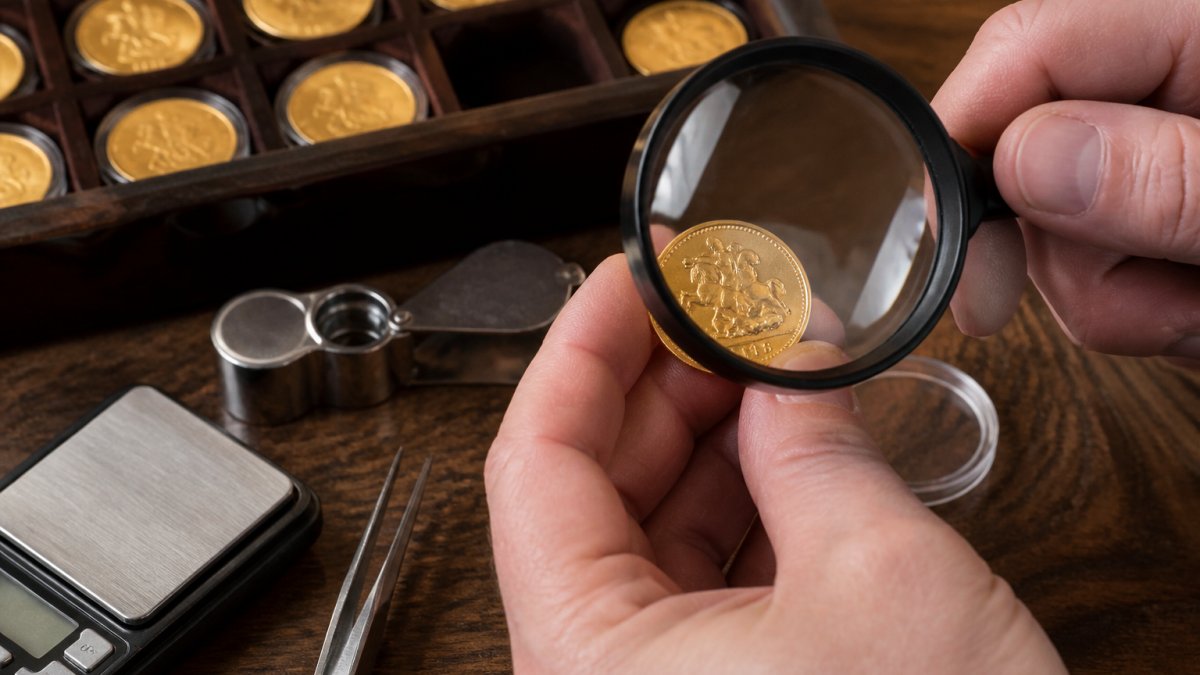
The basic physical checks
Genuine gold coins exhibit consistent weight, dimensions, and physical properties. Counterfeits often fail these tests because accurate reproduction requires expensive precision equipment.
Weight. Legitimate scales accurate to 0.1 grams cost under £30. Weigh your coin and compare against published specifications. A genuine 1871 Victoria Sovereign weighs 7.98 grams gross (7.3224 g fine gold).
1871 Queen Victoria Full Gold Sovereign →
Diameter and thickness. Use digital callipers, available for under £20. A full sovereign has a diameter of approximately 22.05 mm.
Magnetism. Gold is not magnetic. A strong magnet should not attract a genuine gold coin.
Specific gravity. This is the most reliable home test. Weigh the coin dry, then weigh it suspended in water, and divide the dry weight by the difference.
Surface, strike, and hallmark checks
Examine the coin under magnification. Genuine coins show sharp, consistent detail; counterfeits often show fuzzy edges, uneven striking, or inconsistent design. Mint marks should be crisp and properly positioned.
Check the edge. Many gold coins have reeded (milled) edges, which should be even and complete. A cast counterfeit often has weak or irregular edge detail.
Check the hallmark or fineness mark. British sovereigns typically carry a fineness of 916.7 (22 carat). A blurred or misplaced mark is a reason to walk away.
Feel the coin's density. Gold is dense; base-metal counterfeits feel lighter or oddly textured. Experienced collectors develop this sense by handling authenticated pieces.
Listen to the coin. Dropped onto a hard surface from a few inches, genuine gold produces a distinctive ring counterfeits rarely replicate.
When to use professional authentication
For valuable or suspicious pieces, professional authentication services exist. Reputable grading companies examine coins under magnification, test purity, and issue certificates for £20-£100 depending on value. Use them when the fee is a small fraction of the price, or when home checks are ambiguous.
Dealers like Gold2u authenticate every coin before sale, so buying from established sources removes the burden of personal verification for initial purchases.
Learning Coin Basics: Terminology and Grading
Collectors use specific terminology to describe coins accurately. Learning it helps you research, communicate with dealers, and understand pricing.
Fineness expresses gold purity as a decimal or ratio. A coin marked 916.7 fineness contains 91.67% pure gold. Weight is measured in grams or troy ounces. Denomination is the coin's face value, though this often differs dramatically from market value.
Condition or grade describes a coin's state of preservation: pristine coins command premiums, worn coins trade at discounts.
Grading uses numerical scales: MS-65 shows minimal imperfections under magnification, while VF-30 shows significant circulation wear. Lower grades mean lower prices but still represent genuine historical pieces.
How to Store Gold Coins Safely and Protect Your Collection
Proper storage protects your investment from damage, theft, and loss. The method depends on collection size, value, and risk tolerance.
Home storage in a quality safe offers convenient access and lower costs.
Bank safety deposit boxes offer professional security for typically £50-£200 yearly.
Professional vault storage provides maximum security for valuable collections.
Whatever the method, keep detailed inventory records: specifications, acquisition date, purchase price, estimated value, and clear photographs, stored separately from the coins.
Insurance is essential for valuable collections.
Handle coins minimally, wearing cotton gloves to prevent skin oils from damaging surfaces. Store them in acid-free holders.
Starting a gold coin collection combines financial security with historical engagement.
Gold2u connects collectors with authenticated historical gold coins and modern bullion pieces.
Frequently Asked Questions
What is the difference between bullion and collectible gold coins?
Bullion coins are valued primarily for their gold content and weight, with value tied to the spot price of gold. Collectible (numismatic) gold coins carry additional value based on rarity, historical significance, condition, and demand among collectors. A numismatic coin may be worth significantly more than its gold content alone. For beginners, bullion coins offer simplicity and lower entry costs, while numismatic coins suit those interested in history and willing to research market values.
How do I know if a gold coin is genuine?
Authentic gold coins have consistent weight, precise dimensions, and sharp, well-defined details on both obverse and reverse. Check the coin's fineness marking (e.g., 916.7 for British sovereigns), examine the mint mark, and verify the die number if present. Counterfeit coins often feel lighter, have blurred edges, or show inconsistent colouration. Purchase from established dealers who provide certification and offer video viewings. Never rely on appearance alone, buy from reputable sources that guarantee authenticity and stand behind their sales with documentation.
How much should I budget for my first gold coin?
Budget depends on your collecting goals and financial situation. Entry-level gold coins range from £500 to £2,000, though rare or historically significant pieces command higher prices. A 1871 Queen Victoria Full Gold Sovereign, for example, costs around £1,100 and contains 7.32 grams of pure gold. Start with one or two coins to learn the market, then expand your collection as your knowledge grows. Set aside additional funds for secure storage and insurance, which typically add 1-2% annually to your collection's value.
How should I store and protect my gold coin collection?
Store coins in acid-free holders, capsules, or sleeves to prevent tarnishing and damage. Keep them in a home safe, safety deposit box, or bank vault away from moisture and direct sunlight. Maintain detailed records of each coin's specifications, purchase price, and certification. Insure your collection against theft and loss, most standard home insurance policies do not cover high-value collectibles. Handle coins minimally and only by the edges to preserve condition. Periodically check storage conditions and ensure documentation is kept separately from the coins themselves.


0 comments