

Table of Contents
- Step 1: Why Physical Gold Belongs in a Diversified Portfolio
- Step 2: Best Gold Coins for Investment and Bars Compared
- Step 3: Capital Gains Tax on Gold UK: What You Need to Know
- Step 4: How to Store Gold Bullion Securely at Home or in a Vault
- Step 5: Buying and Selling: Premiums, Liquidity and Verification
- Step 6: Avoiding Common Beginner Mistakes
- Frequently Asked Questions
Last Updated: September 29, 2026
Step 1: Why Physical Gold Belongs in a Diversified Portfolio
Physical gold is tangible bullion you own outright, rather than a paper claim on metal held by someone else. For beginners learning how to invest in physical gold for beginners UK investors face a simple choice: own the metal, or own a promise.
- It works as diversification, not as a growth engine
- Most advisers suggest a modest portfolio allocation, often a small single-digit share
- It is a long-term holding, not a quick trade
Step 2: Best Gold Coins for Investment and Bars Compared
For most beginners, the best gold coins for investment are Britannias and sovereigns, while small bars offer the lowest entry cost per gram. Both are investment grade and easy to resell.
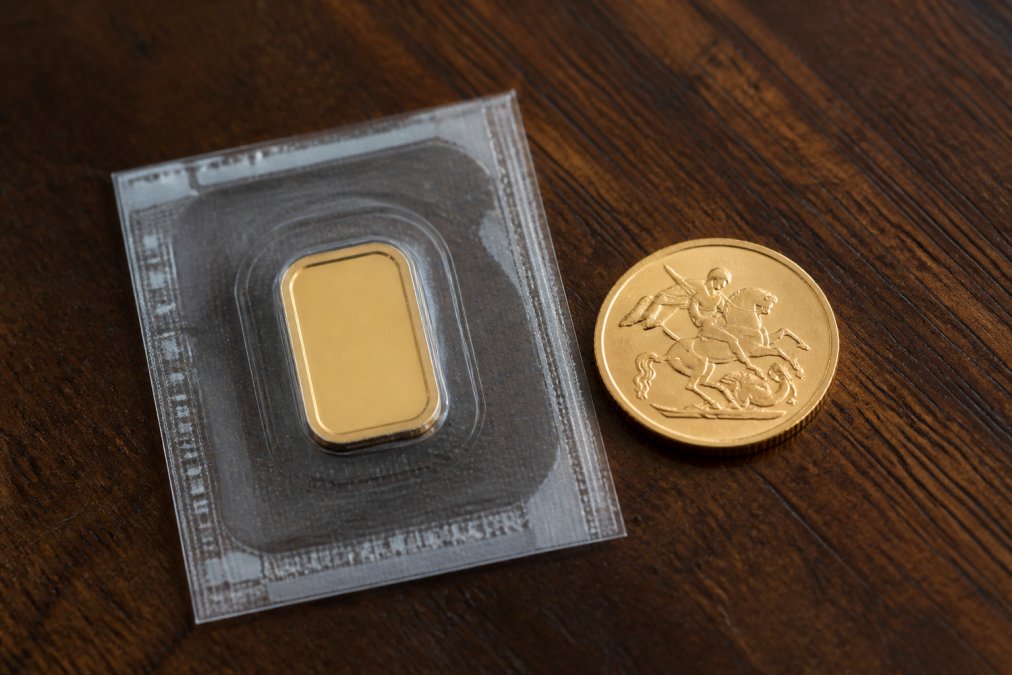
Here is how the main options compare:
| Option | Typical Size | Key Feature | Best For |
|---|---|---|---|
| Sovereign | 7.98g | 916.7 fineness, legal tender | Beginners, gifting |
| Britannia | 1oz | 999.9 fineness, Royal Mint | Pure gold buyers |
| Small bar (1g) | 1g | Low cost, easy to store | First purchase |
| 1oz bar | 31.1g | Lower premium per gram | Larger budgets |
Coins: Sovereigns, Britannias and Collectable Pieces
Coins split into two groups: bullion and collectable. Bullion coins are priced close to the spot price. Collectable coins carry extra value for rarity.
Bars: Small, Stackable and Cost-Effective
Bars suit buyers who want metal, not history. The Nadir 1 Gram Fine Gold Bar at £110.00 is a simple starting point. It is struck in 995.0 gold and sealed in a plastic packet.

Step 3: Capital Gains Tax on Gold UK: What You Need to Know
Capital gains tax on gold UK rules are simpler than most beginners expect, but only if you buy the right items. Britannias and sovereigns are legal tender, so they are exempt from Capital Gains Tax. Bars are not.
VAT and Inheritance Tax Planning
Value added tax works in your favour here. Investment gold is VAT exempt, so you pay no VAT on qualifying coins and bars. That is a real saving against most other assets.
- Keep every assay certificate and receipt
- Record what you paid and when
- Store paperwork with your will
Step 4: How to Store Gold Bullion Securely at Home or in a Vault
How to store gold bullion securely comes down to two choices: home storage or professional vaulting. Each has a clear trade-off between cost and control. What most guides skip is the insurance paperwork, and that is where beginners get caught out.
Home Storage and Insurance Requirements
Your standard home insurance may not cover gold. Many policies cap valuables or exclude bullion entirely, and some exclude it the moment it leaves a rated safe. Call your insurer before you buy, not after.
- Is bullion covered at all, or is it excluded as a 'valuable'?
- What is the single-item limit and the total valuables limit?
- Do I need a safe, and if so, to what standard?
- Is cover valid if the gold is temporarily removed from the home?
- Does the policy require a receipt, assay certificate or valuation?
Practical home storage rules that actually reduce risk:
- Do not keep the gold in the original packaging if that packaging is obviously branded bullion packaging.
- Split holdings across two or three hiding places rather than one 'clever' spot.
- Never tell anyone outside your immediate household what you hold or where.
- Photograph every item, record serial numbers and weights, and store the photos in the cloud.
- Keep the assay certificate and receipt separately from the metal.
Professional Vaulting: Allocated and Segregated Storage
Allocated gold is metal held in your name. Segregated storage means your bars stay physically separate from everyone else's. Both give you clear legal ownership, and both are what a beginner should aim for.
What to check before signing a vaulting agreement:
- Is the metal allocated and segregated, or pooled?
- Who is the custodian, and is it independent of the dealer selling you the gold?
- Is the vault insured, and to what value?
- What are the storage fees, annual percentage of value, or flat fee per bar?
- What is the notice period and cost to withdraw physical metal?
- Is there an audit trail, and how often is the vault independently audited?
A Third Option: Bank Deposit Boxes
Some banks and safe-deposit providers offer a box in a vaulted facility. You keep the key, the provider keeps the building. It is cheaper than full allocated vaulting but you get no insurance from the provider, you must arrange your own cover, and you must declare the contents to your insurer.
Step 5: Buying and Selling: Premiums, Liquidity and Verification
The premium is the amount you pay above the spot price. A 1g bar carries a bigger premium per gram than a 1oz bar. That is the price of flexibility. Liquidity is how fast you can sell, coins and small bars sell quickly, while large or unusual pieces can sit for weeks.
Understanding Premiums and the Buy-Back Spread
Two numbers decide whether you make money:
- The premium you pay over spot when buying.
- The spread, the gap between what a dealer pays you and what they sell for.
Sellers rarely pay spot price. Expect a small gap on any buy-back. The tighter the spread, the more liquid the product. Sovereigns and Britannias typically have the tightest spreads because they are widely recognised and easy to resell. Novelty or collectable pieces often have wide spreads, which is why they are a poor first purchase.
KYC and Anti-Money Laundering: What to Expect on a Large Purchase
This is the step most beginner guides skip, and it is the one that stops a purchase dead at the counter. Dealers are subject to the Money Laundering, Terrorist Financing and Transfer of Funds (Information on the Payer) Regulations 2017 and must carry out Know Your Customer (KYC) checks.
In practice, that means:
- Photo ID, passport or driving licence.
- Proof of address, a utility bill or bank statement dated within the last three months.
- Source of funds, for larger purchases, you may be asked where the money came from (savings, sale of an asset, inheritance).
- A record of the transaction kept by the dealer.
Verifying Gold Authenticity and Avoiding Counterfeits
Verification protects you, and it matters most when buying from private sellers rather than established dealers.
Check these on every piece:
- The hallmark, for UK coins and bars, look for the maker's mark, fineness mark and, where applicable, the assay office mark.
- The purity stamp, for example 916.7 for 22-carat sovereigns, 999.9 for fine Britannias and most modern bars.
- The weight, a sovereign should weigh 7.98g gross; a 1oz coin should weigh 31.1g. A kitchen scale is enough to catch obvious fakes.
- The diameter and thickness, counterfeits often fail on dimensions even when weight is close.
- The assay certificate, for bars, the certificate should match the serial number stamped on the bar.
- The packaging, sealed cards and blister packs are harder to fake convincingly, but not impossible.
Selling: Where and How to Get a Fair Price
Your realistic routes are:
- Back to the dealer you bought from, if they offer a buy-back guarantee.
- A different bullion dealer, always get two or three quotes.
- A coin dealer or auction house for collectable pieces.
- A private sale, which usually gets the best price but carries the most risk and paperwork.
Before selling, weigh the tax position. Britannias and sovereigns are legal tender and exempt from Capital Gains Tax; bars are not. If you are selling bars at a profit, check the current allowance and rates on the HMRC capital gains tax guidance before you commit.
Step 6: Avoiding Common Beginner Mistakes
The biggest beginner mistake is chasing novelty over liquidity. A rare coin may look exciting, but it can be hard to sell at a fair price.
Here is what to watch:
- Buying without checking the premium first
- Skipping insurance on home-stored gold
- Forgetting that bars face CGT while coins may not
- Trusting a seller with no buy-back guarantee
- Ignoring market volatility and buying all at once
Frequently Asked Questions
Is physical gold a good investment in the UK?
Physical gold can act as a hedge against inflation and currency weakness because its supply is limited and it is not tied to any government. In the UK, investment-grade gold coins and bars are exempt from VAT, and certain coins are also exempt from Capital Gains Tax. Many investors hold 5-10% of their portfolio in physical gold for diversification. However, gold pays no income and its price can fall, so it should complement, not replace, other assets.
Do I have to declare gold to HMRC?
You do not need to declare gold you own unless you sell it and make a profit above the annual Capital Gains Tax allowance. If your gain exceeds the allowance, you must report it to HMRC. Gold coins that are legal tender, such as Britannias and sovereigns, are exempt from CGT. For bars and non-exempt coins, keep records of purchase and sale prices. Inheritance Tax may also apply to gold as part of your estate.
Are gold coins or gold bars better for beginners?
Both have merits. Coins like sovereigns and Britannias are legal tender, CGT-exempt, and easy to sell in small amounts. Bars often have lower premiums per gram, especially larger ones, but can be less liquid in small sizes. Beginners might start with 1g bars for affordability and flexibility, or with a single sovereign for its recognisability. Consider your budget, storage plans, and whether tax efficiency matters most.
How do I store physical gold securely?
You can store gold at home in a safe or hidden location, but check your home insurance policy for single-item and total valuables limits. Alternatively, use a professional vaulting service that offers allocated and segregated storage, which keeps your gold separate from the dealer's assets. Always insure your holding and keep purchase receipts, assay certificates, and any storage agreements in a safe place.
Gold is a slow, steady asset, and the hard part is getting the details right: tax, storage and resale. At Gold2u, we help beginners buy with confidence. Our collection includes historical gold coins like the 1871 Queen Victoria Full Gold Sovereign, natural Australian gold nuggets, and antique old mine cut diamond jewellery. Every piece comes with free insured delivery, and you can book a video viewing before you order. Get started with Gold2u and build a physical gold holding you understand.


0 comments