

Table of Contents
- What Makes Physical Gold Collectibles Liquid
- Gold Bullion vs Collectible Coins: Liquidity Differences
- How to Value Rare Gold Coins Before Selling
- Selling Gold Coins: Channels and Time to Cash
- Gold Coin Selling Fees and Net Proceeds
- Factors That Affect Liquidity of Physical Gold Collectibles
- A Practical Selling Workflow for Gold Collectibles
- Frequently Asked Questions
Last Updated: October 8, 2026
What Makes Physical Gold Collectibles Liquid
The liquidity of physical gold collectibles depends on one reality: someone must want to buy what you're selling at a price acceptable to both parties.
Gold collectibles are liquid because they exist in a genuine global market: central banks hold them, investors trade them, and collectors compete for rare examples. But liquidity isn't binary, a common 1920s gold sovereign sells faster than a rare proof coin from a limited mintage.

At Gold2u, we've seen collectors buy beautiful pieces without considering how easily they convert back to cash. Before acquiring any collectible gold, understand the channels, costs, and timeline for converting your collection into funds.
Gold Bullion vs Collectible Coins: Liquidity Differences
Spot Price vs Numismatic Premium
Gold bullion trades at the spot price, the live market rate for pure gold. A one-ounce gold bar sells close to spot because it's fungible, buyers care only about weight and purity.
Collectible coins carry two values simultaneously. The melt value is the gold content at current spot price. A 1917 King George V Full Gold Sovereign contains 7.32 grams of pure gold, roughly £300-350 at spot.

This premium creates a problem: when you sell, you must find a buyer willing to pay it.
Market Depth and Trading Volume
Market depth describes how many buyers exist at various price levels. Bullion has enormous depth. Thousands of transactions occur daily. Prices move in pence, not pounds.
Collectible coins have thinner markets. A rare 1920 proof sovereign might have only five potential buyers worldwide, so finding one willing to pay fair value takes time.
Trading volume matters too. High-volume items, common dates, popular sovereigns, recognizable designs, sell faster because more people seek them. Obscure pieces sit longer.
How to Value Rare Gold Coins Before Selling
Melt Value and Collector Demand
Start by calculating melt value, your floor if you sell to a refiner or dealer buying purely for gold content. Multiply pure gold weight by the current spot price: 7.32 grams at £60 per gram equals roughly £439.
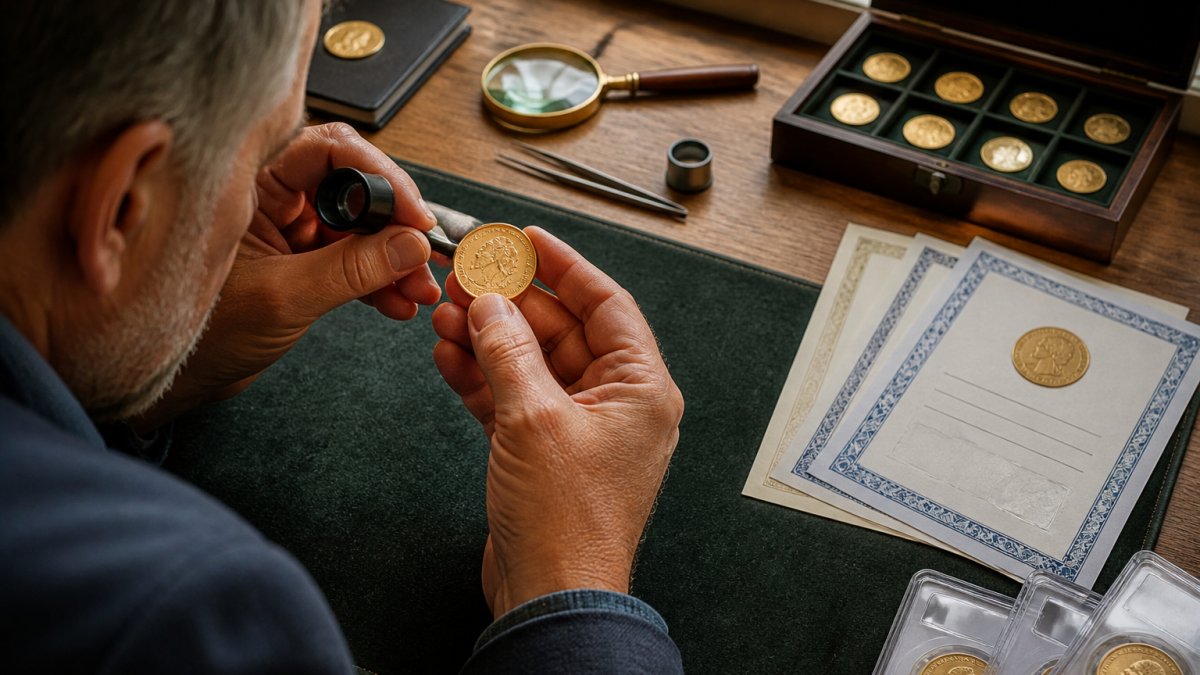
Collector demand determines how far above melt value you can sell. Demand depends on:
- Rarity by date and mintmark. Common years flood the market; scarce dates attract premiums. The 1917 Perth Mint sovereign commands attention because fewer were struck than London or Melbourne versions.
- Condition. Coins graded "uncirculated" or "proof" sell for multiples of circulated examples; handled, worn coins lose collector appeal.
- Historical significance. Commemorative issues, special designs, or pieces linked to notable events attract enthusiast premiums.
- Provenance. Documented ownership history, especially from respected collections, adds credibility and value.
The gap between melt and collector value can be 50%, 100%, or more. A common circulated sovereign might fetch £400-500; a rare proof in excellent condition could reach £2,000-3,000.
Authentication, Grading, and Condition Assessment
No collector pays a premium without proof of authenticity. Counterfeits exist. Treatments hide flaws. Altered coins masquerade as rare dates.
Authentication means verifying the coin is genuine. Look for:
- Proper weight and dimensions matching official specifications
- Correct metal composition and fineness markings
- Appropriate design details, mint marks, and date formatting
- No casting bubbles, tool marks, or other signs of counterfeiting
Grading assesses condition on the Sheldon scale, from 1 (poor) to 70 (perfect).
Condition factors include:
- Luster and surface preservation
- Contact marks from handling or storage
- Wear on high points of the design
- Toning or discolouration
- Cleaning or polishing history
Professional grading services like PCGS or NGC assign grades and encapsulate coins in tamper-proof holders. This certification increases buyer confidence and resale value, graded coins command 20-40% premiums over ungraded examples.
Selling Gold Coins: Channels and Time to Cash
Dealer Networks and Private Sales
Coin dealers offer speed and certainty, buying at fixed prices usually 10-40% below retail value. You receive an offer within hours and leave with cash.
Private sales to collectors yield higher prices but take longer. You might list coins on specialist forums, auction platforms, or collector networks. Finding a buyer actively seeking your coin can take weeks or months.
Auction houses occupy the middle ground. You consign pieces to a reputable firm, which photographs, describes, and markets your coins globally.
Auction Houses and Over-the-Counter Markets
Auction houses specialise in rare and high-value pieces. Sotheby's, Christie's, and specialist coin auctioneers have established reputations and international bidder networks. For scarce coins or pieces with documented provenance, auction exposure maximises reach and competitive bidding.
The over-the-counter market (OTC) connects buyers and sellers directly through dealer networks. Dealers maintain client lists of collectors seeking specific coins; if your piece matches a wish list, the dealer facilitates the sale.
Time to cash varies dramatically:
| Channel | Typical Timeline | Price Realisation | Best For |
|---|---|---|---|
| Dealer buyback | Same day | 60-80% of retail | Speed and certainty |
| Private sale | 2-12 weeks | 85-100%+ of retail | Rare, desirable pieces |
| Auction house | 8-12 weeks | 70-120% of estimate | High-value or unique coins |
| OTC dealer network | 1-4 weeks | 80-95% of retail | Specific collector matches |
Gold Coin Selling Fees and Net Proceeds
Dealer Premiums and Buy-Sell Spreads
When you sell to a dealer, they quote a buy price significantly below the sell price they'd charge a customer. That spread covers inventory holding costs, insurance, and profit margin.
A dealer might sell a common sovereign for £500 retail but offer you only £350.
Rare coins have narrower spreads because demand is stronger. A dealer might buy a scarce 1920 proof sovereign at 85% of retail value, knowing it will sell quickly. Common pieces have wider spreads because they're harder to move.
1917 King George V Full Gold Sovereign – Perth Mint →
Transaction Costs and Fair Value
Beyond the dealer's margin, other costs reduce your net proceeds:
- Shipping and insurance. Sending coins to dealers or auction houses costs £10-50 per shipment. Insurance adds another 1-2% of value.
- Authentication and grading. Professional services cost £20-100 per coin if you haven't already graded.
- Auction commissions. Houses charge 10-15% of the hammer price as buyer's premium, plus 15% seller's commission, 25-30% total.
- Documentation and legal fees. For large collections, solicitors may charge to verify ownership or handle estate transfers.
Calculate your net realisation carefully. A coin with £1,000 retail value might yield £600-700 via dealer buyback, £700-800 at auction, or £850-950 through a private sale. The highest gross price doesn't always mean the highest net proceeds.
Factors That Affect Liquidity of Physical Gold Collectibles
Rarity, Provenance, and Market Conditions
Rarity is the primary liquidity driver. A coin struck in millions of copies is liquid because many exist and many people collect them.
Provenance strengthens liquidity. Coins with documented ownership history, especially from respected collections, command premiums, a sovereign with a certificate from a famous collector's estate sells faster than an identical coin with no history.
Market conditions shift constantly. When precious metals are in favour, gold coins sell briskly; during downturns, collectors hoard rather than sell.
Global Demand and Central Bank Activity
Gold collectibles benefit from global demand. A rare British sovereign attracts buyers from Asia, Europe, and North America. This geographic diversity increases liquidity compared to purely local markets.
Central banks influence the broader gold market: when they buy physical gold reserves, spot prices rise, benefiting all gold holders including collectible coin owners.
Collector demand varies by region: European collectors prize historical sovereigns and guilders, Asian buyers focus on bullion and modern commemoratives, and American collectors seek rare US coins and world rarities.
A Practical Selling Workflow for Gold Collectibles
Step 1: Document and Authenticate Your Pieces
Before approaching any buyer, compile complete documentation. Photograph each coin in high resolution, showing obverse and reverse under good lighting. Record the date, mintmark, weight, dimensions, and any visible wear or damage.
Obtain professional authentication if you haven't already. Independent grading services like PCGS or NGC assign a grade, verify authenticity, and encapsulate the coin. This certification eliminates buyer scepticism and justifies premium pricing.
Create a spreadsheet listing:
- Coin description (date, mintmark, denomination)
- Assigned grade
- Weight and purity
- Estimated melt value at current spot price
- Estimated collector value based on recent comparable sales
- Condition notes and special features
Step 2: Get Independent Valuations
Contact multiple sources for valuations. Approach three or four dealers and ask for written offers. Don't accept the first quote. Dealers vary in their assessments of condition, rarity, and market demand.
Research recent auction results for comparable coins. Catalogues show what similar pieces actually sold for, not asking prices, grounding your expectations in reality.
Consult specialist catalogues and price guides. Standard reference works like Yeoman's "Guide to Antique Gold Coins" provide historical pricing and rarity assessments. Online databases track recent sales and current market ranges.
Step 3: Compare Offers Across Channels
Once you've gathered valuations, compare systematically:
- What does each dealer offer?
- What would auction houses estimate?
- What do private collector networks suggest?
- What are the associated costs and timelines?
Factor in all expenses. A dealer offer of £8,000 minus £200 in shipping and insurance nets £7,800. An auction estimate of £10,000 with 25% total commission nets £7,500. A private sale target of £9,500 with £300 in costs nets £9,200. The highest gross offer isn't necessarily the best deal.
Step 4: Negotiate and Execute the Sale
Once you've identified your preferred channel, negotiate the terms.
Execute the transaction carefully.
Keep detailed records for tax purposes.
Understanding the liquidity of physical gold collectibles is essential before you buy.
At Gold2u, we help collectors navigate this complexity. Our curated selection includes pieces like the 1917 King George V Full Gold Sovereign from the Perth Mint, a coin with both historical significance and strong collector demand.
Before adding to your collection, ask three questions: Is this coin rare enough to command a premium? Can I document its authenticity? Do established markets exist for this type?
Frequently Asked Questions
How liquid are physical gold collectibles compared with bullion?
Physical gold collectibles are less liquid than bullion. Bullion trades on spot price with tight buy-sell spreads and global market access. Collectibles depend on numismatic value, rarity, and condition, factors that slow the conversion to cash. A common gold sovereign may sell within days; a rare historical coin can take weeks or months to find the right buyer at fair value. Authentication and grading add time but also justify higher prices.
What affects how quickly a gold coin or nugget can be sold?
Speed to sale depends on rarity, condition, documentation, and your selling channel. Well-known coins like sovereigns sell faster through dealers; rare or numismatically valuable pieces take longer but often command premiums. Provenance and grading certificates accelerate sales. Auction houses typically require 6-12 weeks; private sales and dealer networks can be faster. Market conditions and global demand for that specific type also influence timescale.
Do rare gold coins always sell for more than their gold content?
No. A rare gold coin's resale value depends on collector demand, condition, and provenance, not just melt value. Some collectibles sell at or below melt value if demand is weak or condition is poor. Others command significant premiums due to historical significance or scarcity. Always get independent valuations from multiple dealers before selling. Fair value reflects both the gold content and the numismatic premium the market will actually pay.
What documents help when selling a gold collectible?
Provenance documentation, grading certificates, and authenticity records are essential. A certificate from a recognised grading service (such as PCGS or NGC) significantly increases buyer confidence and price. Receipts from previous purchases, historical records, and photographs showing condition all strengthen your position. These documents reduce authentication risk for buyers, which means faster sales and better offers. Without them, dealers will apply larger discounts to account for verification uncertainty.


0 comments