

Table of Contents
- Why Rare Gold Specimens Carry Different Risks Than Bullion
- Authenticity and Counterfeit Detection: Authenticating Rare Gold Specimens
- Liquidity and Resale Challenges for Rare Specimens
- Storage, Theft, and Insurance Costs
- Capital Gains Tax on Gold Collectibles in Your Portfolio
- Price Volatility and Market Demand Uncertainty
- Dealer Markups, Premiums, and Transaction Costs
- Concentration Risk and Portfolio Sizing
- Frequently Asked Questions
Last Updated: October 9, 2026
Why Rare Gold Specimens Carry Different Risks Than Bullion
Rare gold specimen investment risks differ fundamentally from standard bullion investment because they combine gold's intrinsic metal value with an additional layer of collectibility, authenticity, and market complexity. When you purchase a natural Australian gold nugget or a historical gold coin, you're not simply buying gold by weight, you're acquiring an asset whose value depends partly on its provenance, condition, rarity, and the strength of collector demand.

Standard bullion tracks the spot price of gold closely. A one-ounce gold bar sells near the daily market rate plus a modest dealer markup. Rare specimens, by contrast, trade on multiple value dimensions simultaneously: the gold content itself, the geological or historical significance, the quality of preservation, and the depth of the collector market willing to pay for that specific piece.
This complexity introduces risks that bullion investors rarely encounter. A rare gold specimen can depreciate in ways that pure gold weight cannot. Even if the gold price rises, your particular specimen might decline in value if collector interest shifts, if authentication questions emerge, or if the market discovers similar pieces that undercut its uniqueness.
Understanding these specific risks is essential before committing capital to rare gold specimens.
Authenticity and Counterfeit Detection: Authenticating Rare Gold Specimens
Authenticating rare gold specimens is non-negotiable. Counterfeits, treatments, and misrepresented provenance are genuine concerns in the collector market, and a specimen that fails authentication can lose most or all of its premium value overnight.
Common Authentication Methods
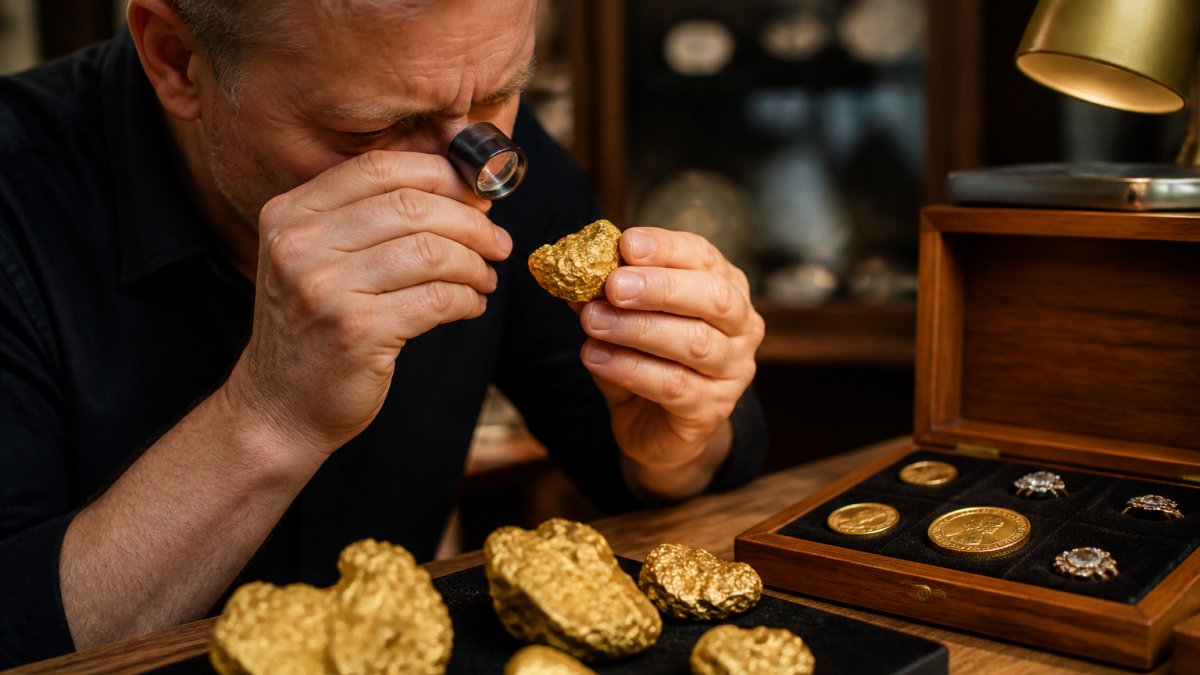
Reputable dealers use several overlapping methods to verify rare gold specimens. Weight and dimensions are measured precisely. Specific gravity testing (comparing density to pure gold) reveals if a piece has been hollowed or filled with base metal. X-ray fluorescence (XRF) analysis measures surface gold purity non-destructively, identifying plating or surface treatments.
For natural gold nuggets, geological assessment matters. Genuine Australian specimens display characteristic surface textures, crystalline structures, and weathering patterns formed over millions of years. Experienced assessors examine under magnification for signs of artificial shaping, chemical treatment, or modern tooling marks.

Historical coins require numismatic expertise. Die characteristics, striking patterns, metal composition, and wear patterns must match known authentic examples from the same mint and year. Grading services provide third-party verification and encapsulation.
Red Flags and Provenance Documentation
A specimen without documented provenance carries elevated risk. Where did it come from? Who held it previously? Can that history be verified? Gaps in provenance, especially sudden changes in ownership or vague descriptions, warrant caution. Legitimate rare specimens often come with historical records, auction house documentation, or chain-of-custody paperwork.
Be wary of specimens offered at prices significantly below market comparables. A rare gold specimen selling at a steep discount often signals authentication concerns, damage, or undisclosed treatment. Similarly, sellers unwilling to provide detailed specifications, high-resolution photography, or third-party grading reports are creating unnecessary friction.
Provenance documentation should be specific: auction house catalogues with lot numbers, previous owner names and dates, conservation records if any work was performed, and certificates from recognised grading authorities. Vague claims like "estate collection" or "private acquisition" without supporting evidence are red flags.
Liquidity and Resale Challenges for Rare Specimens
Rare gold specimen investment risks include a fundamental liquidity problem: reselling a rare piece is harder and slower than selling bullion.
When you own bullion, you can contact any major dealer and receive a quote within minutes. The spot price is transparent, dealer markups are competitive, and execution is nearly guaranteed. Rare specimens lack this efficiency. A natural gold nugget with unusual geological features or a historical coin from a low-mintage year may appeal to only a handful of collectors worldwide.

This means resale timelines are unpredictable. You might find a buyer within weeks, or you might wait months for the right collector willing to pay your asking price. During that waiting period, your capital is tied up and earning no income. If you need to liquidate quickly, you'll likely accept a lower price than the specimen would command if you could wait for an ideal buyer.
Market demand for specific specimens fluctuates based on collector trends, economic conditions, and the discovery of similar pieces. A specimen that was highly sought five years ago might face reduced demand today if the collector base has shifted interest to different types or eras. This demand uncertainty is a form of concentration risk, you're betting on continued collector enthusiasm for your particular piece.
Storage, Theft, and Insurance Costs
Physical ownership of rare gold specimens creates ongoing costs and risks that digital or paper gold investments avoid entirely.
Storage is the most immediate cost. Home safes provide basic security but limited protection against determined theft, fire, or water damage. Bank safe deposit boxes offer better security but typically cost £100-300 annually. Dedicated precious metals vaults, insured, climate-controlled facilities with armed security, can cost £500-2,000+ per year depending on the value and volume of your holdings.
Theft risk is real. Rare gold specimens are portable, recognisable to knowledgeable thieves, and difficult to trace once stolen. Insurance is essential, but it's not free. Insuring rare specimens typically costs 0.5-1.5% of their appraised value annually. If you're storing a specimen worth £5,000, insurance alone could cost £25-75 per year.
Damage and loss create additional exposure. A specimen can be damaged by improper handling, environmental stress, or accident. Some damage, scratches, dents, or patina changes, can reduce collector value even if the gold weight remains unchanged. Insurance may cover theft but not all forms of damage, depending on the policy terms.
Transportation costs arise if you need to move specimens between locations or to a dealer for sale. Insured courier services for high-value items are expensive. Each move introduces handling risk and cost.
Capital Gains Tax on Gold Collectibles in Your Portfolio
In the United Kingdom, rare gold specimens are treated as collectibles for capital gains tax purposes, not as simple commodities. This tax treatment creates a significant cost that many new investors overlook.
When you sell a rare gold specimen at a profit, the gain is subject to capital gains tax. The current rate is 20% for higher-rate taxpayers and 10% for basic-rate taxpayers. This applies to the profit, the difference between your purchase price and sale price, not the gold weight itself.
A specimen purchased for £3,000 and sold for £4,500 generates a £1,500 gain. At 20% tax, you owe £300 in capital gains tax. That's a real cost that reduces your net proceeds.
4.638g Natural Gold Nuggets – The Investor’s Lot – Premium Australian Specimen →
Additionally, you benefit from an annual capital gains tax exemption, which means your first £3,000 of gains each year is tax-free (Capital Gains Tax: what you pay it on, rates and allowances: Capital Gains Tax rates). But gains above that threshold are taxed.
This tax treatment differs from some other gold investments. The tax implications should be factored into your expected returns when evaluating whether a rare specimen purchase makes financial sense.
Price Volatility and Market Demand Uncertainty
Rare gold specimen investment risks include significant price volatility driven by factors beyond the gold price itself.
The gold price in pounds has shown considerable variation year to year. Historical performance indicates periods of strong appreciation alongside periods of flat or declining value. This volatility affects the underlying metal value of your specimen.
A specimen might appreciate 15% in a year when collector interest in Australian natural gold nuggets peaks, then decline 10% the following year if collector attention shifts to historical coins or other asset classes. This demand-driven volatility is unpredictable and difficult to hedge.
Market demand uncertainty is compounded by the small size of collector markets. A sudden influx of similar specimens, perhaps from a major estate sale or a new discovery, can depress prices for comparable pieces. Conversely, if a specimen becomes historically significant or a famous collector acquires one, demand and prices can spike. These events are often unforeseeable.
Economic conditions also matter. During recessions or periods of financial stress, collector spending often contracts. Wealthy individuals may liquidate rare specimens to raise cash, flooding the market with supply and depressing prices. During economic expansion, collector demand typically strengthens, supporting prices.
Dealer Markups, Premiums, and Transaction Costs
Every transaction involving rare gold specimens carries costs that erode returns. Understanding these costs is essential for realistic return projections.
When you purchase a rare specimen from a dealer, you pay the dealer's asking price, which includes a markup over the dealer's acquisition cost. This markup, often 15-40% above the underlying gold value, depending on the specimen's rarity and desirability, compensates the dealer for acquisition, authentication, storage, and risk.
When you sell, you face a similar friction. Dealers typically offer less than their asking price when buying specimens from the public. The spread between buying and selling prices, often 10-25%, is the dealer's profit margin. If you sell a specimen to a dealer, you'll receive less than the price at which similar pieces are listed for sale.
Auction house sales introduce different costs. Auction houses typically charge seller's commissions of 10-15%, plus buyer's premiums of 15-25% on top of the hammer price. If your specimen sells for £4,000 at auction, the buyer pays £4,600-5,000 (including buyer's premium), and you receive roughly £3,400-3,600 after the seller's commission. The total transaction cost is substantial.
Transaction costs matter because they reduce returns. A specimen that appreciates 20% in absolute value might deliver only 5-10% net return after transaction costs on entry and exit.
Concentration Risk and Portfolio Sizing
Rare gold specimen investment risks include concentration risk, the danger of allocating too much capital to illiquid, unpredictable assets.
If rare specimens represent a large portion of your portfolio, a decline in collector demand or authentication issues affecting your specific pieces can materially harm your overall wealth.
Financial advisors typically recommend limiting alternative investments, including rare collectibles, to 5-15% of a diversified portfolio. Within that allocation, rare gold specimens should represent only a portion.
Concentration risk is especially acute for investors with limited capital. An individual with £50,000 in investable assets who purchases £15,000 worth of rare specimens has 30% of their portfolio in a single, illiquid asset class.
Diversification within rare specimens also matters. Owning five different Australian natural gold nuggets is less concentrated than owning one large specimen.
Rare gold specimen investment risks are real, multifaceted, and often underestimated by new collectors. Authentication challenges, liquidity constraints, ongoing storage and insurance costs, tax implications, and demand volatility all reduce the predictability of returns compared to standard gold bullion.
At Gold2u, we specialise in authenticated natural Australian gold nuggets and rare historical pieces. When you're ready to explore rare gold specimens for your portfolio, our collection offers authenticated pieces backed by transparent sourcing and expert guidance.
Frequently Asked Questions
What are the primary risks of investing in rare gold specimens?
Rare gold specimen investment risks include authenticity concerns, limited liquidity due to narrow buyer pools, significant storage and insurance costs, price volatility driven by collector demand rather than spot gold prices, and capital gains tax treatment as collectibles. Unlike bullion, specimens depend on provenance documentation, condition assessment, and market sentiment from specialist collectors. Dealer markups can also be substantial, sometimes 20-40% above intrinsic gold value.
How do I verify the authenticity of a rare gold specimen before purchasing?
Request independent certification from a reputable assayer or gemological institute. Examine provenance documentation, including chain of ownership and any historical records. Check for consistent weight, purity markings, and natural surface characteristics. Be cautious of specimens lacking detailed photography, third-party grading, or seller history. Verify authentication protocols and guarantee terms before committing to purchase.
How is capital gains tax on gold collectibles calculated in the UK?
Gold collectibles, including rare specimens, are taxed as capital gains at 20% for higher-rate taxpayers and 10% for basic-rate taxpayers, after the annual exemption. The gain is calculated as the difference between your purchase price (including acquisition costs) and sale price. Unlike gold bullion coins, rare specimens do not benefit from CGT exemption. Keep detailed records of purchase receipts, insurance valuations, and professional appraisals to substantiate your cost basis.
What is the difference between a rare gold specimen and bullion as an investment?
Bullion is standardised, liquid, and valued primarily by weight and purity; it carries lower dealer premiums and easier resale. Rare gold specimens derive value from rarity, historical significance, condition, and collector demand, commanding premiums of 20-100% above intrinsic gold value. Specimens are less liquid, require specialist buyers, and depend heavily on provenance. Bullion suits portfolio diversification; specimens suit collectors seeking unique assets. Both carry storage and insurance costs, but specimens require specialist custody and authentication.


0 comments