

Table of Contents
- What Makes Old Mine Cut Diamonds Valuable
- Old Mine Cut vs Old European Cut: Key Differences
- How to Identify Antique Diamond Cuts
- Antique Diamond Valuation Factors That Matter
- Investment Potential vs Sentimental Value
- Setting Compatibility and Modern Wear
- Frequently Asked Questions
Last Updated: September 21, 2026
What Makes Old Mine Cut Diamonds Valuable
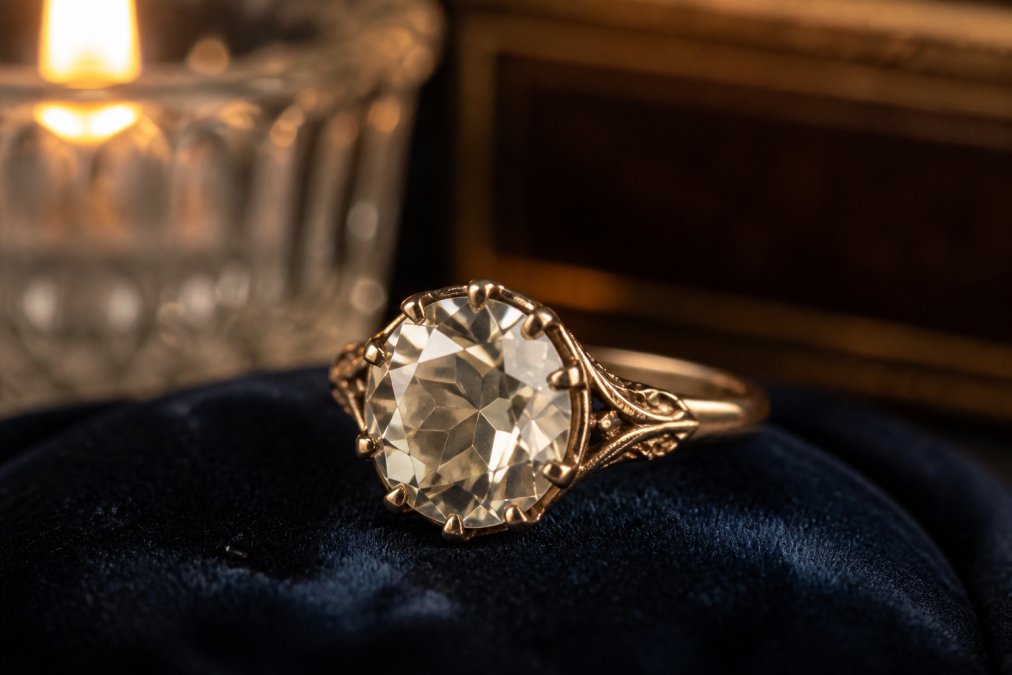
Old mine cut diamonds are valuable because they are rare survivors of hand-crafted lapidary work, and no two are identical. Each was shaped by eye on a spinning wheel, producing a high crown, small table and deep pavilion that scatter light in slow, warm flashes. This guide from Gold2u explains what drives that value, how to spot a genuine antique, and where the risks sit.
The Role of Rarity and Historical Significance
Rarity is the single largest driver. Old mine cuts date from roughly the 18th and early 19th centuries, before the modern brilliant was standardised in the early 1900s, and stones surviving in original condition are a small, shrinking group.
Why Hand-Cut Craftsmanship Commands a Premium
Hand-cutting is slow, imprecise and unrepeatable: a lapidary worked each facet by feel, adjusting angles to suit the rough rather than forcing it into a template.
Old Mine Cut vs Old European Cut: Key Differences
The old mine cut and the old European cut are different stones, and confusing them is a common and expensive mistake. Old mine cuts are older, chunkier and more irregular; old European cuts, from the 19th and early 20th centuries, are rounder and more symmetrical.
Facet Patterns and Proportions Compared
| Feature | Old Mine Cut | Old European Cut |
|---|---|---|
| Shape | Cushion, often squarish | Round |
| Crown | High | Lower than old mine |
| Table | Small | Larger |
| Culet | Large, visible | Smaller |
| Facets | Broad, irregular | More symmetrical |
| Symmetry | Hand-cut, uneven | Improved, closer to round |
Old mine cuts look warmer and more irregular; old European cuts more balanced. Neither is "better" in the abstract, but they appeal to different collectors.
How to Identify Antique Diamond Cuts
Genuine antique cuts can be identified by examining the culet, table size, girdle and crown height under magnification. A large open culet is the clearest single indicator of an old mine cut, since modern cuts have a tiny culet or none at all.
Look for these markers:
- A visible, open culet when viewed face-down through the pavilion
- A small table relative to the overall width of the stone
- A high crown that sits noticeably proud of the girdle
- A girdle that is thin, wavy or bruted rather than polished and uniform
- A cushion outline rather than a perfect circle
- Broad facets that flash slowly rather than sharp, pinpoint sparkle
Tools and Techniques for Authentication
A 10x loupe is enough for most visual checks, and a jeweller's gauge confirms table percentage and crown height. For colour and clarity, an assessment in the mounting by a gemmologist is standard practice, since set stones cannot be measured as precisely as loose ones.
Antique Diamond Valuation Factors That Matter
Valuation for antique stones runs on the same four criteria as modern ones, but the weighting differs. Cut quality matters more than a modern buyer might expect, because an old mine cut with a damaged or worn facet pattern loses much of its premium.
The 4Cs in an Antique Context
- Cut: The most important factor. Original facet geometry, an intact culet and an unaltered crown all protect value. A recut stone drops into a different, cheaper category.
- Colour: Old mine cuts were often cut from stones with warmer tones, and many collectors accept a slightly lower colour grade as period-appropriate. Estimated H to J colour is common in genuine pieces.
- Clarity: Eye-clean is the practical benchmark. Visible inclusions reduce value, but small internal characteristics are normal in hand-cut stones and do not automatically disqualify them.
- Carat weight: Weight still drives price, but a large old mine cut is rarer than a large modern brilliant of the same weight, which supports a premium.
Provenance and Setting Impact on Price
Provenance is where antique jewellery separates itself from commodity diamonds: an original period setting, intact milgrain detailing, hand-pierced galleries and a documented history all add value a loose stone cannot claim.
Investment Potential vs Sentimental Value
Antique diamonds behave differently from bullion, and buyers should be clear about which they are chasing. Sentimental value is real but not liquid; investment value depends on rarity, condition and provenance holding up, and on whether anyone else wants that specific stone.
What Actually Drives Resale Value
Four factors separate an antique diamond that holds value from one that does not:
6.5 Carat Edwardian Platinum Graduated →
- Originality of cut. A stone with its original facet pattern, intact culet and unaltered crown sits in the collector market. A recut stone drops into the commodity market, where it competes with modern brilliants on the same terms and usually loses.
- Provenance. A documented period setting, original box, or a named maker adds a layer of value a loose stone cannot claim. Provenance is also the hardest thing to fake, which is why it commands a premium.
- Condition. Chipped culets, worn facet edges and repaired settings all reduce value. Antique stones have had decades or centuries of wear, and condition is where the biggest price gaps open up between two superficially similar pieces.
- Size and quality within the antique category. A large, well-preserved old mine cut is rarer than a large modern brilliant of the same weight. That rarity supports a premium, but only for stones that are genuinely original.
The Liquidity Reality
Selling a specific antique piece usually takes months rather than days, and the buyer pool is narrow. Auction houses and specialist dealers are the usual routes, but both take a cut and price to their own market. Pieces bought at retail commonly resell at a meaningful discount, because retail pricing includes the dealer's authentication, restoration and presentation work.
Sentimental Value Is Not a Weakness
A stone worn by a relative, or one with a documented history you can trace, carries value no certificate captures. That value is real to you and to a future owner who shares the attachment, but it is not transferable to a stranger at the same price. Treat sentimental value as a reason to buy well and keep, not to overpay.
A Practical Framework
If you want a simple test, ask three questions before you buy:
- Is the cut original? If yes, you are in the collector market. If no, price it as a modern stone.
- Is the provenance documented? If yes, it supports a premium. If no, do not pay for a story you cannot verify.
- Can you hold it for years? If yes, the liquidity problem is manageable. If no, an antique diamond is the wrong asset.
Setting Compatibility and Modern Wear
Old mine cuts are not difficult to set, but they are less forgiving than modern brilliants. Their deep pavilions need a mount with enough depth, and their irregular girdles mean a hand-finished setting often fits better than a mass-produced one, which is where buyers get caught out after purchase.
Why the Geometry Matters
An old mine cut's high crown, small table and deep pavilion create two practical problems:
- Depth. The pavilion extends further below the girdle than a modern brilliant of the same weight. A mount designed for a modern stone will not seat it properly, and forcing it in can put pressure on the culet.
- Girdle irregularity. Hand-cut girdles are often thin, wavy or bruted rather than polished and uniform. A mass-produced setting assumes a consistent girdle thickness, so it may grip unevenly, tight in one spot, loose in another.
Setting Types Compared
| Setting type | Protection | Profile | Best for |
|---|---|---|---|
| Bezel | Highest, metal surrounds the girdle | Higher, covers more of the stone | Everyday wear, active hands, stones with thin girdles |
| Crown | High, metal wraps the crown | Moderate | Larger centre stones needing strength without hiding the cut |
| Four-claw | Moderate, claws expose the girdle | Lowest | Displaying the cut, occasional wear |
| Six-claw | Good, more points of contact | Low to moderate | Stones with slightly irregular girdles needing even grip |
A bezel hides more of the stone, a real trade-off if you bought the piece for its facet pattern. A crown setting is often the compromise, protecting the high crown and girdle without covering the table.
Protecting the Culet
The culet is the single most vulnerable point on an old mine cut: a large, open facet at the base of the pavilion that sits close to the skin or metal depending on the mount. Two practical points:
- Check the clearance. There should be enough space between the culet and the metal, or the skin, that the stone does not rest on it. A mount that presses the culet against a surface will eventually chip it.
- Avoid open-back settings for everyday wear. An open back looks elegant and lets light through, but it leaves the culet exposed to knocks. For a ring worn daily, a closed or semi-closed back is safer.
Pairing and Proportion
Old mine cuts look wrong beside modern brilliants in the same piece: the facet patterns read differently under light, and the contrast makes both stones look worse. Keep antique stones with antique stones.
Frequently Asked Questions
Are old mine cut diamonds worth more than modern cuts?
Not always. Old mine cut diamonds are valued for their rarity, hand-cut craftsmanship, and historical significance, often commanding a premium over modern brilliant cuts of similar carat weight. However, value depends on antique diamond valuation factors like clarity, colour, and provenance. A well-preserved 3 carat old mine cut can be worth significantly more than a modern stone, while lower-quality examples may sell for less.
How can I identify an authentic old mine cut diamond?
Look for a high crown, small table, large culet, and irregular facet patterns. Under magnification, the facets should appear chunky and less symmetrical than modern cuts. Authentic stones also show kozibe reflections, where the culet reflects internally. Learning how to identify antique diamond cuts helps avoid misidentified old European cuts.
Do old mine cut diamonds hold their value over time?
Yes, well-preserved old mine cut diamonds tend to hold or increase in value due to their rarity and demand from collectors. Unlike modern mass-produced stones, each is unique. Investment potential is strongest for larger stones (over 1 carat) with good colour and clarity, original settings, and documented provenance. Market fluctuations affect all diamonds, but antique cuts have shown resilience.
What is the difference between an old mine cut and an old European cut?
Old mine cuts are older, with a cushion shape, higher crown, smaller table, and larger culet. Old European cuts, which emerged later, are rounder with a more symmetrical facet arrangement and smaller culet. Both are hand-cut, but old European cuts represent an evolution toward the modern brilliant. Understanding this difference is key when comparing old mine cut vs old European cut.


0 comments