

Last Updated: October 28, 2026
Quick Summary
Style a vintage diamond cluster ring by matching its scale and silhouette to your hand, keeping supporting rings thin and plain so the cluster stays the focal point. Choose a wedding band that sits close without competing, and check the setting often because old claws are fragile.
- A low-set cluster sits flush with a straight band, while a high dome needs a curved band.
- Keep stacking bands narrow at 1.5mm to 2mm in the same metal as the cluster.
- Old-cut diamonds catch light more softly than modern brilliants, which adds charm.
- Remove the ring before cleaning, gardening or the gym, and store it in its own soft pouch.
- The Vintage 18ct Gold Diamond Cluster Ring is priced at £2,500 and dates to the late 1990s.
Table of Contents
- Start With the Ring: What Makes a Vintage Diamond Cluster Ring Different
- Styling by Ring Silhouette, Scale and Hand Shape
- What Wedding Band Goes With a Cluster Ring?
- How to Stack Rings With a Cluster Ring Without Clutter
- Mixing Vintage and Modern Jewellery: Metals, Colours and Contrast
- Outfit Formulas: Step-by-Step Styling for Different Occasions
- Antique Diamond Ring Care: Wearing and Maintaining a Fragile Setting
- Choosing Your Vintage Cluster Ring From Gold2u
- Frequently Asked Questions
Start With the Ring: What Makes a Vintage Diamond Cluster Ring Different
A vintage diamond cluster ring is a ring built around a group of diamonds set close together, so the stones read as one larger, brighter whole. The design is old, but it still works.
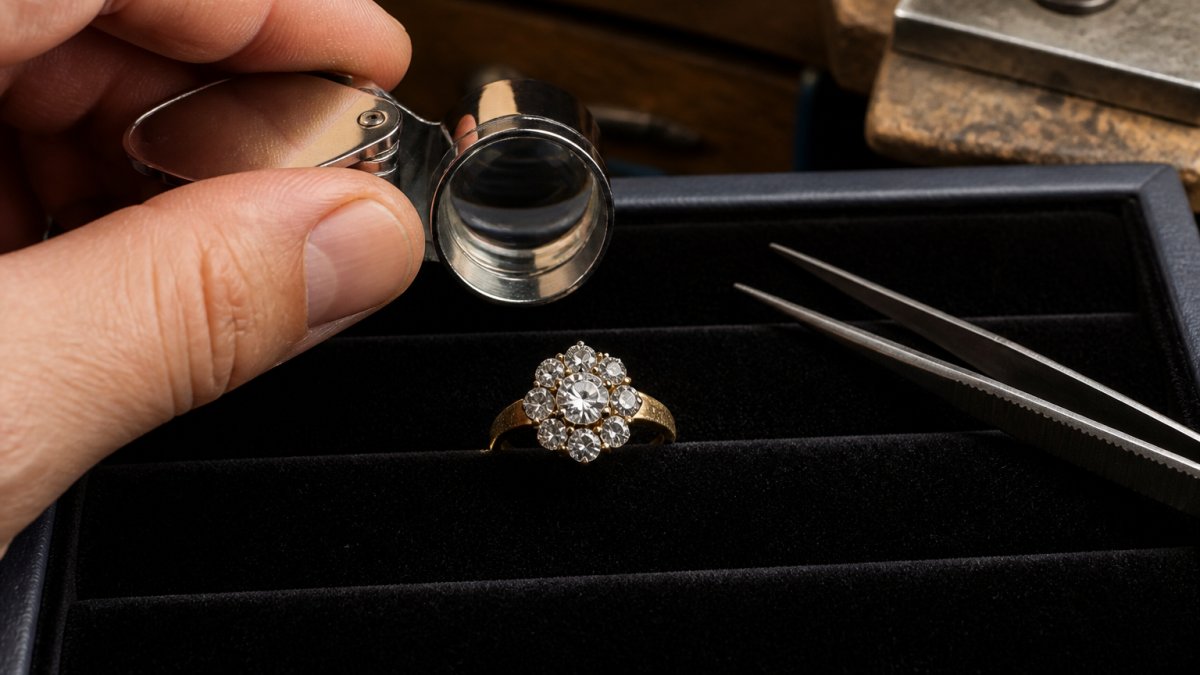
The cluster setting is the key. A central stone sits in the middle, and smaller accent stones circle it. That ring of stones is the halo. Some clusters fan out like a sunburst.
But first, here's what most guides get wrong. They treat every cluster ring as the same. They are not.
Cluster Settings, Stone Arrangements and the Dome Profile
A vintage cluster ring has three main parts: the central stone, the accent stones, and the band. How those parts sit together is the stone arrangement.
- Halo: small stones ring the centre for extra sparkle
- Sunburst design: stones fan outward from the middle
- Dome profile: the setting rises in a soft curve above the finger
- Ornate setting: intricate detailing and metalwork around the stones
The dome profile matters for styling. A high dome catches light from every angle. It also snags on knitwear. A low, flat setting sits closer to the hand and works better for daily wear.
Craftsmanship shows in the details. Look at the metalwork, the period-specific features and how secure each stone feels. A cluster ring can be assessed for visual balance, with no single stone pulling the eye too hard.
Styling by Ring Silhouette, Scale and Hand Shape
Scale is the first thing to get right. A large cluster ring dominates the hand. A small one can disappear. Match the ring's size to your hand and the look you want.
Here is how we would think about it:
- Petite hands: a smaller cluster keeps the ring in proportion
- Longer fingers: a bigger dome or sunburst design fills the space well
- Wide knuckles: a slightly larger central stone draws the eye upward
- Short fingers: a low, oval cluster makes fingers look longer
The silhouette of the ring should echo the shape of your hand. A round cluster softens angular hands. An oval or elongated cluster adds length.
Matching the Ring Profile to Your Hand
Setting height changes how a ring wears. A tall dome profile feels dramatic but catches on sleeves and scarves. A low profile sits flush and suits everyday wear.
Try the ring on before you commit. Turn your hand over. Does the ring feel top-heavy? Does it spin? Comfort matters as much as looks. A ring you fidget with all day is a ring you stop wearing.
What Wedding Band Goes With a Cluster Ring?
The best wedding band for a cluster ring is one that sits close to the cluster without competing with it.
Start with the profile. A low-set cluster sits close to the finger, so a straight band will usually sit flush against it.
Metal choice matters for both looks and wear. A band in the same metal as the cluster, say, 18ct yellow gold with 18ct yellow gold, gives a cohesive, traditional look.
Width is another practical consideration. A narrow band, around 2mm to 2.5mm, keeps the focus on the cluster and reduces the chance of the band rubbing against the setting.
Finally, think about how the two rings will sit together on the hand. Try them on together if you can. Check that the band does not push the cluster ring up or cause it to spin.
How to Stack Rings With a Cluster Ring Without Clutter
Stacking works when one ring leads and the others follow.
Start with the cluster's profile.
Fit is critical. Stacked rings rub against each other, and that wear adds up on soft antique gold.
Here are combinations that work in practice:
- Cluster plus one thin plain band: the simplest, cleanest stack. A 1.5mm to 2mm band in the same metal keeps the look cohesive.
- Cluster plus a fine diamond eternity band: sparkle that stays in line. Keep the eternity band's stones small and the setting low so it does not compete with the cluster's halo.
- Cluster plus a signet on the little finger: balances a heavy ring. A small signet in a contrasting metal can add interest without clutter.
- Cluster on the middle finger, plain bands on the ring finger: spreads the weight and reduces rubbing between the cluster and the bands.
- Cluster with a curved band on either side: if the cluster is high-set, two slim curved bands can frame it and sit neatly against the setting.
Spacing matters as much as the rings themselves. Leave a small gap between each ring so they do not constantly grind against each other.
Check stone security often. Rubbing can loosen a setting over time, especially on antique rings where the claws may already be worn.
Finally, think about the overall balance of the hand. If the cluster is large, keep the other rings on that hand small and simple. If the cluster is small, you can afford a little more detail in the supporting rings. The goal is a stack that looks intentional and feels comfortable all day.
Vintage 18ct Gold Diamond Cluster Ring – 1.8ct Total, Emerald Cut & Brilliant →
These are the stacking combinations the article recommends, with the reason each one works.
| Stack combination | Why it works |
|---|---|
| Cluster plus one thin plain band | Simplest, cleanest stack; 1.5mm to 2mm band in same metal |
| Cluster plus fine diamond eternity band | Sparkle stays in line; keep stones small and setting low |
| Cluster plus signet on little finger | Balances a heavy ring; small signet in contrasting metal |
| Cluster on middle finger, plain bands on ring finger | Spreads weight and reduces rubbing |
| Cluster with curved band on either side | Frames a high-set cluster and sits neatly against setting |
Mixing Vintage and Modern Jewellery: Metals, Colours and Contrast
Mixing old and new is where a vintage diamond cluster ring really earns its place. The trick is contrast with a thread of connection.
You can pair warm 18ct yellow gold with cool white metal. The contrast looks intentional, not accidental.
A reader pairing old and new may want to know why antique diamonds look different. Old cuts catch light in a softer way than modern brilliants. That soft glow is part of the charm.
- Mixed metals: yellow gold cluster with a white metal band
- Colour contrast: warm gold against a cool gemstone
- Complementary design: echo the cluster's curve in an earring
- Contrasting design: a sleek modern bangle beside an ornate ring
Keep one piece as the focus. Let the rest play a quieter role.
Outfit Formulas: Step-by-Step Styling for Different Occasions
Styling a vintage diamond cluster ring starts with the occasion.
Step 1: Everyday wear. Pair the ring with neutral tones, a plain knit or a crisp shirt.
Step 2: Work settings. Choose a low-profile cluster and a slim band.
Step 3: Evening events. This is where a bold cluster shines. Wear it with a dark dress or a deep colour.
Step 4: Weddings and celebrations. Pair the cluster with a complementary band and simple earrings. Avoid competing diamonds on the same hand.
Step 5: Weekend and casual. One ring, one thin band, nothing else.
Antique Diamond Ring Care: Wearing and Maintaining a Fragile Setting
Antique diamond ring care comes down to gentleness. Old settings were made by hand. They are strong, but they are not indestructible.
Take the ring off before cleaning, gardening or the gym. Store it in its own soft pouch so it does not rub against harder stones.
If you want to clean it at home, follow safe guidance on how to safely clean antique gold rings. Warm water and a soft brush go a long way.
- Check stone security monthly
- Remove before heavy tasks
- Store separately from other jewellery
- Clean gently, never scrub hard
- Have the setting inspected by a jeweller now and then
Watch out: a high dome profile snags on knitwear and scarves. That tug can loosen an accent stone over time. Check the claws after any snag.
Choosing Your Vintage Cluster Ring From Gold2u
Choosing the right ring means matching the piece to how you will wear it. Start with the silhouette, then the setting height, then the band.
The Vintage 18ct Gold Diamond Cluster Ring is set with three emerald-cut diamonds framed by a halo of brilliant cuts. It is fully hallmarked in Birmingham as 18ct gold and dates to the late 1990s. The step-cut centre stones and brilliant halo create real depth and fire. It is priced at £2,500.
The Five-Stone Old Cut Diamond Heirloom Ring is priced at £1,390. Its listing describes a five-stone design with genuine natural diamonds and a low profile.
If you are still weighing up options, our guide to choosing an antique diamond ring walks through the key checks before you buy.
Frequently Asked Questions
Can you wear a vintage diamond cluster ring every day?
Yes, with a few precautions. Check the setting every few weeks for loose claws or movement in the stones, and remove the ring for gardening, cleaning with chemicals, or heavy lifting. A cluster ring with a domed profile sits higher on the finger, so it can catch on knitwear and pockets. If the claws are worn, have a jeweller retip them before daily wear. A vintage diamond cluster ring in good condition can be worn daily for years with routine checks.
How do you mix vintage and modern jewellery without it looking mismatched?
Anchor the look with one metal tone and vary the scale instead. Pair a vintage diamond cluster ring with a plain modern band in the same gold colour, or contrast deliberately by setting yellow gold against a slim white metal bangle. Keep the modern pieces simple so the antique detailing stays the focus. Two or three pieces is usually enough. Mixing vintage and modern jewellery works best when one piece clearly leads and the rest support it.
What wedding band goes with a cluster ring?
A slim plain band in the same metal is the safest choice because a cluster setting often has a domed, raised profile that a straight band cannot sit flush against. A shaped or curved band follows the contour of the cluster and closes the gap. If you want sparkle, a thin diamond eternity band in matching gold works well, but keep the stones small so the cluster stays the centrepiece. Try both on together before buying.
How do you care for an antique diamond cluster ring?
Clean it with lukewarm water, a drop of mild washing-up liquid and a soft brush, then dry it fully with a lint-free cloth. Avoid ultrasonic cleaners on antique settings because older claw work and solder joints can be weakened. Store the ring separately in a soft pouch so harder stones do not scratch the gold. Have the setting inspected by a jeweller once a year, and check that the hallmark and claws remain intact.
The right vintage diamond cluster ring should feel like it was made for your hand, not just your jewellery box. At Gold2u, we curate antique old mine cut diamond jewellery, natural gold nuggets and historical gold coins, each chosen for authenticity and lasting value. Our pieces come with clear detail on metal, hallmark and era, so you know exactly what you are buying. Get started with Gold2u and find a ring that carries its history as well as it carries its sparkle.


0 comments